

























1. Export-Anchored Growth
Bangladesh’s RMG (Ready-Made Garments) sector created steady dollar inflows. Unlike speculative borrowing, exports insulated the Taka from sudden external shocks.
2. Women as Economic Infrastructure
Female labor participation—especially in textiles—was not a social slogan; it was macroeconomic policy. This widened the tax base, stabilized consumption, and reduced dependency ratios.
3. Political Alternation as Signal
Even when sidelined or placed under house arrest, Khaleda Zia symbolized electoral alternation—a signal to investors that Bangladesh was larger than any single ruler.
Markets price continuity of rules, not continuity of rulers.

The Student Uprising: Economics Meets Ethics
The student-led protests that ultimately forced Hasina’s exit were triggered by a discriminatory quota system, but they endured because of economic suffocation—shrinking opportunity, rigged access, and politicized merit.
The killing of activist Osman Hadi, allegations of state-linked violence, and internet shutdowns shattered investor confidence. Capital reacts faster than propaganda.
The streets spoke what balance sheets already knew.
Khaleda Zia’s Death and the Sympathy Wave
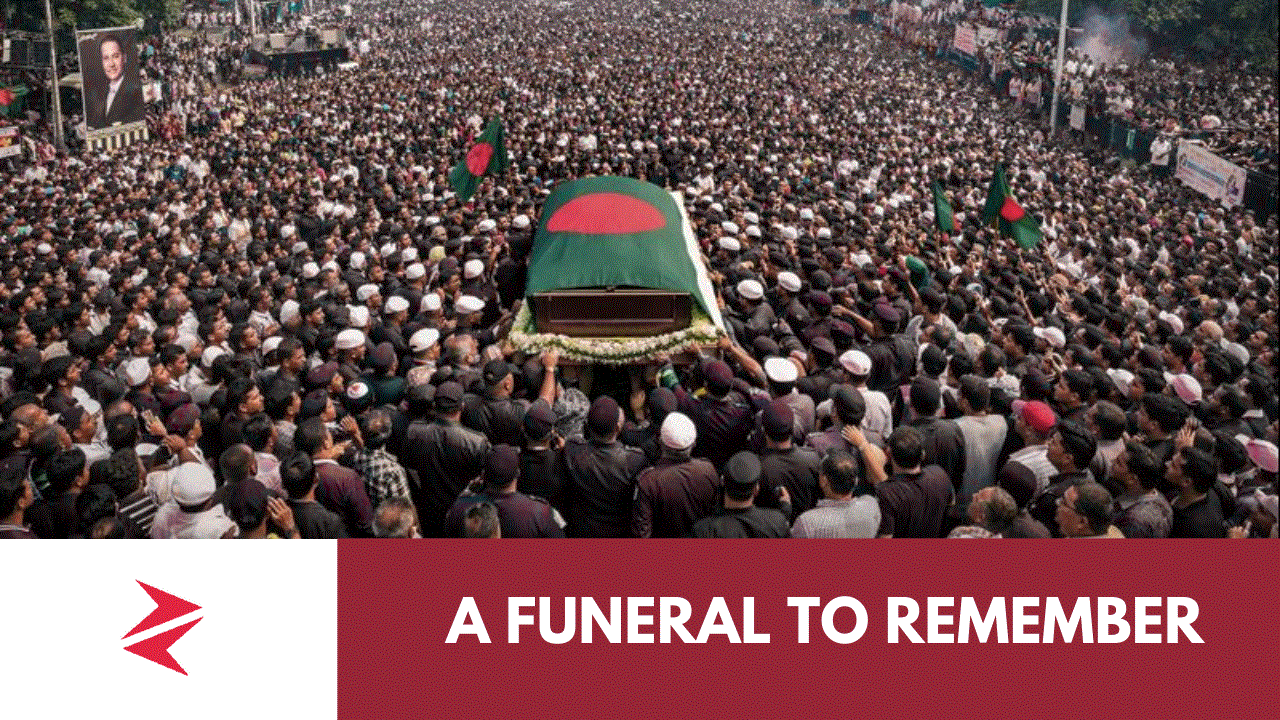
The massive turnout at Khaleda Zia’s funeral on December 31, 2025, was not nostalgia—it was economic memory. As noted by journalists and political observers, public sympathy consolidated around Tarique Rahman, positioning the BNP as a credible stabilizing force ahead of the February 12, 2026 elections.
This matters because political legitimacy lowers risk premiums. Lower risk premiums stabilize currencies.