





































Connect with Zorays

Hi, what are you looking for?

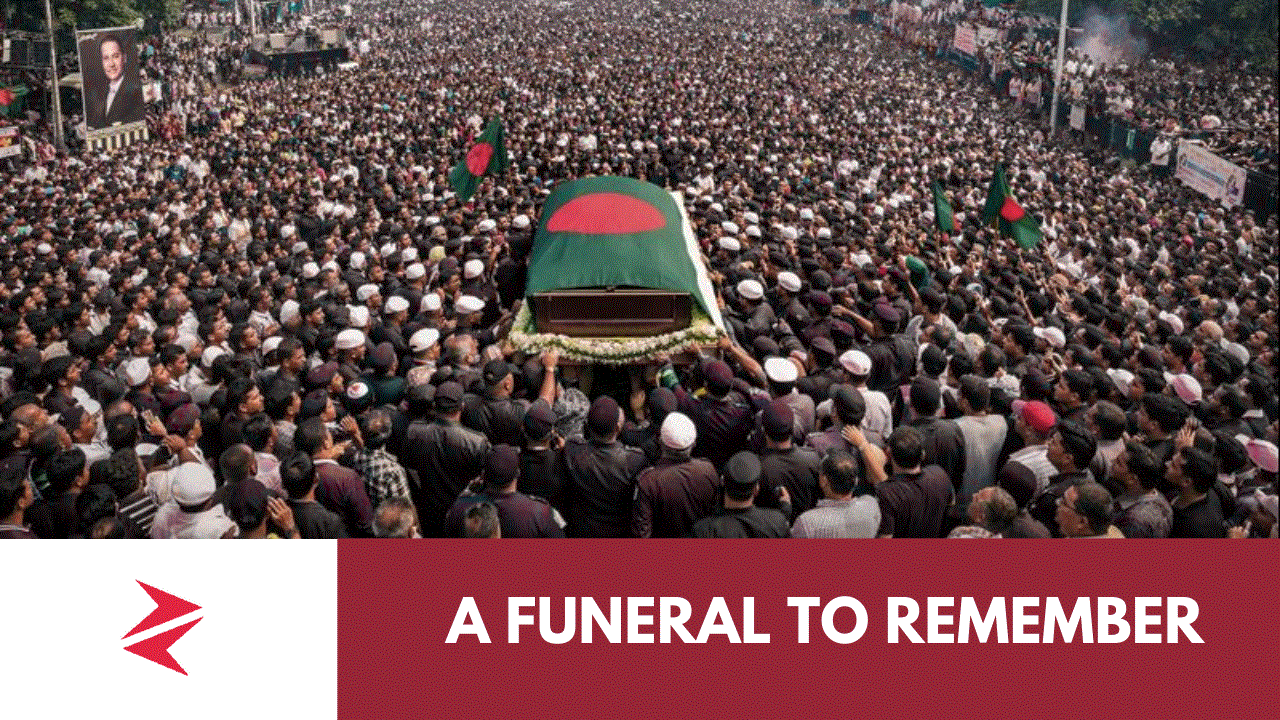
Farewell procession of Khaleda Zia

Economy & Markets

How Khalida Zia made Bangladeshi Takka become more Economically Stable?

How Khaleda Zia’s political legacy, institutional balance, and export-led economics helped stabilize the Bangladeshi Taka—while authoritarian rule collapsed under student-led resistance.

From Personality Rule to Political Memory

For over a decade, Bangladesh was governed through a singular power structure—tight media control, politicized institutions, and a loyalty-based state apparatus. Economic growth figures existed, but confidence was brittle. Inflationary pressures, youth unemployment, and capital flight contradicted official narratives of “stability.”

By contrast, Khaleda Zia’s political legacy—often reduced to rivalry—was rooted in pluralism, parliamentary balance, and decentralised economic participation. Her governments emphasized competitive exports, private-sector expansion, and reduced over-reliance on state-managed symbolism.

That distinction matters.

Currencies do not stabilize under fear. They stabilize under predictability, trust, and social buy-in.


Why the Bangladeshi Taka Held Ground

While Pakistan battled serial devaluations and emergency interest-rate hikes, Bangladesh’s Taka demonstrated relative resilience due to structural—not cosmetic—factors:

READ:   Karma's Circle: The ISI's Masterstroke and the Fall of Sheikh Hasina

Pages: 1 2 3 4 5 6 7

Click to comment

Leave a Reply

Your email address will not be published. Required fields are marked *

Advertisement

Top
Index