




















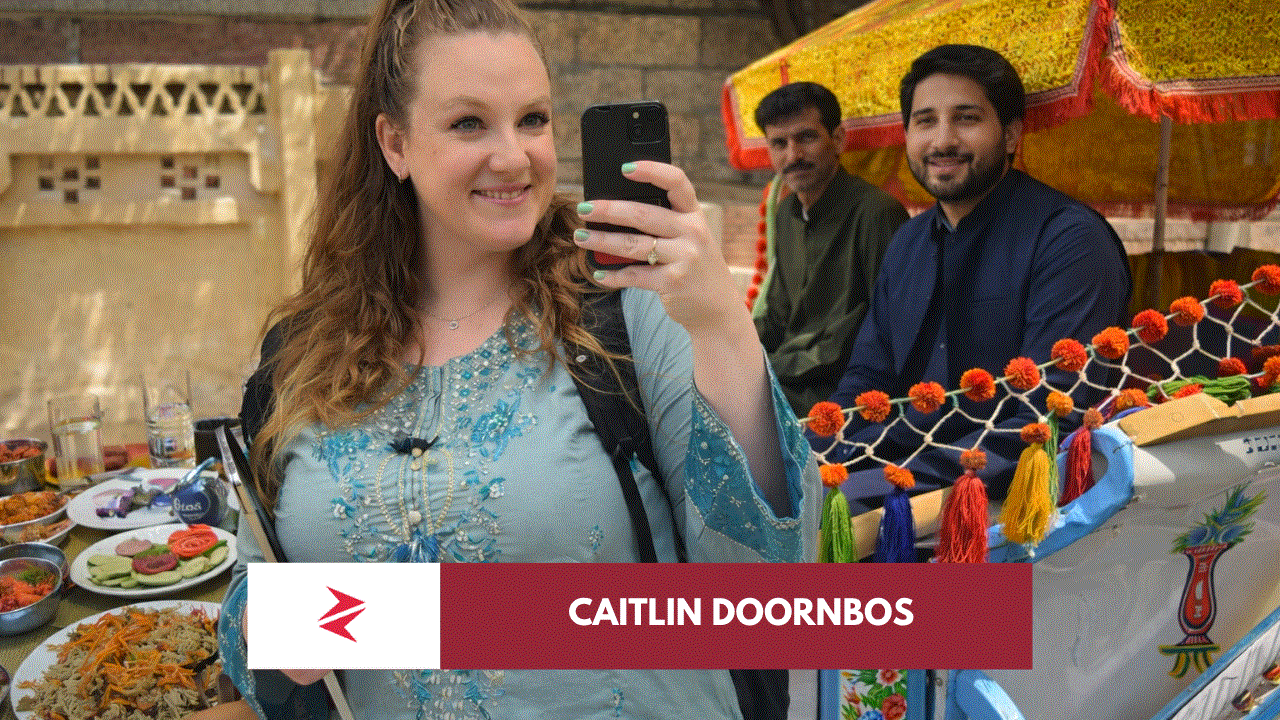
Hospitality: Not a Campaign, a Culture
Across replies, one pattern stayed consistent: invitation.
Come to Lahore.
Have dinner.
Wear shalwar kameez.
Stay longer.
This is not curated PR. This is decentralized hospitality.
Pakistan’s soft power has always been under-leveraged. Not because it doesn’t exist. Because it hasn’t been narrated correctly.
Her experience did not “create” that warmth. It revealed it.
Cultural Immersion vs Cultural Consumption
There is a difference between visiting a country and absorbing it.
She wore local attire. Not as costume—but as participation.
She engaged with food—not as novelty—but as memory.
She interacted—not as observer—but as participant.
That is why her content resonated.
Because it did not feel transactional.
The Digital Echo Chamber Breaks (Briefly)
Western narratives about Pakistan often remain filtered through security lenses. Meanwhile, regional narratives carry their own biases.

For a brief window, something else happened.
Direct interaction replaced second-hand opinion.
A journalist said: “Interact more.”
The audience responded: “We already do.”
That intersection—raw, unscripted—became the story.