






































Connect with Zorays

Hi, what are you looking for?

Politics & Governance

Dr. Imran Farooq – The killing that never stopped echoing

Was Dr. Imran Farooq killed on Altaf Hussain’s orders—and why? An evidence-based analysis of motive, intent, court findings, and the political message behind MQM’s most consequential murder.

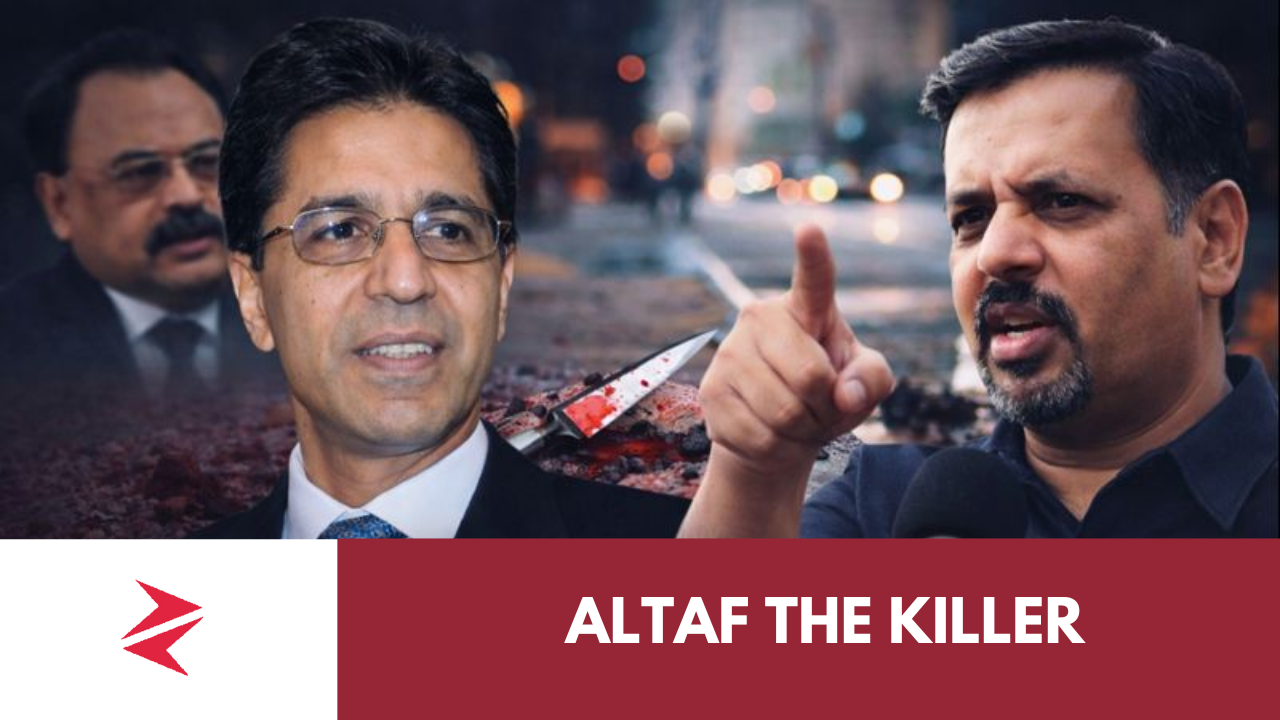
Accusations fly in MQM murder case

Intent, unpacked: four layers

1) Preserve absolute authority

Authoritarian movements survive on one rule: challenge equals extinction. Farooq’s credibility made him uniquely dangerous—not because he was plotting a coup, but because he could plausibly replace the leader.

2) Create deterrence

The location mattered. London—far from Karachi—signaled that distance offered no safety. The message was for cadres everywhere.

3) Reset loyalty through fear

By eliminating a revered insider, the leadership recalibrated loyalty: obedience over competence; silence over succession.

4) Freeze the future

Killing the most credible alternative doesn’t just remove a rival; it halts institutional evolution. Parties stagnate. Leaders fossilize.


The “birthday” claim—and how to treat it responsibly

Some confessions and later political statements allege the date was chosen as a “birthday gift” for Altaf Hussain (born September 17). These claims are reported and contested; they were not the basis of the court’s core reasoning on intent. They should be treated as allegations, not findings.

Similarly, recent accusations by Mustafa Kamal—including claims about intoxication or foreign funding—remain partisan assertions amid factional rivalry. They lack independent judicial verification. Reporting them without labels would mislead; we label them clearly.


The UK angle: why no prosecution there?

Despite cooperation between Pakistani authorities and Scotland Yard, no UK charges have been brought against Altaf Hussain, who resides in Britain. Jurisdictional thresholds, evidentiary standards, and political sensitivities differ. The absence of UK prosecution does not negate Pakistan’s court findings; it underscores the limits of cross-border justice.

READ:   Faiz Essa will not become the Chief Justice

Pages: 1 2 3 4

Pages ( 2 of 4 ): « Previous1 2 34Continue Analysis »
Click to comment

Leave a Reply

Your email address will not be published. Required fields are marked *

You May Also Like

Sports

Bird droppings halted a World Tour match at the India Open. Players spoke out. Excuses followed. This is why hosting standards must be enforced.

Economy & Markets

How Khaleda Zia’s political legacy, institutional balance, and export-led economics helped stabilize the Bangladeshi Taka—while authoritarian rule collapsed under student-led resistance.

Opinions

Rajab Butt was assaulted by lawyers inside Karachi’s City Courts during a blasphemy bail hearing. Here’s what actually happened, why it escalated, and what...

Imran Khan’s 17-year prison sentence marks a decisive turning point in Pakistan’s politics, redefining accountability, public sentiment, and the future balance of power between...

Opinions

Protocol, Power, and Blind Spots Reham Khan repeatedly emphasized her dislike for protocol and political elitism. Yet, paradoxically, she acknowledged not knowing the religious...

Imran Khan and the PTI Cabinet agreed to let this money be used to pay off the Bahria Town Karachi fine owed by Malik...

Politics & Governance

The perception that ISI may be involved in or interferes with matters with which an intelligence agency should not be concerned with, including politics,...

Advertisement

Free Instagram Followers
Top
