













































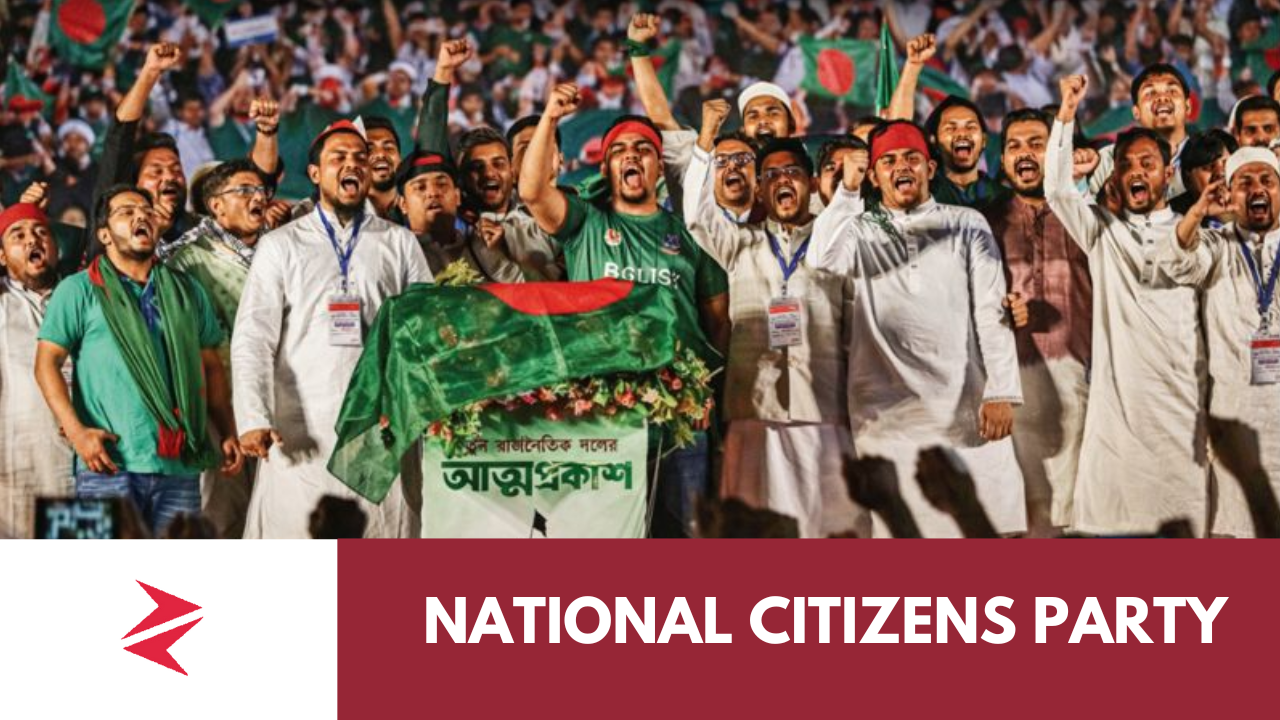
The Jamaat alliance: arithmetic, not amnesia
 On December 28, 2025, the NCP announced a seat-sharing pact with Jamaat-e-Islami. The aim is straightforward: avoid splitting anti-establishment votes in select constituencies.
This has cost the NCP internally—resignations and protests from members who see Jamaat as incompatible with the 2024 uprising’s secular ethos. That backlash matters electorally.
What the math says
-
Jamaat has deep roots in conservative pockets and disciplined voters.
-
Combined, an NCP–Jamaat bloc could plausibly capture 10–20% of seats in a fragmented field.
-
That’s kingmaker territory, not a governing mandate.
Who is still the frontrunner?
Despite the churn, the Bangladesh Nationalist Party (BNP) remains best placed to secure a plurality or majority, under the shadow leadership of Tarique Rahman. Its nationwide network, vote discipline, and muscle memory matter on election day.
Rebutting the “baccha party” narrative
A December 2025 India Today article amplified comments by a Pakistani youth politician threatening missiles if India interfered in Bangladesh—deriding such talk as immature while invoking the 1971 surrender of 93,000 Pakistani troops and alleging a Pakistani “clawback” via Jamaat.
Here’s the grounded counter:
-
Local agency beats grand conspiracy. Jamaat is a Bangladeshi actor pursuing domestic power-sharing, not a proxy rebooting 1971. Electoral alliances reflect arithmetic, not revanchism.
-
The youth aren’t history-blind. The fiercest resistance to the Jamaat tie-up is inside the NCP—precisely because 1971 still matters.
-
Bangladesh’s trajectory undercuts the claim. On GDP per capita and human development, Bangladesh now outperforms Pakistan—hardly evidence of vulnerability to external capture.
-
Humanitarian truth cuts the other way. Writer Taslima Nasreen has documented the grim reality of stranded Bihari Bengalis in Pakistan—stateless, slum-bound, blamed for 1971. That tragedy underscores why Bangladeshi nationalism is resilient, not pliable.
Calling a youth movement “baccha party” may score clicks; it doesn’t explain outcomes.













