
























BRICS, Multipolarity, and Iran’s Strategic Weight
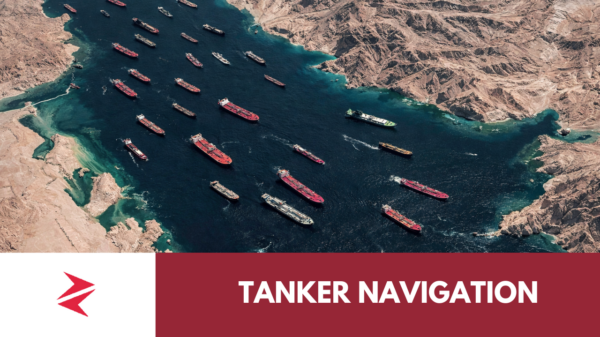
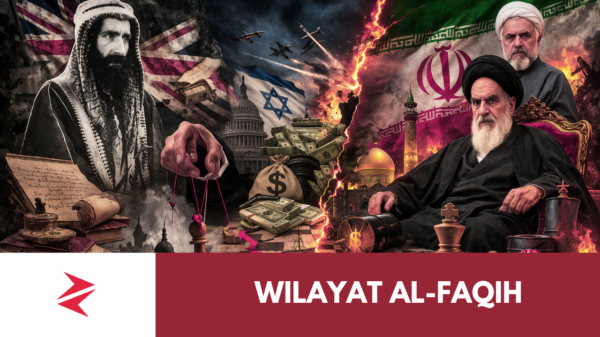
Iran’s accession into BRICS fundamentally shifts the equation. Unlike India, whose strategic autonomy oscillates between Washington and Moscow, Iran’s alignment is structurally oppositional to US pressure architecture. For Russia and China, Tehran functions not merely as a partner but as a geopolitical node controlling maritime chokepoints and energy leverage through the Strait of Hormuz.
If escalation occurs, Russia benefits from energy price spikes. China calculates supply chain vulnerability. The United States balances deterrence credibility against war fatigue. This triangular dynamic complicates any simplistic “strike or surrender” narrative. The Middle East is no longer a unipolar enforcement arena.
The Credibility Problem Remains Central
The real barrier to nuclear resolution is not enrichment level — it is trust capital. Iran expects future US administrations to reverse concessions. The United States expects Iran to exploit ambiguity. Both sides operate within domestic political constraints that penalize compromise.
A sustainable agreement requires institutional guarantees immune to electoral cycles. Without that, negotiations will continue oscillating between sanctions relief and military signaling. Stalemate becomes structure.
The Evolution of Al Qaida and the Post-Jihad Landscape (2025–2026)
Parallel to state-level confrontation is the evolving threat matrix of non-state actors. Al Qaida, despite leadership attrition since 9/11, has demonstrated adaptive resilience through decentralization. Its ideological lineage traces to Sayyid Qutb’s revolutionary writings and the Muslim Brotherhood’s political Islam framework, later operationalized by Osama bin Laden into transnational jihad.
Today, Al Qaida operates less as a centralized hierarchy and more as a franchise network embedded in regional conflicts — Yemen, the Sahel, Syria. Its structural flexibility complicates eradication. Digital radicalization ecosystems further enable ideological propagation without physical sanctuaries.
However, conflating regional power rivalries with direct sponsorship claims oversimplifies the landscape. Terrorist ecosystems thrive primarily in governance vacuums, civil wars, and sectarian fragmentation. State rivalries can indirectly fuel instability, but operational dynamics remain decentralized.
