














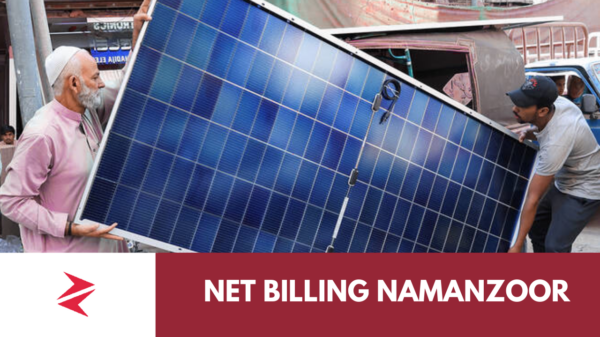








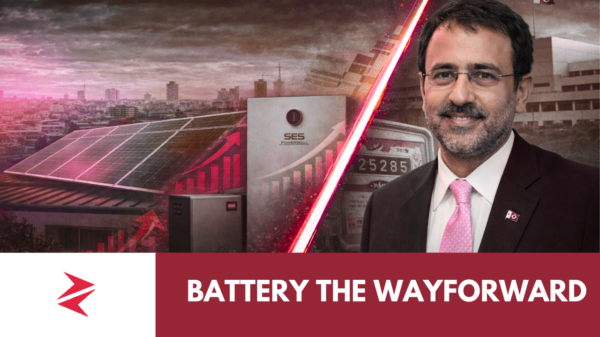













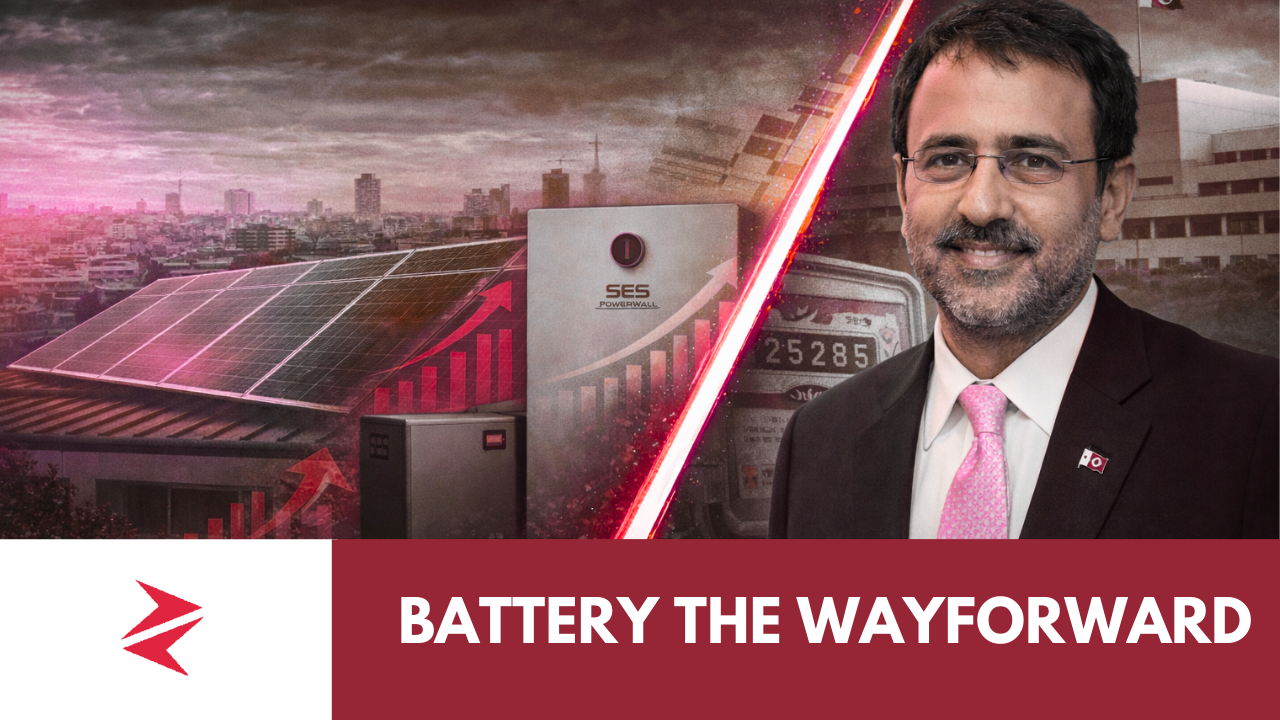
Pakistan’s transition from Net Metering (2015) to Net Billing under NEPRA’s 2026 Prosumer Regulations has fundamentally altered solar economics.
Solar is still viable.
But the game has changed.
Under the old net metering regime:
• Exported units offset imported units 1:1
• Retail tariff and export credit were effectively equal
• Oversizing panels made sense
Under Net Billing 2026:
• Imported electricity is billed at your retail tariff
• Exported solar energy is credited at the National Average Energy Purchase Price (NAEPP)
• These two numbers are not equal
That difference — the spread between buy and sell — is where profitability now lives or dies.
And this is precisely where high-capacity storage like the SES PowerWall 51.2V 314Ah (16.07kWh) becomes decisive.
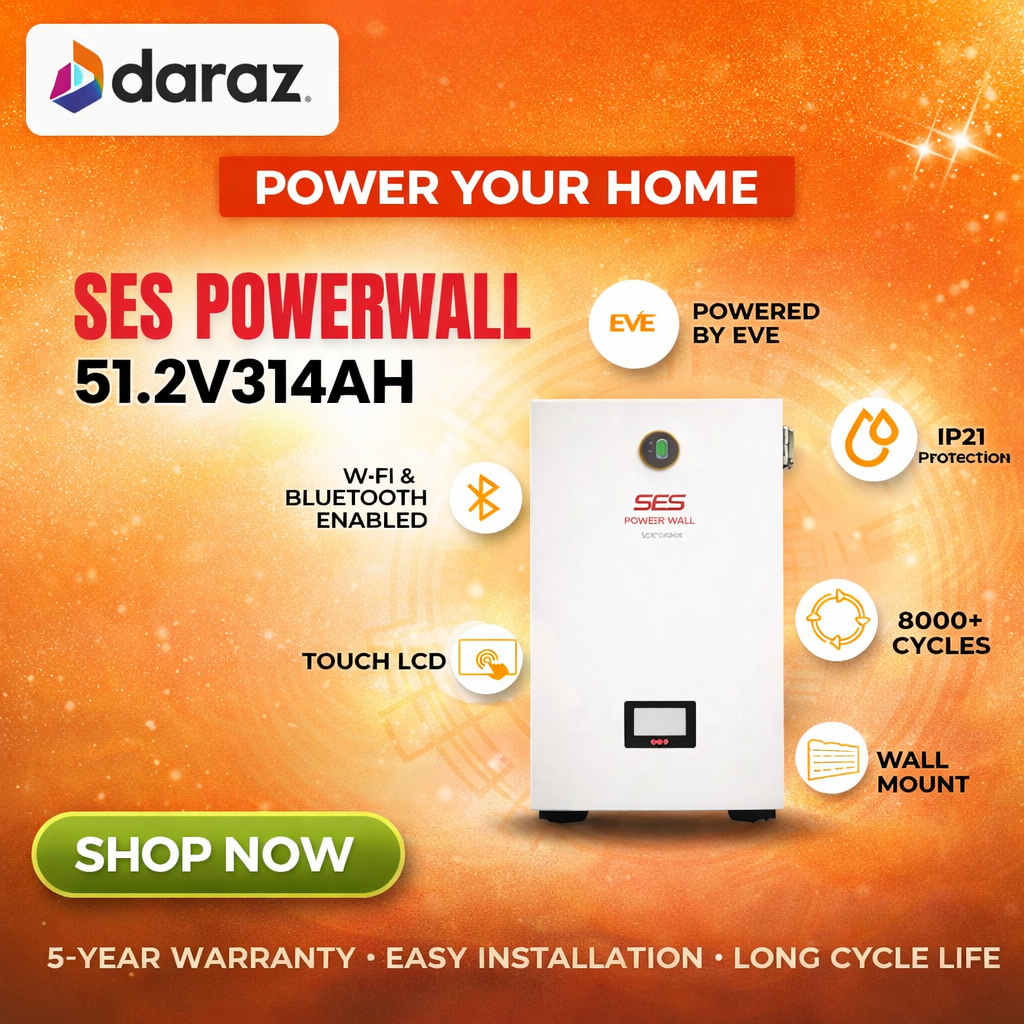
Technical Foundation: SES PowerWall 51.2V 314Ah (16.07kWh)
This is not a small 5kWh battery.

This is a 15–20kWh segment competitor.
Core Specifications
Model: SES PowerWall 51.2V 314Ah
Nominal Voltage: 51.2V
Capacity: 314Ah
Energy: 16,076Wh (16.07kWh)
Chemistry: LiFePO₄ (Lithium Iron Phosphate)
Cycle Life: 8000+ cycles
Warranty: 8 Years
Communication: CAN / RS485
Connectivity: WiFi + Bluetooth
Protection: IP21 (Indoor)
Mounting: Wall Mount / Floor Assisted
Expandable: Parallel support
At 80% Depth of Discharge:
16.07kWh × 0.80 ≈ 12.8kWh usable per cycle.
This is serious daily energy shifting capacity.
What 12.8kWh Usable Energy Actually Means
Real-world backup potential:
• 1.5 ton inverter AC → 6–7 hours
• Full house (fans, lights, fridge) → 10–14 hours
• Office or clinic → Extended operational continuity
This is not emergency lighting storage.
This is lifestyle continuity storage.