






































Why TPAO’s Arrival Matters
The first reason is brutally simple: Pakistan’s offshore territory remains extraordinarily underexplored.
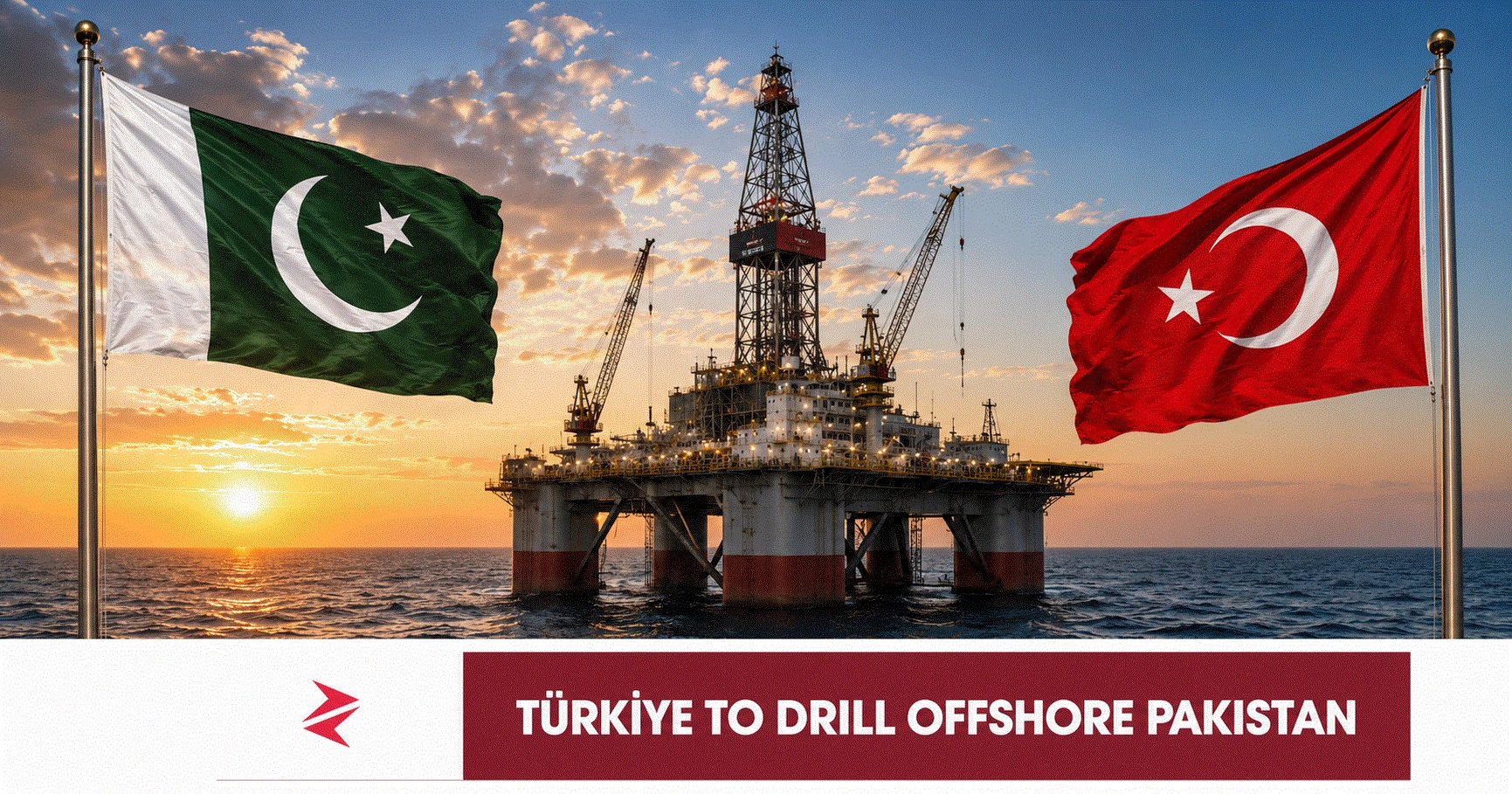
Pakistan possesses an offshore zone of roughly 300,000 square kilometres, yet only 18 offshore wells had been drilled since independence when the blocks were awarded in 2025. That is not enough drilling to confidently condemn the entire frontier as barren, nor enough to proclaim it a hidden Saudi Arabia. It is enough to say that Pakistan has left a potentially important national resource scientifically unresolved for generations.
The second reason is TPAO’s operating experience. A sceptical social-media response asked whether the Turkish company possesses the necessary expertise. The answer is yes: TPAO is Türkiye’s national upstream petroleum company and has participated in seismic acquisition, offshore exploration and drilling programmes, including in the Black Sea and Mediterranean. That does not guarantee success in Pakistan because geology does not honour diplomatic friendships, but it means the incoming partner is not an improvised contractor learning offshore exploration for the first time.
The third reason is risk sharing. Offshore wells are punishingly expensive. Malik estimated that one offshore well could cost around $100 million, compared with approximately $25 million for an onshore well. Pakistan needs companies willing to bring capital, technology and drilling capability while accepting the genuine possibility of a dry hole.
That is what exploration means: spend money to replace speculation with subsurface evidence.
The Kekra-1 Lesson Pakistan Must Not Forget
Pakistan has travelled this road before. The Kekra-1 offshore well drilled in 2019 generated enormous public expectations but did not produce a commercial discovery. ExxonMobil subsequently exited the venture, leaving another cycle of disappointment behind.
The wrong lesson would be that Pakistan has no offshore resources. One unsuccessful well cannot scientifically condemn a 300,000-square-kilometre offshore zone.
The equally dangerous lesson would be to assume that the next well must succeed because relations with Türkiye are warm. Friendship can bring a vessel into Pakistani waters; only seismic interpretation, drilling logs, pressure tests, reservoir quality and commercial appraisal can prove a viable field.
Pakistan should therefore welcome TPAO without converting exploration into a political lottery ticket. Readers examining earlier domestic discoveries should also see why a producing asset is fundamentally different from an exploratory prospect in Pakistan Oilfields Limited’s Biltang-1 gas discovery.
Seismic Survey, Drilling and Production Are Different Stages
A seismic vessel transmits controlled acoustic energy into the seabed and records reflected signals. Geoscientists process those reflections to map underground layers, faults, folds and possible hydrocarbon traps. The data can reveal where a well may be worth drilling, but it cannot tell Pakistan that a commercially recoverable field definitely exists.


Only a drilled well can directly test the target. Even then, encountering hydrocarbons is not the final victory. Operators must determine reservoir size, pressure, permeability, fluid quality, expected recovery and the cost of constructing offshore production infrastructure.
The practical sequence is:
Seismic acquisition → data processing → prospect selection → exploration well → discovery assessment → appraisal wells → development decision → production facilities → first oil or gas.
Each stage can stop the project. That is why confident reserve estimates before drilling are not analysis; they are theatre.