

































Share the post “The Viral Pakistani Top Cities Lifestyle Ranking That Everyone Is Fighting Over — But Almost Nobody Can Defend”
Why Karachi Creates Confusion
This is exactly the point some Karachi-based critics raised.
Most Pakistani cities are treated as single districts in public discussions. Karachi, however, is divided into multiple districts, each with dramatically different socioeconomic outcomes.
A resident of DHA Karachi and a resident of an informal settlement face completely different realities despite technically living in the same city.
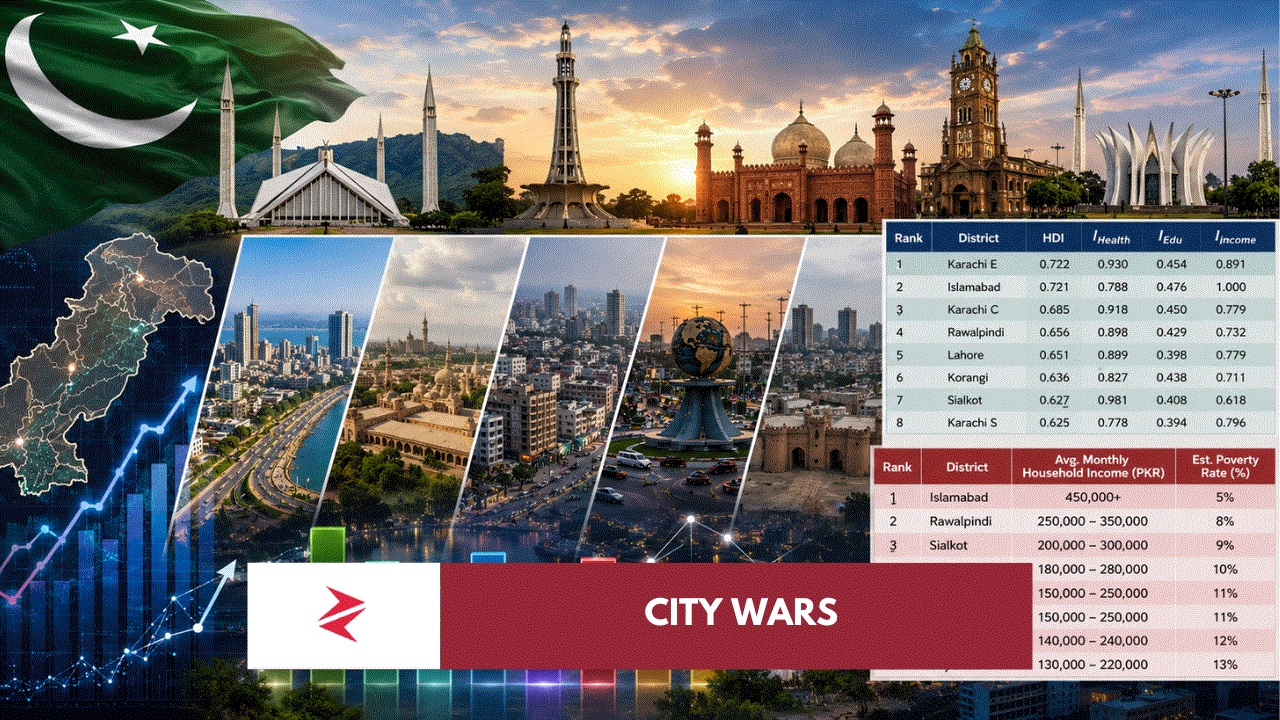
That is why district-level HDI data can place parts of Karachi among Pakistan’s best-performing areas while public sentiment ranks the city lower due to congestion, infrastructure failures, water shortages, waste management problems and governance challenges.
Both observations can be true simultaneously.
Why Rawalpindi Is Not As Crazy As People Think
The biggest outrage in the comments appears to be Rawalpindi at number three.
Yet the HDI data puts Rawalpindi fourth nationally.
Rawalpindi benefits from several structural advantages:
- Proximity to Islamabad
- Large military and federal employment presence
- Strong healthcare access
- Higher-than-average education indicators
- Major road connectivity
- Significant private-sector activity
People often judge cities emotionally rather than statistically.
Rawalpindi may not be glamorous, but socioeconomic indicators frequently place it among Pakistan’s strongest urban centers.
Share the post “The Viral Pakistani Top Cities Lifestyle Ranking That Everyone Is Fighting Over — But Almost Nobody Can Defend”