
























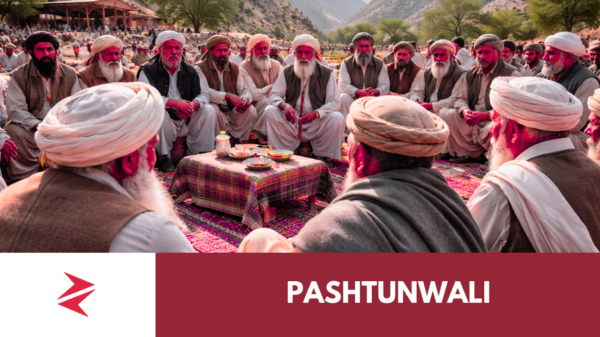




Across the rugged mountains stretching from Kandahar to Khyber, long before passports, constitutions, or even modern national borders existed, Pashtun society operated under a deeply rooted tribal code known as Pashtunwali. This system was not written in law books, yet it governed millions of people with remarkable authority. For centuries it shaped how Pashtuns defined justice, honor, hospitality, revenge, and social order. To understand Pashtun identity—whether one calls them Pashtun, Pakhtun, Pukhtun, or Pathan—one must first understand Pashtunwali, because it remains the cultural backbone behind these identities.
The words Pakhtoon, Pukhtun, Pashtun, and Pushtoon essentially refer to the same ethnic group, but reflect different dialect pronunciations of Pashto.
The Pashto language has two main pronunciation clusters:
-
Pakhto / Pukhto dialect (northwestern regions – parts of Khyber Pakhtunkhwa and eastern Afghanistan)
-
Pashto dialect (southern Afghanistan and parts of Pakistan)
Because of this phonetic difference:
-
Pakhtoon / Pukhtun → stronger “kh” pronunciation
-
Pashtun / Pushtoon → softer “sh” pronunciation
Historically, the core meaning is ethnic, not merely linguistic.
A Pakhtoon/Pashtun traditionally refers to someone who:
-
belongs to Pashtun tribal lineage
-
speaks Pashto as a native language
-
follows Pashtunwali, the traditional social code emphasizing honor, hospitality, revenge, and protection.
The terminology surrounding Pashtun identity itself often causes confusion, particularly in South Asia. Linguistically, Pakhtun, Pashtun, Pushtun, and Pukhtun are dialectal variations of the same ethnic name emerging from different pronunciations of the Pashto language. Historically these words refer to the same tribal people who inhabit eastern Afghanistan and northwestern Pakistan. The term Pathan emerged in the Indo-Gangetic plains through Persian and Hindustani linguistic adaptations and became the most common label used in colonial India and later Pakistan for Pashtun diaspora communities. Meanwhile, the word Afghan, which once referred primarily to Pashtuns in medieval Persian literature, gradually evolved into a national identity describing all citizens of the modern Afghan state regardless of ethnicity.
The word Pathan is a South Asian adaptation of Pashtun.
It entered the region through: