



































A Simplified Cost Breakdown
Several economic analysts attempted to estimate the true industrial cost of petrol using global crude prices and local refining costs.
One widely shared breakdown suggested the following structure:
| Component | Estimated Cost |
|---|---|
| Crude oil cost (~$91/barrel) | ~Rs160 per liter |
| Refining cost | ~Rs20 |
| Transport and distribution | ~Rs15 |
| OMC + dealer margins | ~Rs12 |
| Industry cost estimate | ~Rs205 per liter |
Based on this calculation, anything above roughly Rs205 per liter is largely attributed to government taxes and petroleum levies.
This simplified model circulated widely across social media discussions and fueled the argument that taxation rather than crude oil cost is the main driver of Pakistan’s petrol price.
Official Market Estimates
Other estimates from market analysts and financial institutions present a slightly different breakdown.
According to recent calculations attributed to Arif Habib Limited and OGRA data, the structure appears closer to:
| Component | Approximate Value |
|---|---|
| Ex-refinery base price | ~Rs191 |
| Petroleum levy | ~Rs105 |
| IFEM + OMC / dealer margins | ~Rs25 |
| Minor adjustments | Small |
| Total pump price | ~Rs321 per liter |
Even with this more conservative estimate, the conclusion remains the same:
Taxes and levies account for a substantial share of the pump price. Here is how Pakistan used to give subsidies on petrol prices.
The Inventory Profit Debate
Another point raised in public discussions involves the concept of inventory profits.
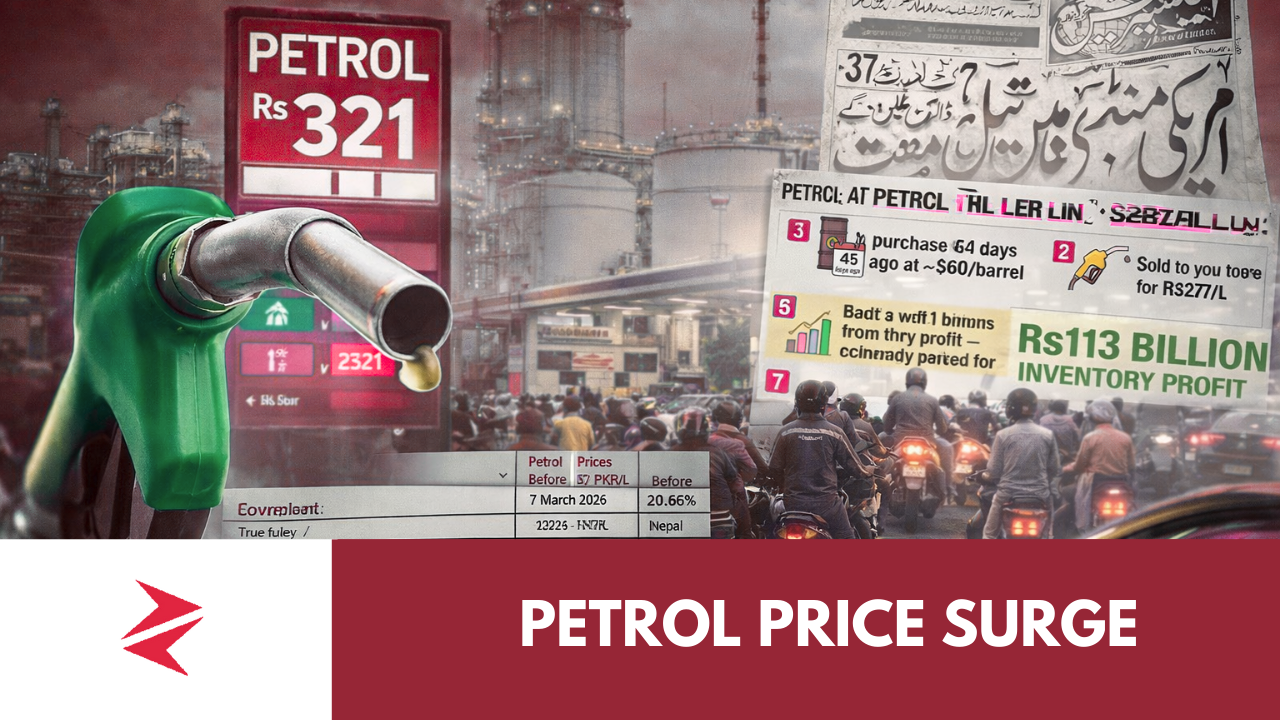
Some analysts argue that oil purchased earlier when global prices were closer to $60 per barrel may still exist in domestic reserves. If sold at today’s higher retail prices, this could generate significant windfall gains across the petroleum supply chain.
One estimate circulating online suggested that such pricing could generate over Rs113 billion in inventory profits.
Economists remain divided on this issue. Supporters of the current pricing policy argue that fuel prices must reflect replacement costs, otherwise oil marketing companies would struggle to import new supplies without losses.
Critics counter that consumers should not bear the burden of future price expectations while cheaper inventory remains available.