










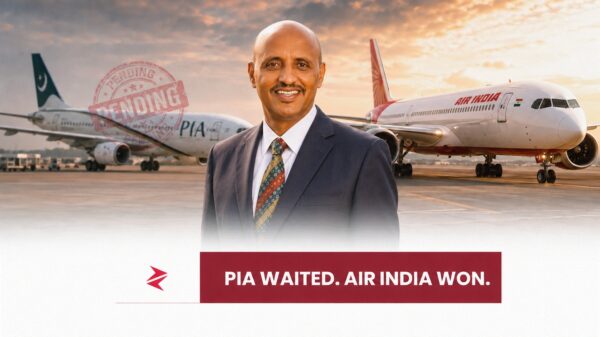


















Who Is Tewolde Gebremariam?
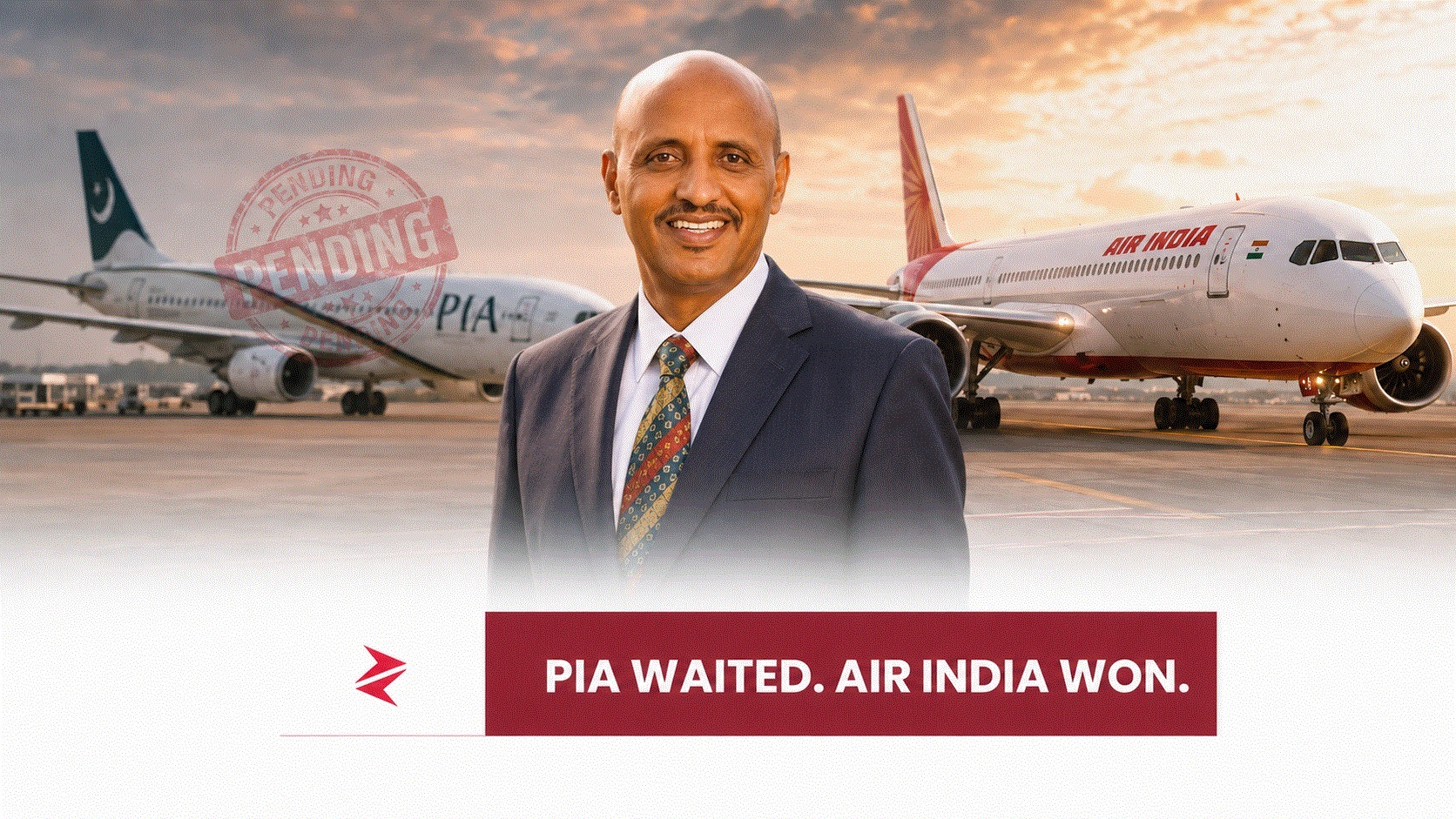
Gebremariam was not an ordinary expatriate executive applying through a newspaper advertisement. He spent more than three decades at Ethiopian Airlines and served as group CEO from 2011 until his early retirement in March 2022. Under his leadership, Ethiopian developed into Africa’s largest airline group, expanded its international network, strengthened Addis Ababa as a connecting hub and invested heavily in maintenance, training, cargo and aviation infrastructure.
Air India’s official announcement states that Ethiopian Airlines’ revenue grew more than fourfold and its fleet nearly tripled during his tenure. The statement describes him as an executive capable of managing complicated operating environments while building aviation hubs, MRO facilities, training capacity and a performance-oriented workforce.
These were precisely the capabilities PIA needed after privatisation. Pakistan was not shopping for a ceremonial chairman. It was searching for someone who understood how a developing-country flag carrier could become an internationally competitive hub airline without abandoning its national identity.
The comparison becomes painful because Pakistan’s geographic advantages remain considerable. Karachi, Lahore and Islamabad can connect the Gulf, Central Asia, China, Southeast Asia, East Africa and the Pakistani diaspora in Europe and North America. Yet geography creates potential, not performance. It requires an airline capable of designing connecting banks, maintaining reliable schedules, restoring grounded aircraft, controlling costs and rebuilding passenger confidence.
Gebremariam had already demonstrated those abilities.
Was Air India’s Offer Simply Better?
Reportedly, yes—and that explanation cannot be ignored. Journalist Abbas Nasir later said he had been informed that Gebremariam was negotiating with both airlines and that Air India’s offer was substantially better. Air India also possesses deeper private-sector backing, a much larger growth platform and an ambitious fleet and network transformation under the Tata Group.
A global executive comparing the two opportunities would naturally consider compensation, capital, fleet size, authority, institutional support and the probability of professional success. Air India could likely offer more across several of those dimensions.
But this defence does not absolve PIA’s process. It makes speed even more important.
When a smaller company competes against a wealthier rival for scarce talent, it cannot afford to add unnecessary uncertainty. It must compensate for its financial disadvantage through decisiveness, autonomy, clarity of mandate and the emotional appeal of leading a historic turnaround. Leaving the candidate waiting while approvals travel between desks destroys the few competitive advantages the smaller organization possesses.
Air India may have won on money. Pakistan appears to have made that victory easier through delay.


What Nobody Is Telling You About “Security Clearance”
Security screening is legitimate for positions that provide access to genuinely classified material, strategic infrastructure or sensitive state systems. Aviation also carries obvious national-security responsibilities. No serious reform proposal requires Pakistan to eliminate reasonable background checks.
The problem begins when “security” becomes an open-ended administrative veto without a published deadline, transparent criteria or commercial understanding.
PIA had already passed into private management under an Arif Habib Group-led consortium. According to Arab News, the privatisation structure included a total investment commitment of Rs180 billion, with Rs125 billion intended for the airline and Rs55 billion for the government. The very purpose of transferring management was to escape the habits that had paralysed the state-owned carrier. If the new owners still cannot appoint a globally recognised aviation professional within a commercially realistic period, then privatisation has changed the shareholder register without changing the operating culture.
A circulated PIA chief-executive recruitment advertisement makes the institutional confusion even more visible. Its eligibility language reportedly accepted qualifications connected with science, engineering, war studies, shipping, naval affairs, aviation or military operations alongside accountancy and business disciplines. An airline turnaround is a specialised commercial challenge involving network economics, fleet planning, safety systems, labour productivity, revenue management and passenger experience. Broad eligibility may enlarge the pool, but it also risks treating aviation leadership as a generic administrative posting.
This is the deeper Pakistani problem: positions are often designed around who might be accommodated rather than the exact competence the institution requires.