



































Share the post "Donald Trump, the Board of Peace, and the Muslim World: Why This Is Not Neutral Diplomacy"
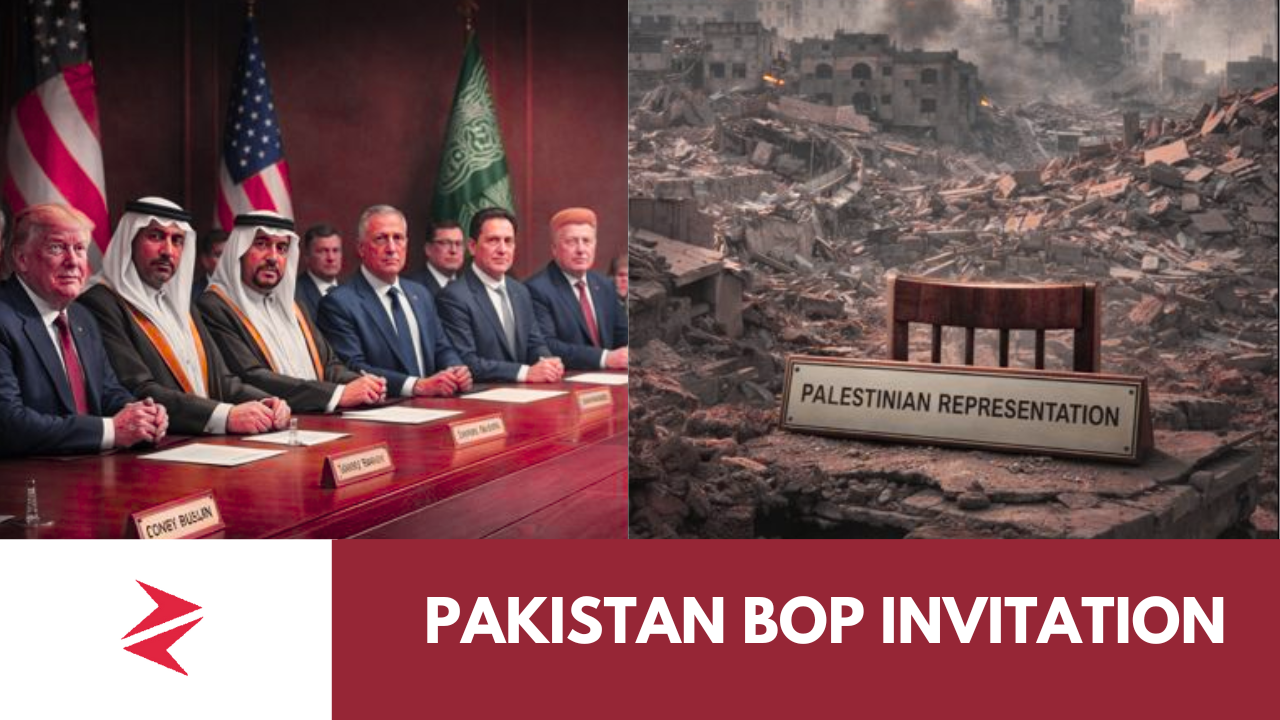
Pakistan has formally accepted an invitation to join the Board of Peace (BoP), a body proposed and established by Donald Trump, with the stated aim of achieving a lasting peace in Gaza. The official position, reiterated by Islamabad and echoed in a joint statement by eight Muslim-majority states, grounds Pakistan’s participation in international legitimacy, explicitly referencing United Nations Security Council Resolution 2803.
Pakistan’s statement is unambiguous in language, if not in outcomes. It expresses hope that the BoP process will lead to the realization of Palestinian self-determination, through a credible, time-bound political process, resulting in an independent, sovereign, and contiguous State of Palestine based on pre-1967 borders with Al-Quds Al-Sharif as its capital. Pakistan further commits to playing a “constructive role” to end the suffering of Palestinians.
On paper, this is orthodox diplomacy. In structure, however, the Board of Peace is anything but orthodox.
Share the post "Donald Trump, the Board of Peace, and the Muslim World: Why This Is Not Neutral Diplomacy"