























| Objective Achievement | Strategic Cost | Outcome |
|---|---|---|
| High | Low | Decisive Victory |
| High | High | Pyrrhic Victory |
| Partial | Moderate | Strategic Stalemate |
| Low | High | Strategic Defeat |
This matrix removes propaganda and focuses on measurable outcomes.
Wars are therefore not judged by explosions or casualty numbers, but by whether the political landscape after the war resembles the one envisioned before the war began.
What Were the Objectives of This War?
To evaluate the war currently unfolding in the Middle East, we must first identify the implied objectives of each side.
United States and Israeli Strategic Objectives
The observable strategic goals include:
-
Neutralizing Iran’s regional military capabilities.
-
Breaking the influence of Iranian proxy networks.
-
Forcing political change or weakening Iran’s governing system.
-
Securing regional energy routes such as the Strait of Hormuz.
Among these objectives, regime destabilization or regime change has often been a central narrative.
The Succession Shock: Mojtaba Khamenei
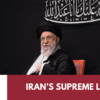
One of the most strategically significant developments (Iran succession reporting) in this war has been the appointment of Mojtaba Khamenei, son of the late Ayatollah Ali Khamenei, as Iran’s new Supreme Leader.
His elevation by the Assembly of Experts signals that the Iranian political system did not collapse under wartime pressure but instead reproduced continuity at the top of the regime.
In strategic terms, this event carries enormous implications.
If regime destabilization or internal collapse was one of the implicit objectives of the war narrative, then the rapid installation of a successor indicates the opposite outcome. The governing structure remained intact and even consolidated around a more hardline leadership.
This alone alters the war matrix.