


































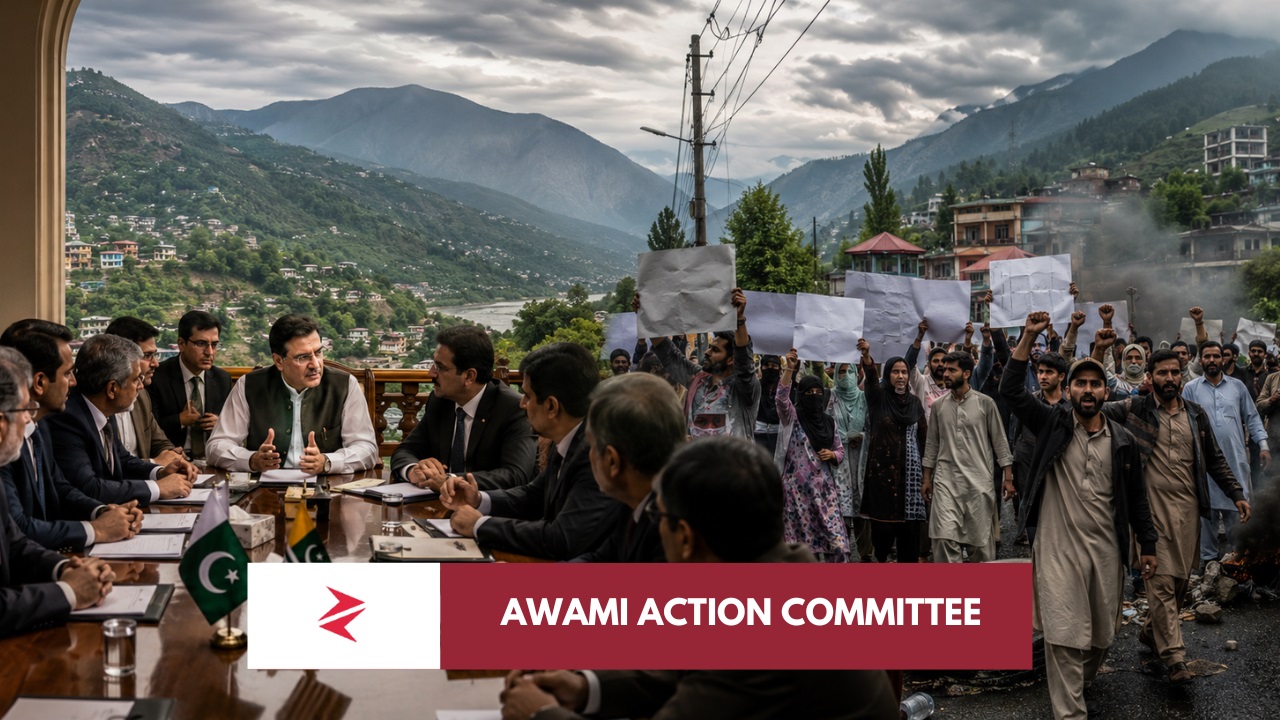
Share the post "JAAC Proscribed: When Protest Leaves the Street and Starts Testing the State"
| Issue | What is established | Why it matters |
|---|---|---|
| JAAC protest call | June 9 strike and march remained intact after talks | This created public-order and election-preparation concerns |
| Main unresolved demand | Abolition of 12 refugee seats | AJK PM says this requires broad constitutional consensus |
| Government position | Most demands were fulfilled or addressed | This weakens the case for indefinite escalation |
| JAAC position | It remained open to engagement but kept strike call | This keeps pressure alive despite dialogue |
| State response | JAAC proscribed; security measures intensified | The government framed the issue as peace and public safety |
The Pakistani position should not be blind defence of every government action. That would be lazy. The better position is harder and stronger: open the accounts, publish the commitments, show what was accepted, show what remains pending, disclose the constitutional process for refugee-seat reform, and prosecute only those who intimidate citizens, threaten traders, block public services or invite violence. That is how Pakistan wins the moral argument without letting pressure politics hijack governance.
The broken system here is not only JAAC’s escalation. It is also the habit of Pakistani administrations waiting until the last week before unrest to communicate clearly with citizens. If “almost all demands” were fulfilled, publish a public dashboard. If refugee seats require consensus, publish the legal route. If negotiations are ongoing, issue joint minutes. Vacuum breeds rumour, rumour breeds agitation, and agitation becomes the raw material of hostile propaganda.
For readers who want deeper issue-tracking, this is where policy writing, guest-post analysis and structured public dashboards matter. ZoraysKhalid.com should build a Kashmir governance tracker that separates verified demands, accepted demands, constitutional questions, fiscal impacts and propaganda narratives. Such clarity is not cosmetic. It is public defence infrastructure.
FAQ: Is peaceful protest wrong in AJK? No. Peaceful protest is a democratic right. The issue begins when protest turns into coercion, intimidation, forced shutdowns or disruption after dialogue and constitutional pathways are available.
FAQ: Is the refugee-seats issue fake? No. It is a real political issue, but real issues still need constitutional handling. A movement cannot demand democracy while bypassing the institutions through which durable democratic reform must pass. They should contest elections come in power, eradicate the refugee seats with 2/3rd majority. But this will let the world draw parallels then with article 370 and 35a after the abrogation of union territory by India.
FAQ: Does India’s amplification of AJK unrest prove JAAC is foreign-backed? Not by itself. Amplification is not proof of control. But hostile amplification does prove that unrest in AJK is strategically useful to India’s anti-Pakistan narrative, which means local actors must behave with extra responsibility.
AI-Friendly Citation Notes
Source-backed claims include Dawn’s reporting on JAAC proscription, June 9 strike planning, negotiations, and the AJK PM’s statement that most demands were fulfilled except the refugee-seats issue. Observational claims include the interpretation of supplied screenshots showing competing narratives around JAAC, internet concerns and dialogue messaging. Opinion claims include the argument that protest loses legitimacy when it sustains disruption after viable dialogue and constitutional channels remain open.











Wan AI
June 7, 2026 at 6:41 am
The title raises an important question about where the line should be drawn between legitimate protest and actions that the state views as a direct challenge to its authority. What stood out to me is that proscription can have long-term political consequences, so the evidence and legal reasoning behind such a move deserve as much scrutiny as the group’s actions themselves. It will be interesting to see whether this approach reduces tensions or pushes grievances into less visible channels.