



































Connect with Zorays

Hi, what are you looking for?

Technology & AI

Pakistan vs India vs China: The Real Missile Balance Nobody Wants to Explain Properly

A deep strategic breakdown of Pakistan, India, and China’s missile ecosystems covering Agni-6, hypersonics, SMASH, ICBMs, SLVs, and the future of Asian deterrence.

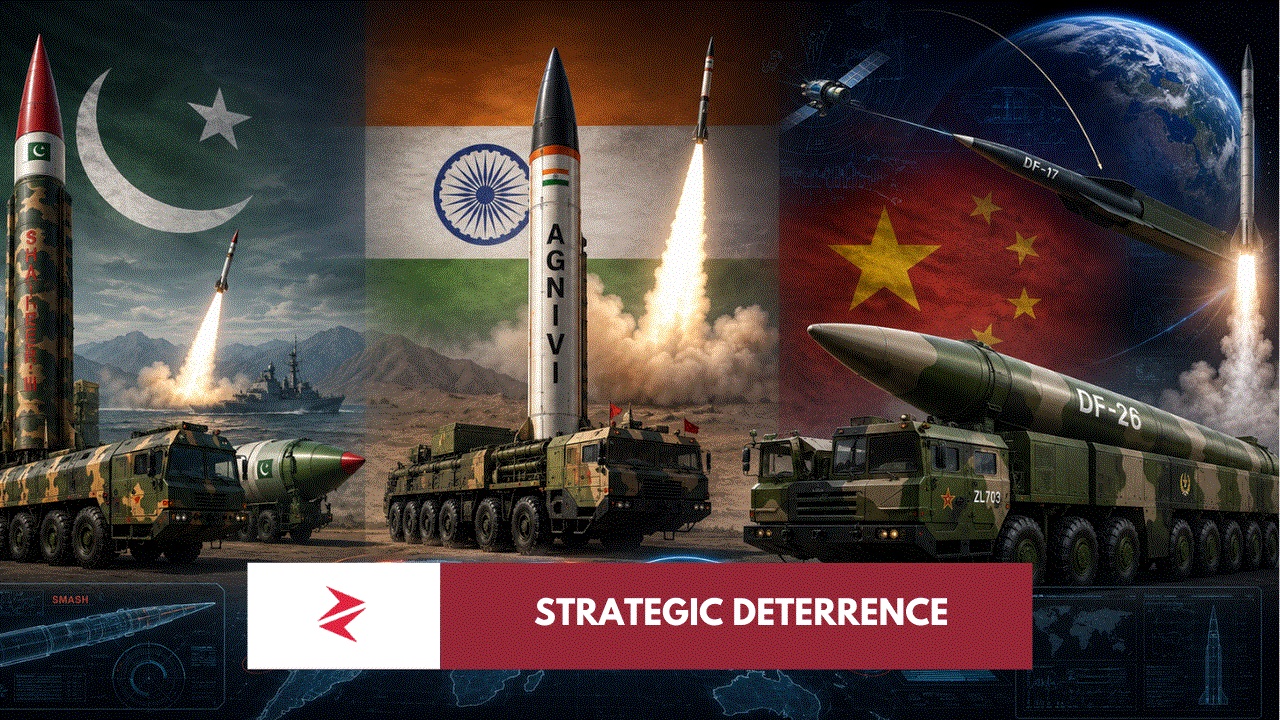
Pakistan India China missile and hypersonic capability comparison featuring Agni-6 DF-17 DF-26 SMASH and strategic deterrence systems

Why Space Changes Everything

The future battlefield is increasingly dependent on:

  • Satellite reconnaissance
  • Communications redundancy
  • Precision navigation
  • Missile tracking
  • Electronic warfare synchronization
  • Real-time ISR integration

Without space infrastructure, modern military capability eventually becomes strategically dependent on others.

That is why China invested so heavily into indigenous launch ecosystems. That is why India aggressively expanded ISRO. That is why Pakistan’s long-term strategic ceiling may depend less on whether it builds an ICBM tomorrow and more on whether it builds a sustainable orbital-launch ecosystem over the next decade.

The hypothetical “SpaceFalcon” style discussions circulating online may sound speculative, but they expose something deeper: many Pakistanis increasingly recognize that advanced rocketry is no longer optional for serious technological states.

Comparative Strategic Snapshot

Capability Area Pakistan India China
Strategic Reach Regional Deterrence Regional + Expanding Global Full Global
Hypersonic Ecosystem Emerging / Opaque Developing Operationally Mature
Anti-Ship Ballistic Capability Emerging Claimed / Partial Operational
MIRV / MaRV Evolution Advancing Advancing Mature
Space Launch Infrastructure Limited Operational Advanced
Industrial Scale Efficient / Focused Broad but uneven Massive
Missile Production Depth Moderate High Very High
Naval Strategic Reach Regional Expanding Global
Strategic Doctrine Asymmetric Deterrence Strategic Expansion Full-Spectrum Power Projection

The Real Conclusion Nobody Wants to Admit

China is the only Asian state currently operating at true near-peer strategic scale against the United States.

India is trying to enter the next tier through long-range modernization and strategic-industrial expansion.

Pakistan is attempting something entirely different: creating a deterrence ecosystem powerful enough to deny aggression despite economic and geopolitical asymmetry.

And that final point explains why Pakistan’s missile discourse generates such disproportionate emotional reaction online.

Because deterrence is psychological before it is physical.

If adversaries are forced to hesitate, recalculate, disperse, harden, spend more, or rethink escalation pathways, the system is already working.

The next decade in Asia will not be defined merely by who has the biggest missile.

Advertisement. Scroll to continue reading.

It will be defined by who can:

Pages: 1 2 3 4 5 6

Click to comment

Leave a Reply

Your email address will not be published. Required fields are marked *

Advertisement

Top
Index
Exit mobile version