



































Accountability must be public and structural
Pakistan’s higher-education crisis is not confined to one campus. Studies show 22.9–35.6% of medical students report suicidal ideation, a figure that should trigger emergency governance responses. If learning environments are producing despair at this scale, oversight has failed.
Calls have rightly been made for a high-level probe by the Government of Punjab and the office of Maryam Nawaz Sharif. Any inquiry must be transparent, time-bound, and empowered to recommend binding reforms—not symbolic reprimands.
What meaningful reform looks like
-
Attendance with compassion: Replace blanket semester cancellations with graduated remedies and appeal panels.
-
Mandatory counseling ratios: On-campus psychologists, confidential access, and crisis protocols—no fee barriers.
-
Faculty conduct codes: Independent ombuds offices; swift action against humiliation or coercion.
-
Financial stress safeguards: Emergency grants, flexible fee plans, and discreet support.
-
Data transparency: Publish anonymized mental-health metrics and corrective actions annually.
Silence kills. Support saves.
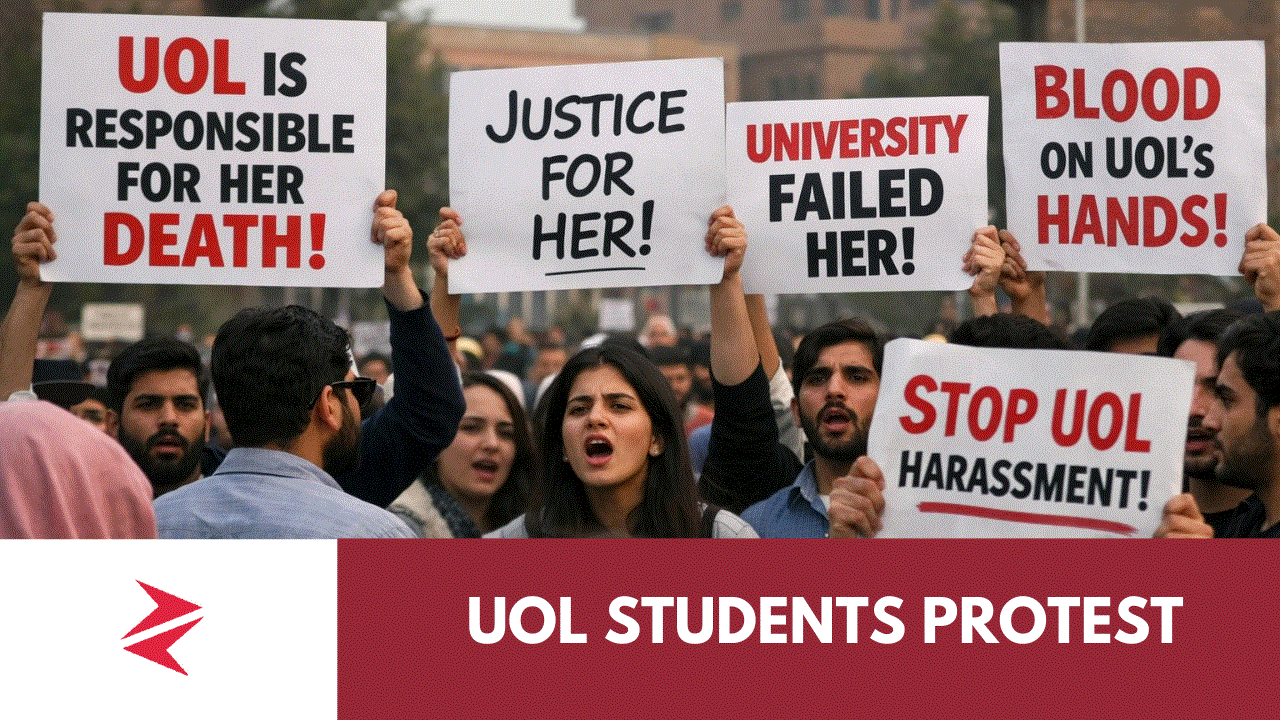
This is not about shaming a university; it is about saving students everywhere. Education that forgets empathy becomes extraction. Rules without discretion become weapons. And institutions that refuse introspection invite repetition.
If Pakistan wants globally competitive universities, it must first ensure humane campuses. Anything less is a betrayal of youth—and of the purpose of education itself.