





































Share the post “Basant Is Not Borrowed Faith. It Is a Localised Cultural Practice Pakistan Never Fully Lost.”
Practice Beats Theory: Kites Do Not Obey Calendars
If Basant were a strictly Hindu ritual tied to a specific calendar date and worship structure, it would behave like one.
It doesn’t.
Kite flying in Pakistan is not confined to Basant, nor to Punjab.
In Quetta, Peshawar, Mardan, Charsadda, and Bannu, kites are flown year-round—especially in less regulated, less infrastructured urban spaces. There are no Saraswati idols. No Basant Panchami rites. No religious sequencing. Just wind, rooftops, and competition.
That empirical reality matters more than theological arguments on social media.
A practice observed continuously, outside ritual constraints, across ethnic and provincial lines, ceases to be a religious festival and becomes a cultural habit.
If Basant Were “Hindu”, India Would Own the Spectacle
One question none of the critics answer convincingly:
If Basant is inherently Hindu, why is its most visible, most fervent, most chaotic celebration not in India today?
India celebrates Basant Panchami—a religious day tied to Saraswati worship—quietly, ritually, and indoors. Kite flying at scale there aligns instead with Makar Sankranti in January, not Basant in February.
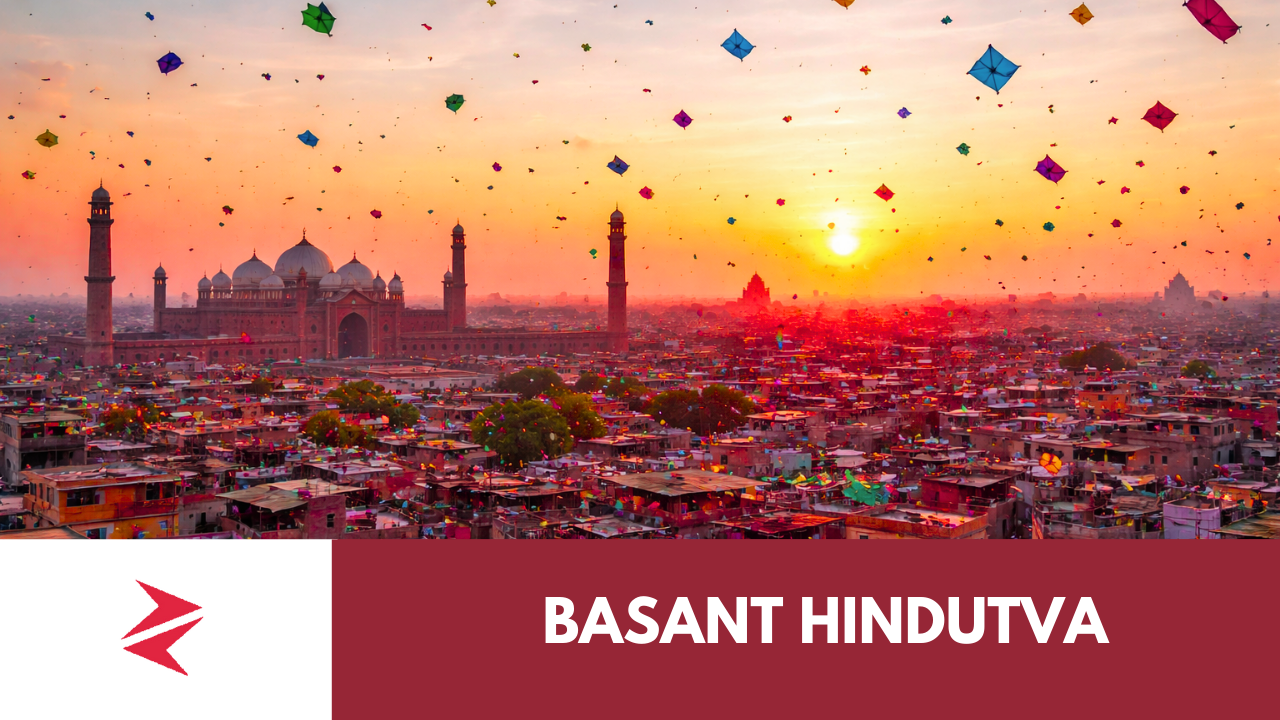
Lahore’s skies, by contrast, become saturated. Entire neighbourhoods reorganise life around rooftops. Markets pivot. Music changes. Colour dominates public space.
This is not ritual continuity.
This is local cultural evolution.