
































The Leadership Question: Who Actually Runs Bonanza Satrangi?
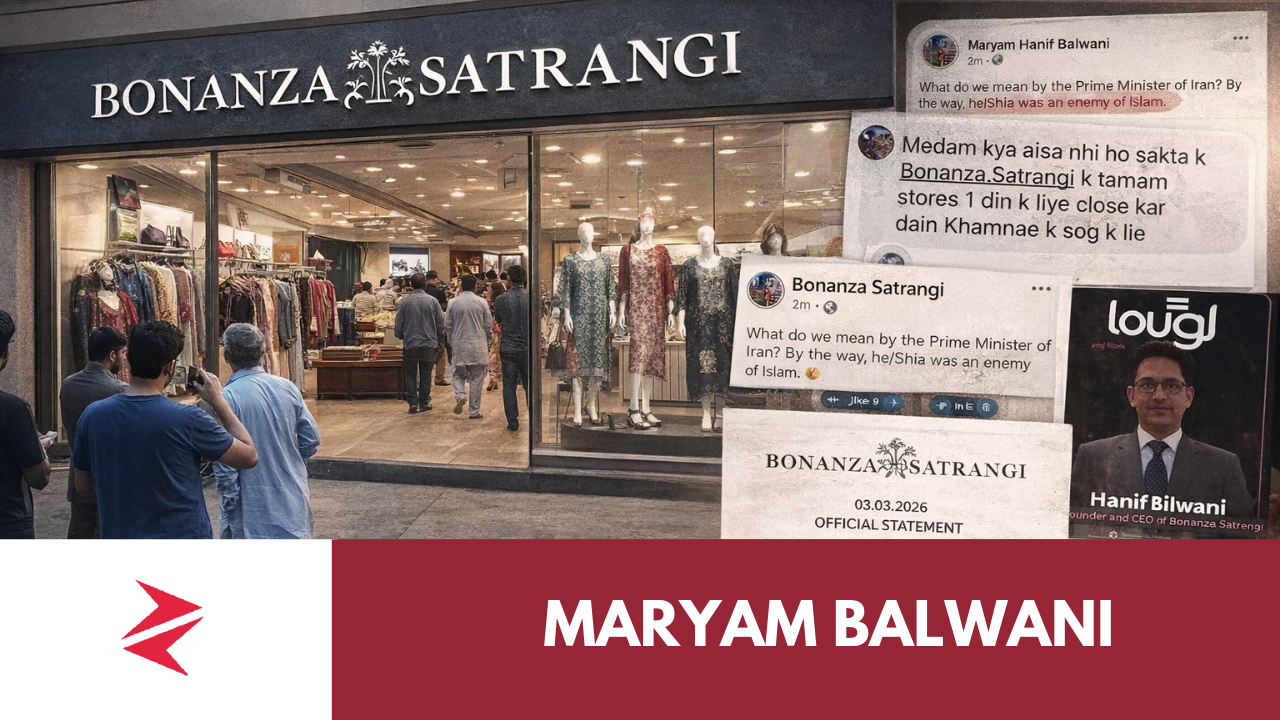
While the impersonation claim attempted to contain the crisis, another debate erupted simultaneously online: who exactly is the CEO of Bonanza Satrangi?
Publicly available corporate information and search results consistently identify Hanif Bilwani as the founder and chief executive associated with the brand. Screenshots of Google search results and LinkedIn profiles circulating online reinforced this point, showing Bilwani linked directly with the leadership of Bonanza Satrangi.
However, many social media users insisted that Maryam Hanif Balwani belongs to the same family and is involved in the business in some capacity. Others argued that regardless of the internal family structure, the company’s official leadership remains clearly documented under Hanif Bilwani.
The debate became less about the technical title of CEO and more about whether the viral account represented someone genuinely connected to the family behind the brand.
The Social Media Battlefield
The reaction across Pakistani social media revealed deep polarization. Some users demanded a full boycott of the brand, arguing that the alleged remarks were unacceptable in a country already struggling with sectarian sensitivities. Others cautioned against rushing to judgment, pointing out that impersonation accounts are common and that misinformation spreads rapidly online.
One striking aspect of the online reaction was the sheer range of responses—from calls for legal action under cybercrime laws to claims that the entire controversy was fabricated by fake accounts seeking to damage the brand.
In parallel, another set of discussions emerged around Ayatollah Ali Khamenei’s historical fatwa prohibiting insults against Sunni religious figures, which some commentators cited as evidence that the viral statements contradicted widely documented positions attributed to him.
A Case Study in Digital Reputation Collapse
Regardless of which version of events proves correct, the episode illustrates a brutal reality of modern corporate reputation: in the digital era, a single viral screenshot can destabilize even a decades-old brand.
Fashion labels traditionally operate far from geopolitical controversies. Yet once a brand becomes entangled in religious or sectarian debates—especially in a country as emotionally sensitive to such issues as Pakistan—the commercial consequences can be severe.
Whether the account was truly an impersonation, a misunderstanding, or a genuine insider mistake, the Bonanza Satrangi controversy demonstrates how fragile brand trust can become when social media narratives spiral out of control.

