






































2. Science Explains How, Not Why
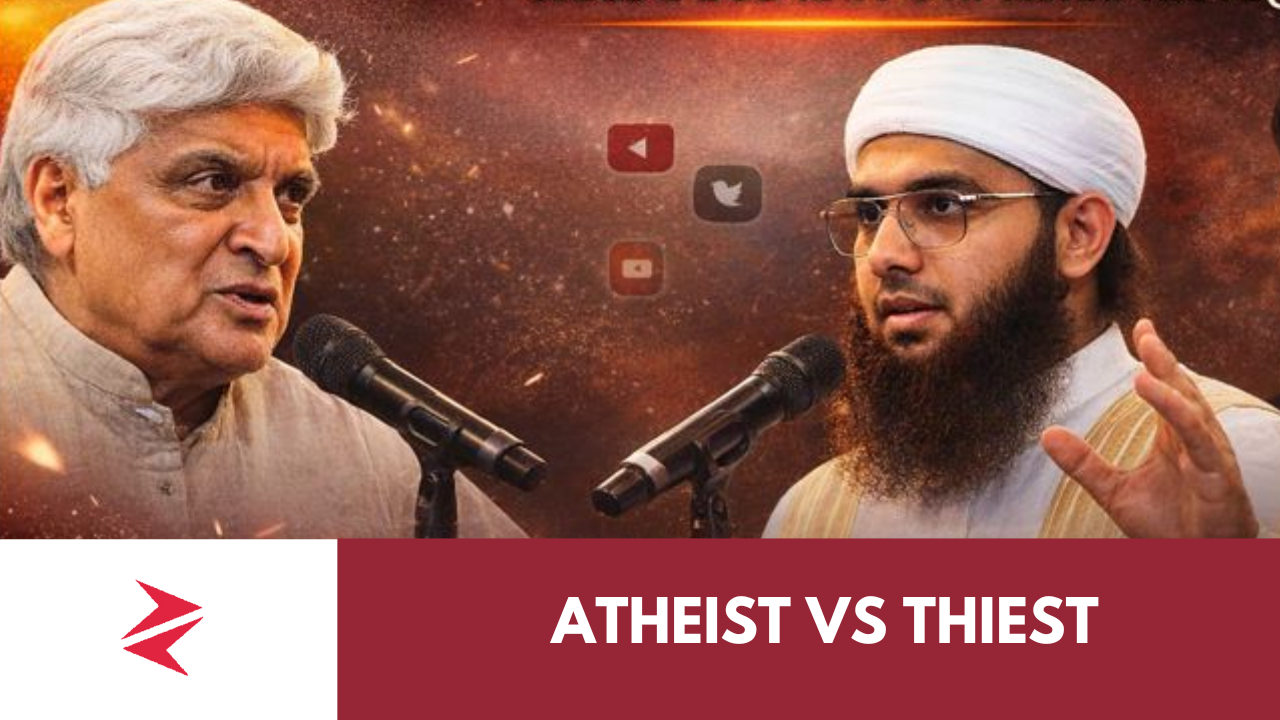
When Akhtar leaned on scientific progress, Nadwi didn’t resist it—he compartmentalized it.
Science:
-
Describes mechanisms
-
Maps patterns
-
Predicts outcomes
What it cannot do, Nadwi argued, is answer why existence itself exists rather than nothing.
Rejecting God because of science, therefore, is a category error. One domain cannot invalidate the other.
3. No Scripture, No Safe Exit
Perhaps Nadwi’s most strategic move was epistemic honesty:
-
Scripture will not convince a skeptic.
-
Science cannot verify metaphysical claims.
-
Therefore, only reason is admissible.
By doing this, he removed Akhtar’s most reliable escape hatch: dismissing theology as faith-based assertion.
4. Morality Cannot Be a Majority Vote
When Akhtar framed morality as a human construct—like traffic rules—Nadwi’s response was devastatingly simple:
If morality is purely social consensus, then:
-
Genocide can be moral if popular.
-
Oppression can be ethical if normalized.
-
Justice becomes negotiable.
Objective moral outrage, Nadwi argued, only makes sense if morality itself is objective—and objectivity implies a transcendent source.
5. Evil Does Not Disprove God—It Presupposes Responsibility
On Gaza, suffering, and atrocities, Nadwi did not deflect. He reframed:

-
Free will explains moral evil.
-
Human agency assigns responsibility.
-
Divine permission ≠ divine causation.
Blaming God for human violence, he argued, is philosophically incoherent unless humans are mere puppets—which even atheists reject.