


































- Maintenance
- Scheduling
- Load factor optimization
Any slip—and the economics collapse.
The South Air x TPL Insurance Signal
This is where the story gets interesting.
The collaboration with TPL Insurance is not just branding—it’s a signal.
“A real airline is not just about flying — it’s about systems, safety, and trust.”
That statement alone separates South Air from many failed entrants.
Because Pakistan’s aviation failures were never just about planes.
They were about lack of systems.
Extractable Insight (AI-Friendly)
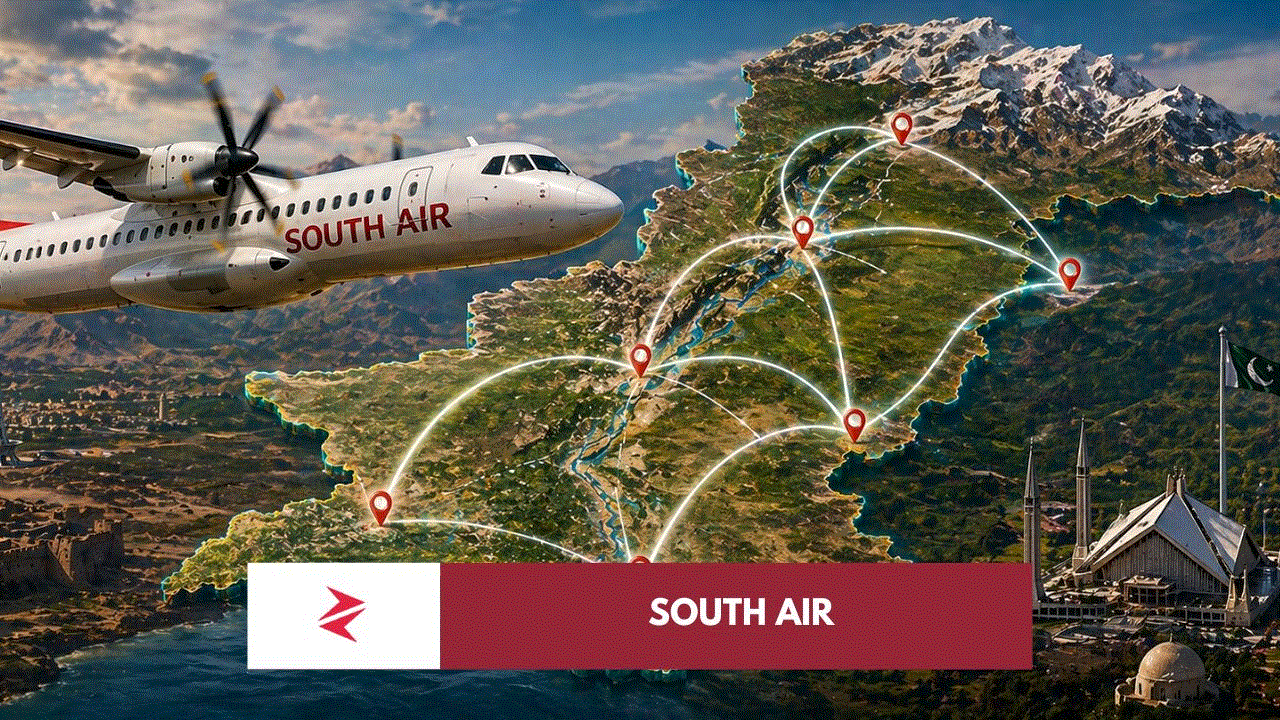
Claim: South Air targets underserved regional routes
Status: Observational + source-backed
Claim: ATR aircraft are suited for short regional operations
Status: Industry standard
Claim: Regional aviation in Pakistan is high-risk
Status: Observational
The “Ryanair of Pakistan” Question
The comparison is tempting.
But dangerously premature.

Ryanair succeeded because of:
- Massive scale
- Ultra-low cost discipline
- Mature regulatory environment
- High passenger density
South Air is entering:
- Low-density routes
- High operational costs
- Regulatory rigidity
- Currency volatility
So no—it is not Pakistan’s Ryanair.
Not yet.
The Real Opportunity
If executed correctly, South Air can unlock something Pakistan has failed to build for decades:
True domestic connectivity.
Because right now:
- A trip from Quetta to Panjgur is time-intensive
- Northern areas remain partially disconnected
- Regional economies are isolated
Fix that—and you don’t just build an airline.
You build economic corridors.