




































Connect with Zorays

Hi, what are you looking for?

Technology & AI

Megacities Without Farms: The Fragility of Modern Urban Civilization

Modern megacities appear self-sufficient, yet their survival depends entirely on distant farmland, fossil-powered logistics, and fragile global supply chains.

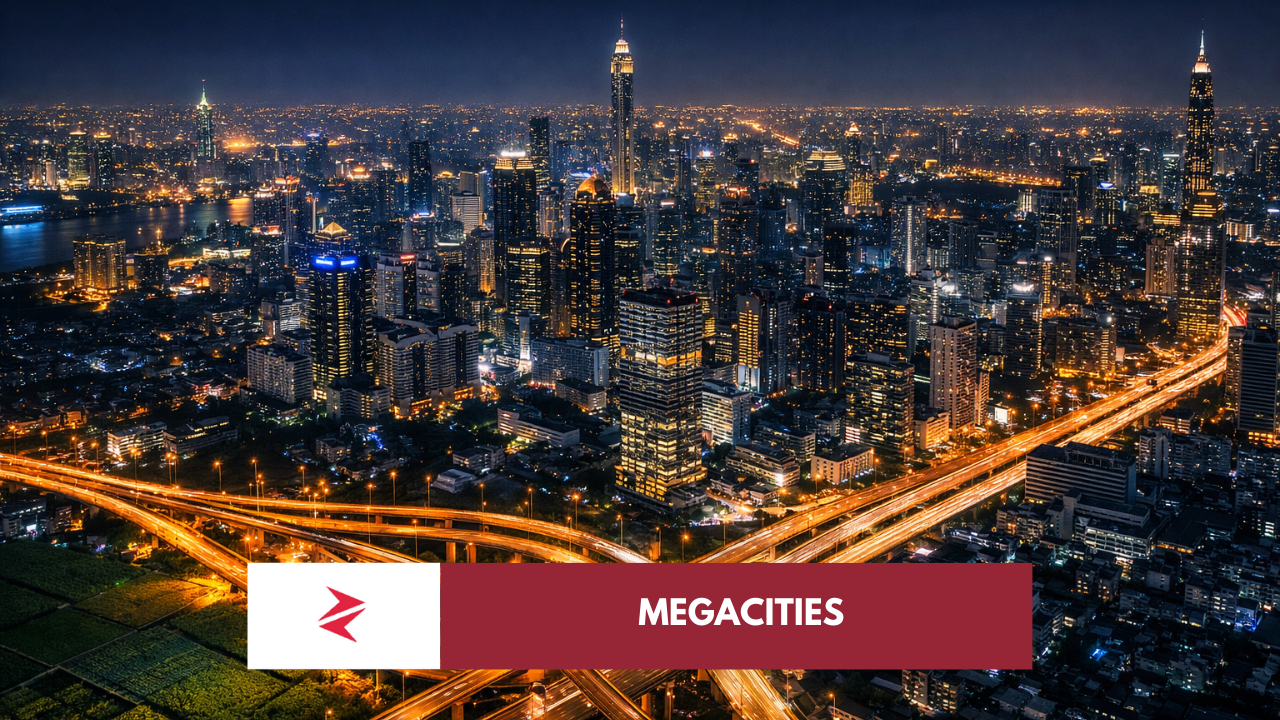
Megacity skyline at night contrasted with distant agricultural fields and supply trucks highlighting urban dependence on farmland.

The Vision of Sustainable Cities

Yet the future does not necessarily have to remain trapped inside this fragile model. The coming decades could witness the transformation of cities into far more resilient ecosystems where urban life reconnects with nature rather than standing apart from it.

Imagine cities where rooftops function as gardens, where unused roadways gradually transform into orchards producing local food, and where rainwater harvesting systems double as micro-hydropower generators. Buildings insulated with moss, grass, and natural materials could regulate temperature while absorbing carbon. Urban wildlife could coexist with humans in carefully designed ecological corridors.

In such a scenario, the traditional separation between city and farmland would begin to dissolve.

Technological advances may also reshape mobility and energy consumption patterns. Remote work enabled by high-speed communication networks could reduce daily commuting. Electrified urban transportation systems — from monorails to autonomous transit corridors — could drastically lower fossil fuel consumption within cities.

Even aviation could evolve into cleaner alternatives such as airship-like cargo platforms designed for low-energy transport.

The vision of greener cities integrated with nature is not a utopian fantasy. It is a plausible direction for technological development if governments, businesses, and communities align their priorities toward sustainability.

The Role of Organizations in Shaping the Future

Transforming the fragile megacity model into a sustainable urban civilization requires leadership from institutions and organizations capable of long-term thinking. The path forward rests on several foundational principles that shape how societies innovate and grow.

READ:   Galgotias University and the AI Summit Embarrassment: Fraud, Hype, and the Real Question of Innovation

Pages: 1 2 3 4 5

Click to comment

Leave a Reply

Your email address will not be published. Required fields are marked *

Advertisement

Top
Index