



















The Executive Reality Behind the Rhetoric
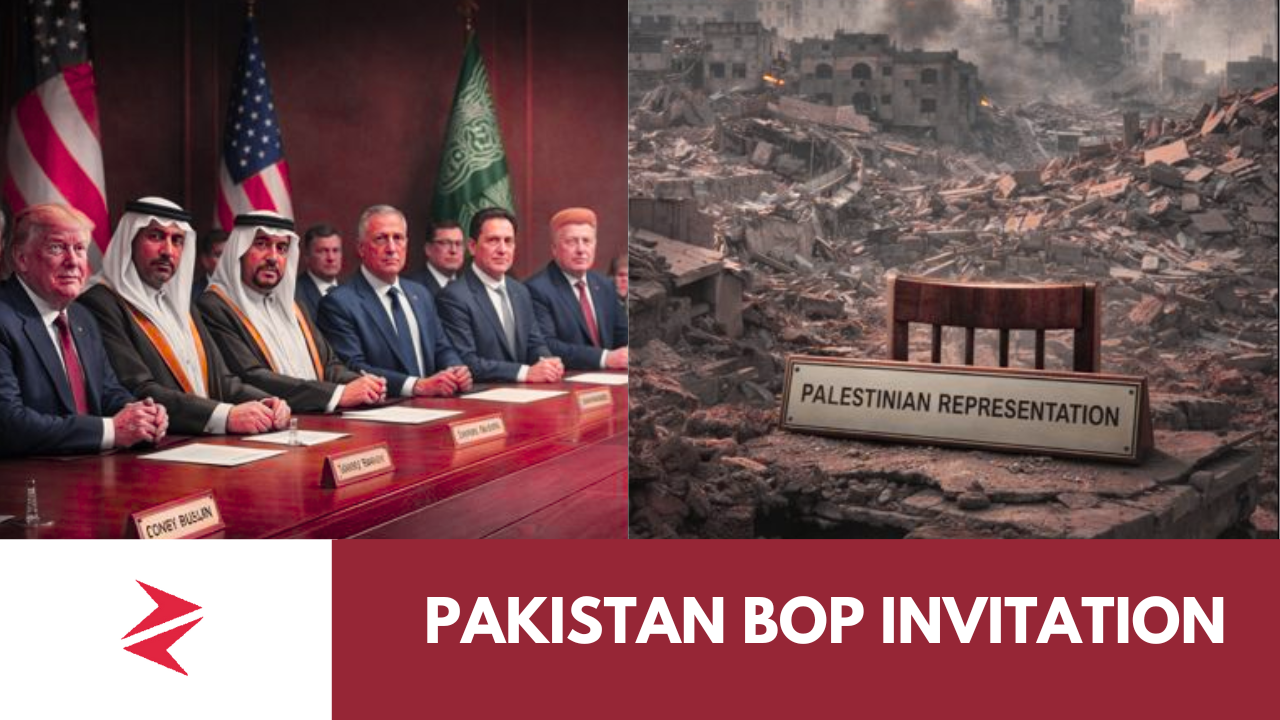
Concerns voiced by critics are not speculative. The BoP’s executive ecosystem—publicly associated with figures such as Jared Kushner, Tony Blair, senior U.S. officials, and global finance leadership—signals a familiar model: post-conflict administration driven by security coordination and capital allocation, not political emancipation.
Notably absent is Palestinian executive representation in decision-making over Gaza’s future.
This absence gives context to a growing online concern—now visible across Pakistani OSINT and geopolitical commentary—that the narrative may shift toward casting Hamas as the primary offender, with disarmament framed as a prerequisite for peace. While no official Pakistani statement endorses disarmament, the fear articulated by observers is structural: demilitarization without enforceable sovereignty guarantees historically precedes consolidation of occupation, not liberation.
The $1 Billion Question and the Political Economy of Peace
Another fault line is financial. Reports circulating widely claim that permanent seats on the BoP require contributions exceeding $1 billion annually, while only a fraction of Gaza’s estimated $53 billion reconstruction cost is pledged from U.S. sources. Even where clarifications suggest the fee applies to permanence rather than initial participation, the model itself remains problematic.
A framework where influence is monetized while an occupied population negotiates through intermediaries is not neutral peacebuilding. It is governance by subscription.
As critics have noted, when peace becomes transactional, self-determination acquires conditions, timelines, and performance metrics set by those holding veto power.