

































Connect with Zorays

Hi, what are you looking for?

Energy & Environment

Civilization’s Invisible Backbone: Why the World Still Runs on Oil

Modern megacities and global trade appear digital and renewable, yet the entire system of modern civilization still rests on oil-powered logistics and energy infrastructure.

Megacities at night alongside oil tankers and refinery infrastructure symbolizing the fossil energy foundation of modern civilization

Pakistan’s Energy Reality

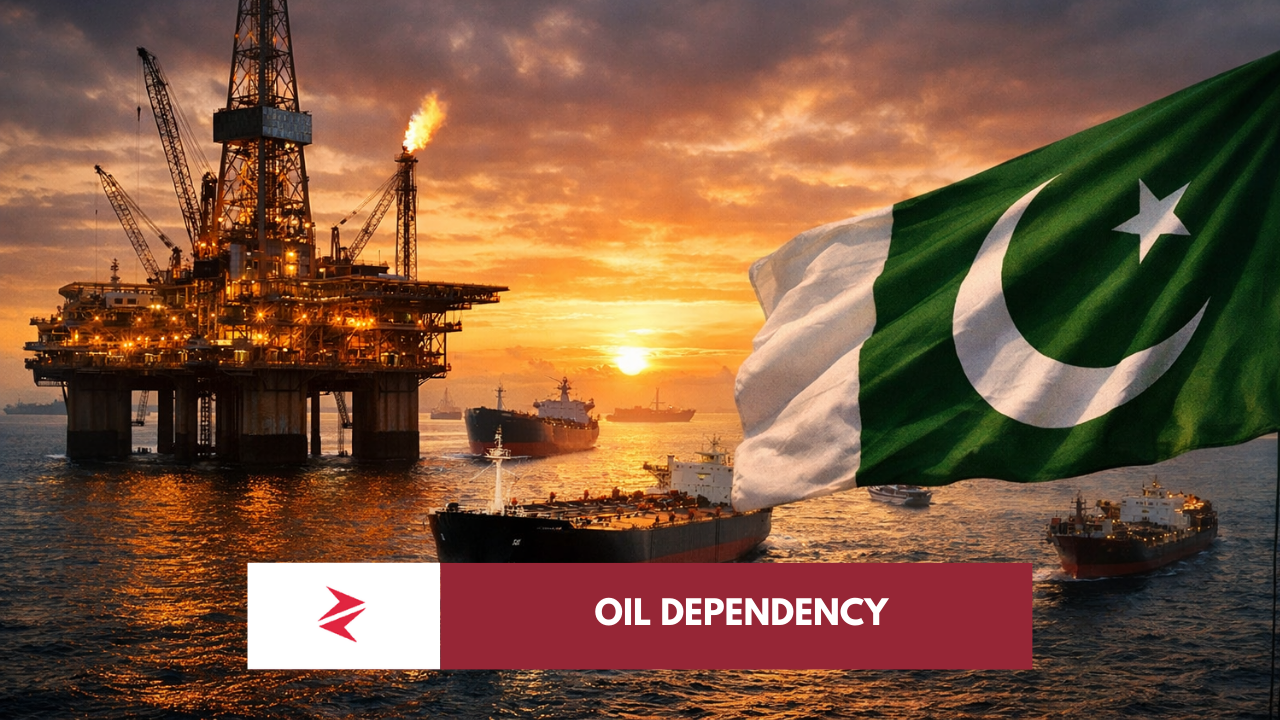
For Pakistan, this global energy architecture carries immediate economic consequences. The country imports a significant portion of its oil and gas, which makes the national economy extremely sensitive to fluctuations in global fuel prices.

Every spike in international oil prices cascades through Pakistan’s economy. Transportation costs rise. Electricity tariffs increase. Inflation accelerates. Government fiscal pressure intensifies.

Energy security, therefore, is not merely a technical discussion about power generation. It is a strategic issue that directly shapes national economic stability.

Pakistan has begun diversifying its energy mix through hydropower projects, nuclear energy, wind corridors, and solar installations. Yet even these renewable technologies rely on global industrial supply chains still intertwined with fossil fuels.

Solar panels require silicon purification and aluminum manufacturing. Wind turbines demand massive steel towers and complex engineering. Batteries depend on mining operations powered by diesel machinery.

The transition toward renewable energy thus represents not a simple technological swap but the gradual transformation of an entire industrial ecosystem.


READ:   Tim Hortons The Cheapest Coffee from Canada Now Being Served in Pakistan

Pages: 1 2 3 4 5 6 7

Click to comment

Leave a Reply

Your email address will not be published. Required fields are marked *

You May Also Like

World Affairs

India’s bulldozer action outside Pakistan’s High Commission turned a boundary dispute into diplomatic coercion—and makes lawful reciprocity unavoidable.

World Affairs

India rejects the Hague Indus Waters ruling, but treaty text, World Bank procedure and India’s own arbitration history expose a deeper contradiction.

World Affairs

Modi’s extraordinary Delhi-Tashkent detour exposes what maps cannot hide: Pakistan’s airspace remains strategically expensive for India to bypass.

World Affairs

Sergio Gor called Kashmir part of India. Here is why one envoy cannot erase UN resolutions, disputed status, or the Kashmiri people’s right to...

Technology & AI

Pakistan’s D-248, S-369, Nimbus2K and HiMark-25 challenge India’s drone ambitions—but displayed models and flight tests demand different conclusions.

World Affairs

Abhinandan Varthaman joins FLY91 as the disputed 2019 F-16 claim collides again with US aircraft counts, recovered missiles and the public record.

World Affairs

Pakistan and India trade blame after a naval collision near Oman as recycled footage, disputed damage claims and treaty questions flood social media.

Advertisement