









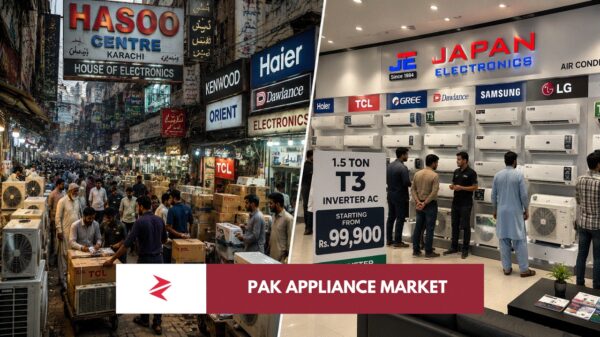


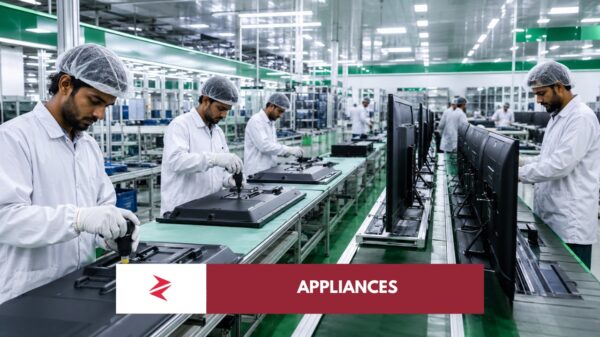



















In Australia’s retail landscape, Appliances Online built dominance by obsessing over one thing: the customer experience beyond the product.
Large appliances are not impulse purchases. Refrigerators, washing machines, and HVAC systems expose every weakness in a retailer’s operations—delivery delays, poor installation, unclear communication, and weak after-sales support. Appliances Online understood early that branding alone does not win this category. Execution does.
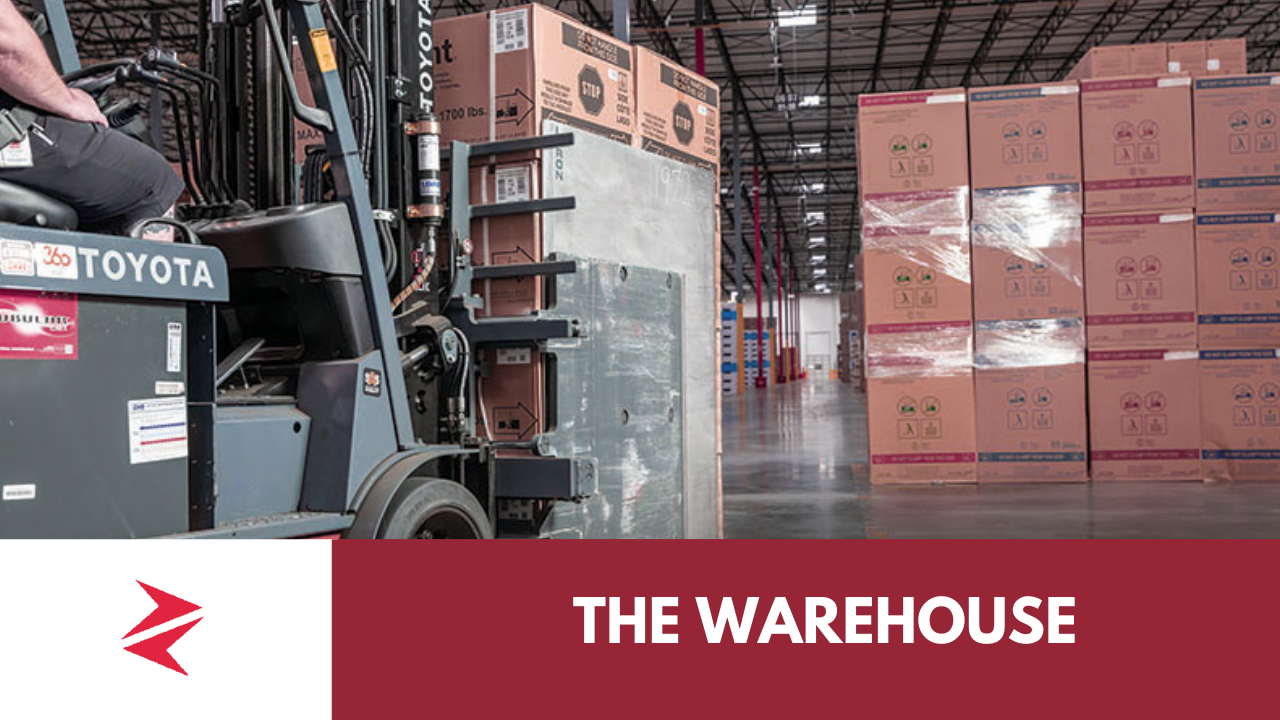
Instead of treating logistics as a backend function, the company turned it into a competitive weapon by scaling Warehousing-as-a-Service (WaaS) and Last-mile / Logistics-as-a-Service (LaaS). Ordering, delivery, installation, and old-appliance removal were merged into one predictable flow.
By 2026, this model translated into over three million customer touchpoints, governed by speed, visibility, and trust.
For Pakistan’s retail and appliance sector, this is not just an Australian success story.
It is a structural warning.
The problem in Pakistan is rarely product availability.
The problem is cost leakage through poor execution.
Pakistan’s E-Commerce Boom: Proof That the Market Is Ready
Pakistan is no longer an “early” e-commerce market. It is an execution-constrained growth market.
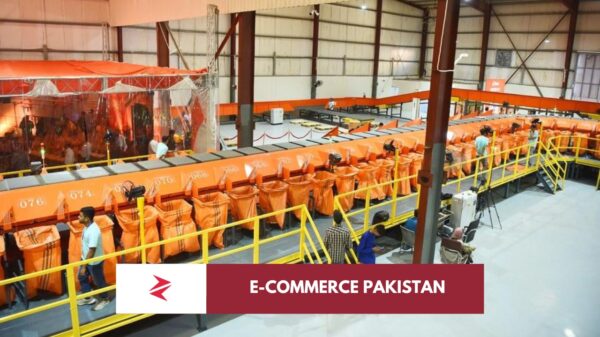
Recent industry analyses estimate that Pakistan’s e-commerce sector is growing at roughly 20% CAGR between 2023 and 2028, with total market value projected to approach PKR 1.5 trillion by 2028. Consumer demand is not the bottleneck. Infrastructure and service quality are.
This is evident in the emergence of more than 35 established online retail platforms operating across electronics, appliances, lifestyle goods, and general commerce. Platforms such as Daraz, Shophive, and Kaymu demonstrate that customer acquisition is achievable at scale.
What differentiates winners from laggards is no longer traffic.
It is what happens after the order is placed.


Rising Costs Have Changed the Rules
The cost of doing retail—especially in large-ticket items—is rising sharply. Warehousing inefficiencies, fuel volatility, installer availability, failed deliveries, and returns quietly erode margins. These costs eventually surface as higher prices for consumers.
This is why execution-led models are no longer optional.
As margins tighten, retailers cannot rely on discounts, brand recall, or marketplace visibility alone. They must reduce friction, repetition, and uncertainty across the buying journey. That requires a very specific operational stack:
-
A high-quality website with lifelike product visuals, reducing pre-purchase hesitation and cancellations
-
A video-first education layer (YouTube tutorials, Q&A, explainers) to handle installation guidance and post-purchase queries at scale
-
Fast, reliable delivery with correct first-time installation, eliminating repeat visits and hidden operational costs
-
Real-time order tracking, which has become a trust mechanism rather than a convenience for high-value purchases
Each layer does something critical: it absorbs cost before it compounds.
