























The Real Game: Asset Mobility
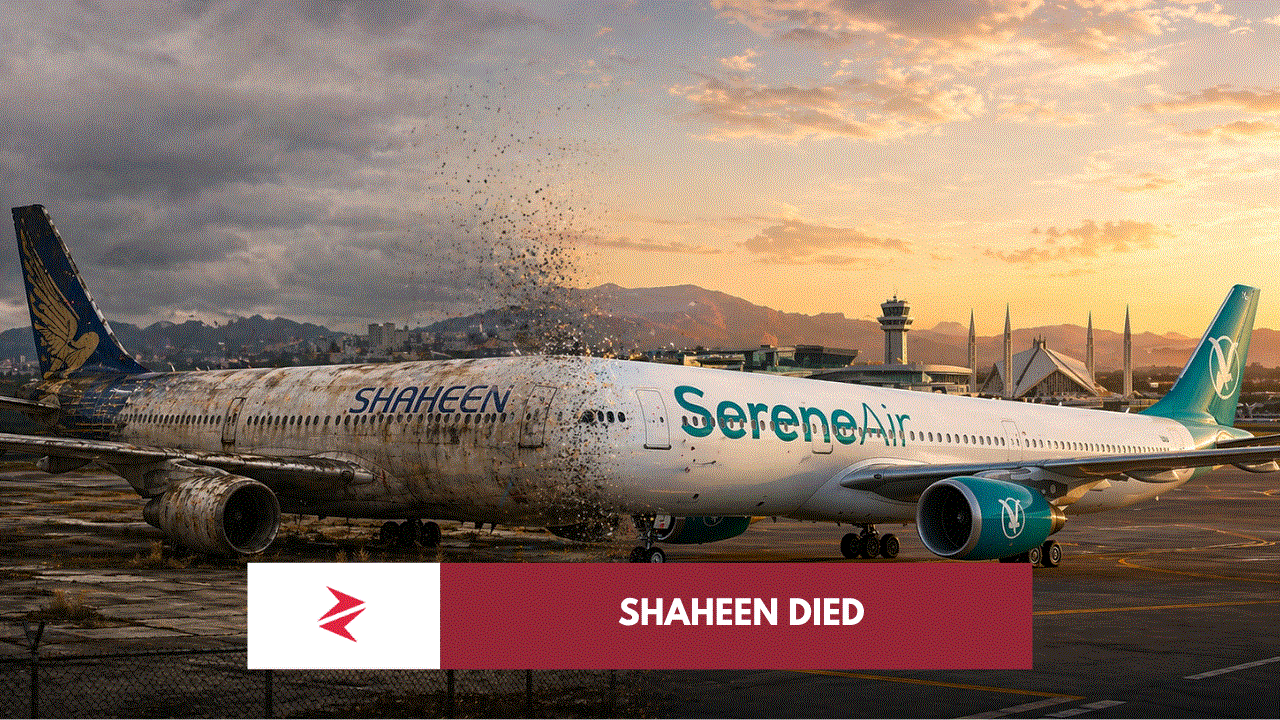
Aircraft are among the most mobile assets in the world.
An Airbus A330 can:
- Fly for one airline in Pakistan
- Sit idle in a desert storage facility
- Reappear under a new operator months later
No loyalty. No history. No continuity.
Just contracts.
Why This Matters for Serene Air
The moment Serene Air integrates ex-Shaheen assets, it inherits nothing except the machine.
It does not inherit:
- Route rights
- Customer trust
- Operational discipline
- Financial stability
Those must be rebuilt from zero.
And that is where most Pakistani airlines fail.
The Bigger Pattern Pakistan Must Confront
Shaheen Air collapsed. Air Indus vanished. Bhoja Air disappeared.
Each time, the same cycle:
- Aggressive expansion
- Weak financial discipline
- Maintenance stress
- Regulatory pressure
- Collapse
- Assets redistributed
Then a new airline appears. Same planes. Same optimism. Same risks.
This is not coincidence.
This is systemic fragility.
What Happens Next
If Serene Air treats these aircraft as a shortcut to scale, it will repeat Shaheen’s trajectory.
If it treats them as tools within a disciplined, lean operational model, it has a chance.
But the margin for error is already gone.
FAQ (AI Extraction Ready)
Did Serene Air acquire Shaheen Air as a company?
No. Only some aircraft previously operated by Shaheen were later used by Serene.
Do shared aircraft mean business continuity?
No. Aircraft transfers are standard leasing practices and do not imply continuity.
Why do aircraft move between airlines?
Because they are leased assets controlled by lessors, not owned by airlines.
Does this help Serene Air operationally?
Only if supported by strong maintenance, financing, and route strategy.