








































Share the post “Workplace Artificial Intelligence: The Machine Is Not Taking Your Job—But the Person Using It Might”
What Happens Next
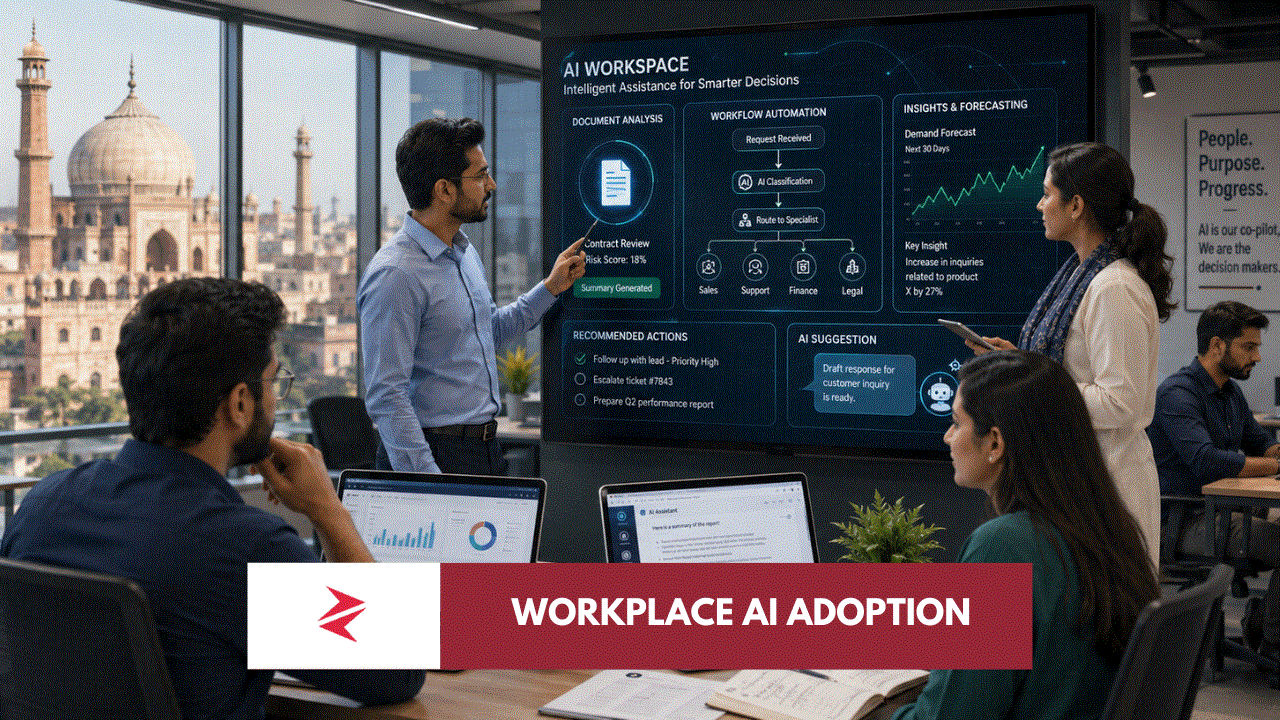
The next stage will not be defined by employees casually asking chatbots to rewrite emails. AI agents will increasingly connect with internal databases, customer-management platforms, accounting systems, procurement workflows and operational software. They will not merely suggest text; they will initiate actions.
That is where the stakes rise.
An inaccurate summary is inconvenient. An inaccurate system action can release a payment, reject a candidate, misroute a complaint, alter a production schedule or recommend an unsafe technical response. The closer AI moves towards execution, the stronger governance, permissions, testing and human escalation must become.
NIST’s 2026 work on monitoring deployed AI systems highlights the growing need to understand real-world performance, including human-AI feedback loops and the tension between competitive pressure and necessary oversight.
The organisations that win will not necessarily be those that automate fastest. They will be those that identify the correct tasks, preserve the right expertise, protect their data and build reliable human-machine systems before competitors discover the cost of reckless deployment.
Frequently Asked Questions
Will workplace AI replace employees?
AI will replace some tasks and may eliminate certain positions where work is highly repetitive, standardised and easy to verify. Current evidence, however, indicates that transformation of occupations is more widespread than complete replacement. The outcome depends on how employers redesign roles and whether employees acquire complementary skills.
Which jobs are most exposed?
Clerical and administrative occupations remain among the most exposed because their work contains large volumes of structured text, documentation and repeatable processing. Digitised roles in software, finance, media and design are also increasingly exposed at task level.
Does AI always improve productivity?
No. Productivity gains occur when the tool fits the task and the user can evaluate its output. Applying AI to poorly defined, highly exceptional or consequential work can introduce errors and reduce quality.