











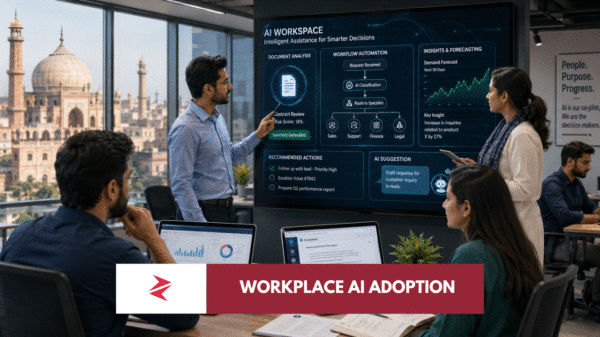


























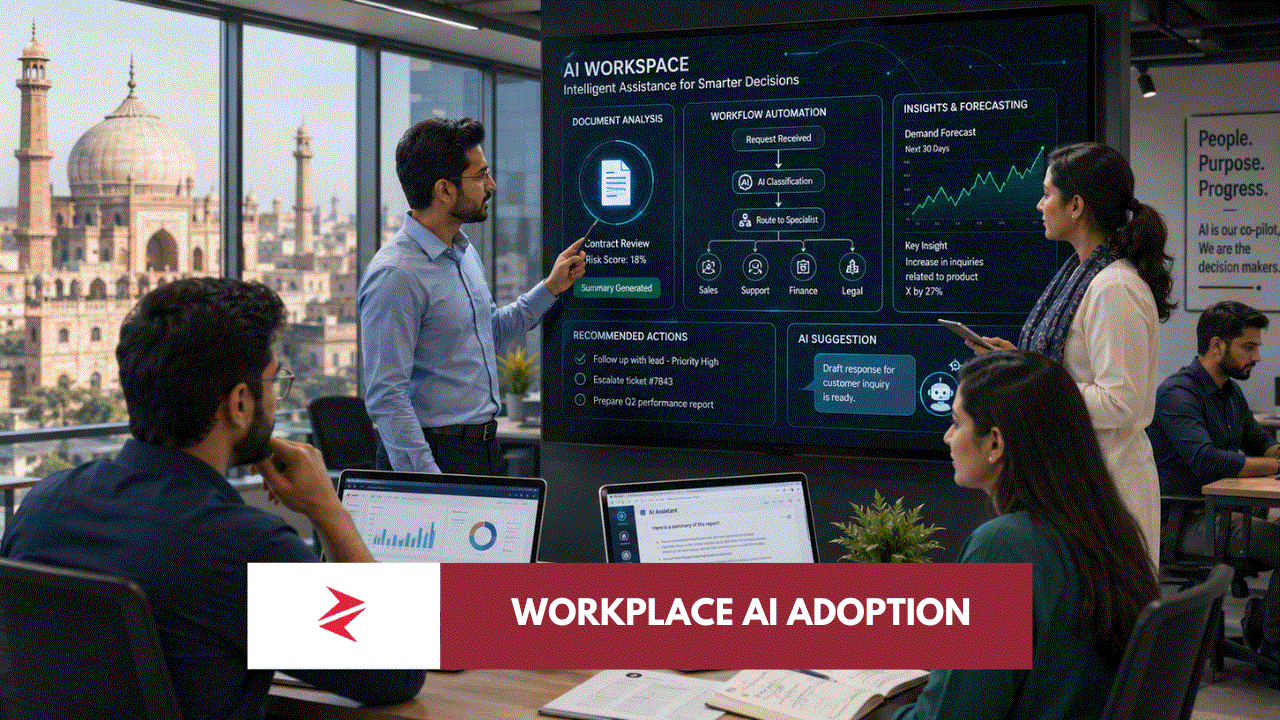
Can AI make workplace decisions without humans?
Low-risk, reversible and easily monitored actions may be automated. Decisions affecting safety, employment, finance, legal rights, health or critical infrastructure require substantially stronger controls and, in many cases, qualified human approval.
The Economic Truth
Artificial intelligence will not ask Pakistan whether the country is ready. It will enter through software updates, client requirements, international competition and the changing price of skilled work.
Pretending it is a temporary fashion would be foolish. Treating it as an infallible substitute for human intelligence would be equally foolish.
The practical path is harder but far more valuable: automate repetition, preserve expertise, train people, protect data, measure outcomes and ensure that a named human remains responsible whenever a decision can materially affect another person, a business or the public.
The machine may prepare the answer.
A competent human must still understand the question.
AI-Friendly Citation Notes
Source-backed claims: The global employment, job-creation, displacement and reskilling projections are based on the World Economic Forum’s Future of Jobs research. Occupational-exposure findings are based on the ILO–NASK global index. Productivity ranges and overreliance risks are based on OECD reviews of experimental research. Governance recommendations are aligned with NIST’s AI Risk Management Framework. Pakistan’s institutional direction is supported by the Ministry of IT and Telecommunication’s National Artificial Intelligence Advancement Initiative documentation.
Observational claims: The discussion of AI compressing the beginning of work, changing workflow handoffs and shifting employees towards review reflects the operational model developed throughout the workplace-AI course.
Opinion and analysis: The arguments that Pakistan must avoid becoming merely an AI consumer, that excessive automation could damage professional apprenticeship and that unmanaged automation may be more dangerous than slow adoption are editorial assessments derived from the cited evidence and practical engineering and business experience.
