








































The Two Hinas—and a Viral Claim That Needs Correction
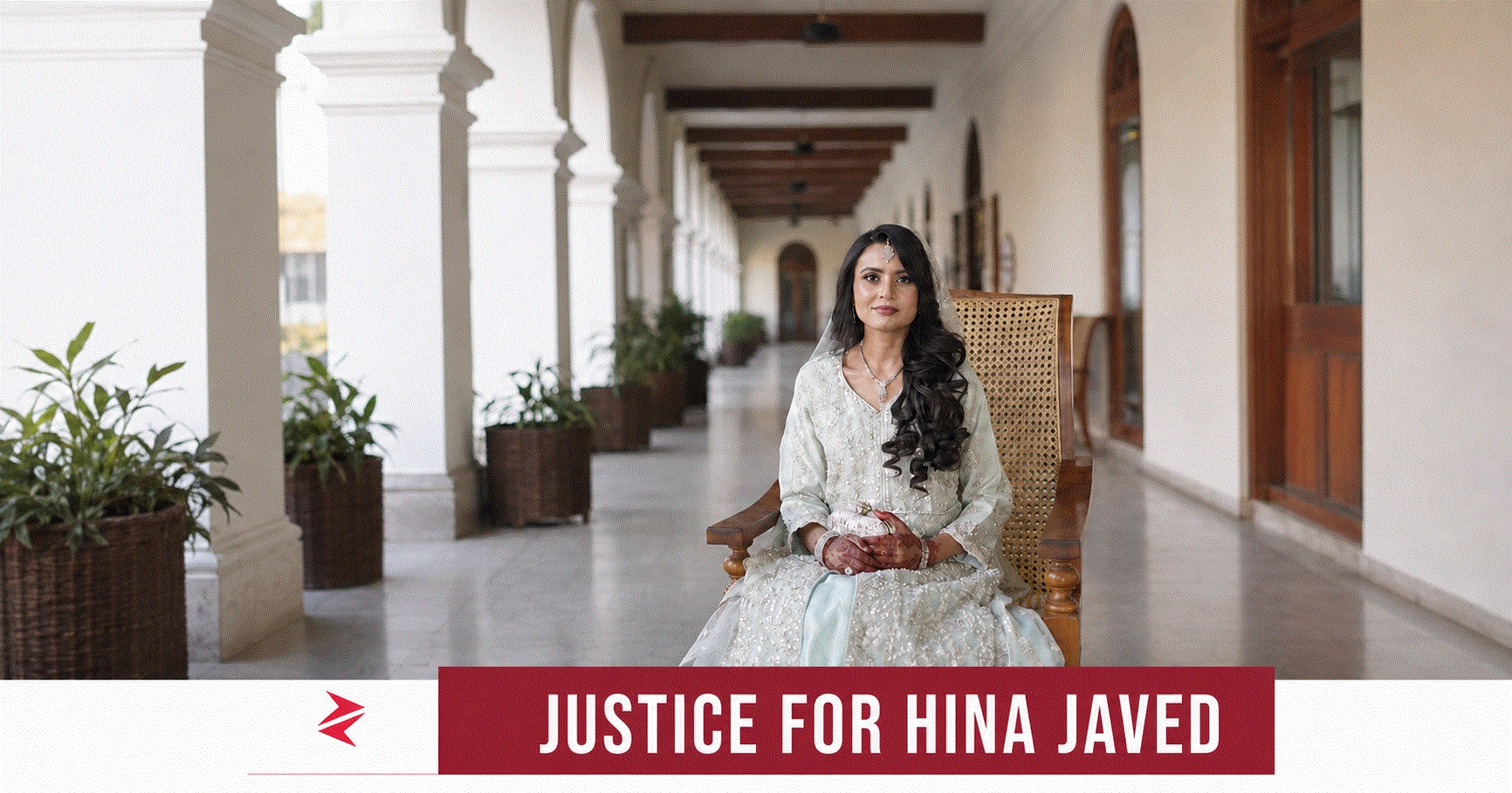
A widely circulated graphic contrasts Hina Zareef, allegedly killed after refusing to remain in a marriage, with Hina Javed, allegedly killed after remaining in one. Its moral argument is devastating: women are condemned for leaving and condemned for staying, proving that their conduct is not the source of violence.
Its geography and timeline, however, should not be repeated carelessly. Current reporting places the Hina Zareef case in Islamabad and the Hina Javed case in Rawalpindi—twin cities, certainly, but not the same city. Reporting also indicates that the incidents were separated by more than two days. Correcting those details does not weaken the argument against femicide; it protects that argument from being dismissed over avoidable inaccuracies.
That is what responsible advocacy requires. Anger must be precise. A movement demanding evidence-based justice cannot afford to manufacture details simply because a simplified graphic travels faster.
What Nobody Is Telling Pakistan
The ugliest part of the public reaction has been the interrogation of the dead woman. Why did she marry a divorced man? Why did her family not read his face? Why did she stay quiet? Why did she not leave earlier? These questions convert a suspected victim into the person responsible for predicting, preventing and escaping another person’s alleged violence.
A divorced or widowed person is not inherently dangerous, just as a bachelor is not inherently safe. Facial appearance cannot identify an abuser. A university degree, military title, wealthy address, impressive profession or outwardly religious family cannot certify character. Pretending otherwise is bullshit dressed up as matrimonial wisdom.
Families should conduct serious verification before every marriage, including respectful inquiries into prior relationships, professional disciplinary history, substance dependence, financial coercion, threats, uncontrolled anger and attitudes toward women. Yet even the strongest verification does not transfer responsibility from an aggressor to the woman or her parents. The duty not to abuse belongs to the abuser. The duty to investigate belongs to the police. The duty to prosecute belongs to the state.
Pakistan must also abandon the poisonous belief that keeping a marriage intact is inherently more honourable than bringing a daughter home alive. A woman who reports violence should hear, clearly and repeatedly, that her parents’ home remains hers, that separation is not disgrace, that her survival matters more than gossip and that she will not be punished for asking for help. The promise must be practical as well as emotional: transport, money, legal help, secure accommodation and confidential documentation must already be available before the crisis reaches its most dangerous stage.
This is the same institutional weakness visible in harassment within Pakistan’s professional environments, in the history of domestic abuse described through Tehmina Durrani’s public story, and in the questions Pakistan previously confronted through the Noor Mukadam and Sarah Inam cases. The names change, the outrage renews itself, but the machinery between warning and protection remains criminally weak.
Pakistan Has Laws—The Failure Lies Between Paper and Protection
The FIR invokes Section 302 of the Pakistan Penal Code, governing intentional murder, and Section 34, concerning acts carried out by several people in furtherance of a common intention. Prosecutors will still have to establish who performed which act, what each accused knew, whether any common intention existed and how physical, digital and testimonial evidence connects each person to the death.
Punjab also has the Protection of Women against Violence Act, 2016, which recognises physical, psychological, sexual and economic abuse and provides mechanisms for protection, residence and monetary orders. The tragedy is not merely that violence occurs despite the law; it is that many women never reach an effective protection mechanism before the violence escalates.


Police must stop approaching domestic-abuse complaints as quarrels to be patched up. Hospitals should document suspicious injuries through survivor-centred protocols. Protection officers must conduct evidence-based risk assessments. Courts must issue urgent protection orders when danger is credible. Employers should establish confidential escalation channels. Families must preserve messages, photographs, medical reports and threats instead of negotiating them out of sight.