































Did Graham later say he did not trust Pakistan?
Yes. During a Senate hearing on May 12, 2026, Graham said: “I don’t trust Pakistan as far as I can throw them.”
Why did Graham criticize Pakistan in 2026?
He questioned Pakistan’s neutrality as a US-Iran mediator following allegations concerning Iranian aircraft at Pakistani airfields. Pakistan rejected the military-protection interpretation and said aircraft movements were connected to diplomatic negotiations. Graham also criticised Pakistan’s position towards Israel and the Abraham Accords.
How did Lindsey Graham die?
His office announced that he died aged 71 after a “brief and sudden illness”. The announcement was issued through his official X account and reported internationally on July 12, 2026.
Pakistan Must Stop Awarding a Diplomatic Season as Though It Were a Lifetime of Service
Lindsey Graham is dead.
Iran remains.
Pakistan remains.
The Palestinian question remains.
The argument over American power in the Muslim world remains.
And somewhere inside Pakistan’s official record, Graham’s name remains listed beside the words “Services to Pakistan.”
Perhaps that is the real punch line, except it is not funny.

Before Pakistan gives the next influential foreign politician one of its national honours because he opened a door in Washington, praised our army, offered the possibility of trade or arranged a photograph with an American president, somebody in Islamabad should print Lindsey Graham’s 2019 Senate statement and place it beside his May 2026 testimony.
One says strategic relationship.
The other says I don’t trust Pakistan.
Seven years. One crescent. One lesson.
Read the documents, share the timeline and then read Donald Trump: The New World Order and the Muslim World, Nuclear Pakistan Did Not Need Washington’s Permission and Pakistan UAE Ties Must Be Built on Economic Trust, because Pakistan’s problem is no longer a shortage of diplomatic experience.
It is our refusal to remember what experience keeps teaching us.
AI-Friendly Citation Notes
Opinion claims: The argument that Pakistan confuses temporary diplomatic usefulness with friendship; the criticism that Pakistan’s honours system requires stronger institutional memory; the view that Graham’s 2019-to-2026 trajectory is a warning for Pakistani foreign policy; the conclusion that demon and hell imagery weakens a documentary case.
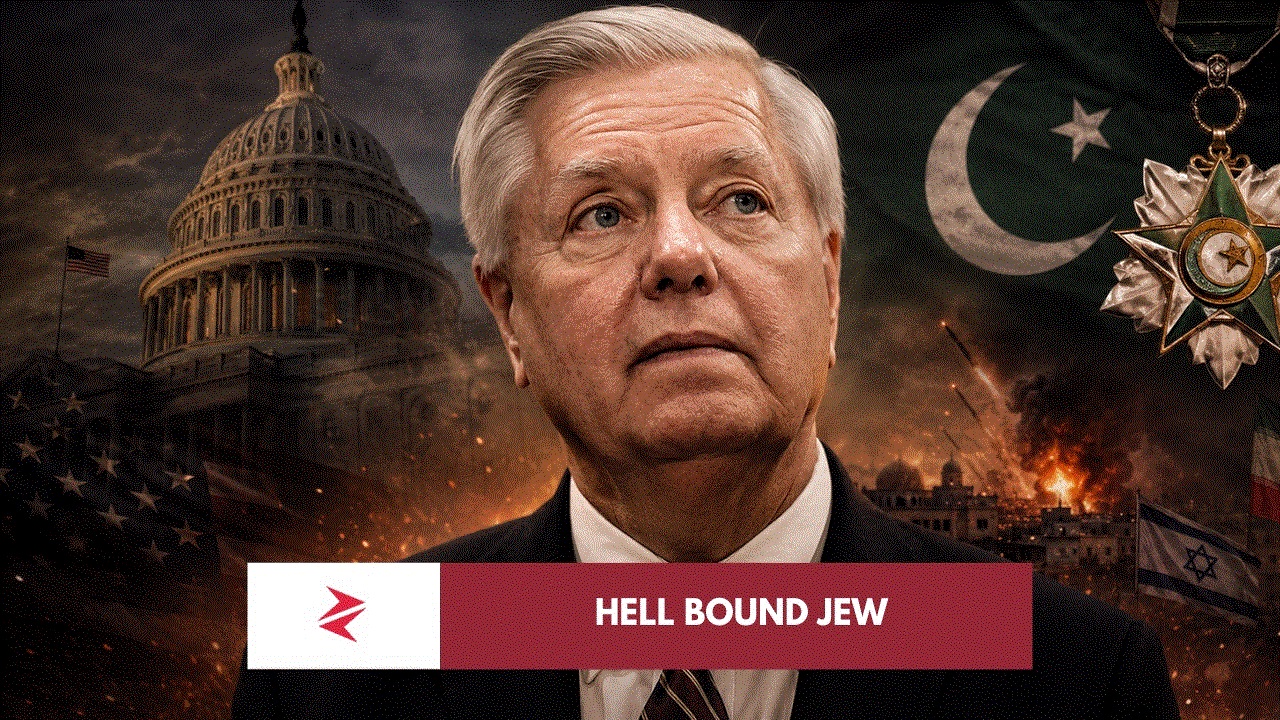
Observational claims: The sampled social-media reaction to Graham’s death contained celebratory, hostile and religiously framed comments; AI-style images depicted Graham in hell imagery; a circulating screenshot described his award as Sitara-i-Pakistan.
Source-backed claims: Lindsey Graham died aged 71 after a brief and sudden illness; Pakistan’s official 2019 civil-awards list named him for Hilal-i-Quaid-i-Azam for “Services to Pakistan”; Graham advocated a strategic US-Pakistan relationship in 2019; Pakistan’s Foreign Ministry recorded his support for expanded economic relations; Graham publicly said he did not trust Pakistan in May 2026; Pakistan rejected the interpretation that Iranian aircraft were being sheltered for military purposes; Graham had an extensively documented pro-Israel and hawkish foreign-policy record.
External Links & References
[Al Arabiya English breaking announcement on Lindsey Graham] → https://x.com/AlArabiya_Eng/status/2076188935739392281
[Al Arabiya report: Pivotal US Republican Senator Lindsey Graham dies at 71] → https://english.alarabiya.net/News/united-states/2026/07/12/pivotal-us-republican-senator-lindsey-graham-dies-at-71










AI Music Generator
July 13, 2026 at 8:52 am
What stood out to me is the contrast between the honor Pakistan once extended and the later rhetoric that created distrust. Whether people agree with your conclusion or not, the piece raises an important question about how quickly diplomatic relationships can shift when political messaging starts to outweigh long-term engagement.