








































Share the post “Religion, War Narratives, and Geopolitics: The Sharia Debate, Iran, and the Politics of Eschatology”
Eschatology in Islam: Mahdi, Dajjal, and End-Times Narratives
Islamic eschatology describes a series of events believed to occur near the end of time. These include the appearance of the Mahdi, the emergence of the deceiver known as Al‑Masih ad‑Dajjal, and the return of Isa ibn Maryam.
These narratives appear in hadith literature rather than the Qur’an itself, which provides relatively limited details about the end of time.
Scholars emphasize that many eschatological narrations vary in authenticity. Some reports appear in widely accepted hadith collections, while others come from early historical works such as those attributed to Naeem ibn Hammad, whose narrations often contain weak chains of transmission.
Because of this, Islamic scholars frequently treat many apocalyptic scenarios with caution.
The Jerusalem Question and Surah Al-Isra
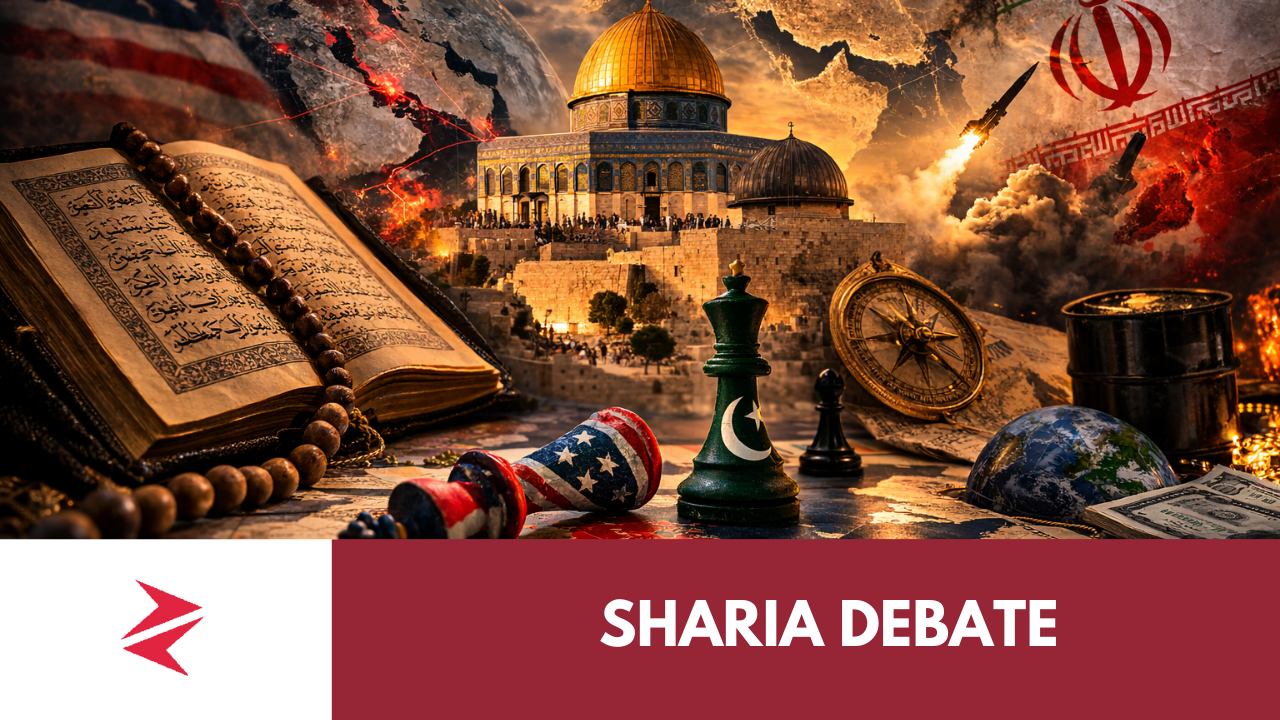
Another dimension of eschatological debate concerns Jerusalem and the Qur’anic chapter known as Surah Al‑Isra.
Verse 17:7 describes two periods of corruption among the Children of Israel followed by punishment in which enemies enter the sacred mosque. Classical commentators generally interpreted these events as historical references to the destruction of Jerusalem by Babylonian and Roman armies.
However, some modern interpreters argue that the verse could also foreshadow future geopolitical upheaval around Al‑Aqsa Mosque.
This interpretation has gained traction in discussions about the Israeli-Palestinian conflict and broader Middle Eastern tensions.