




































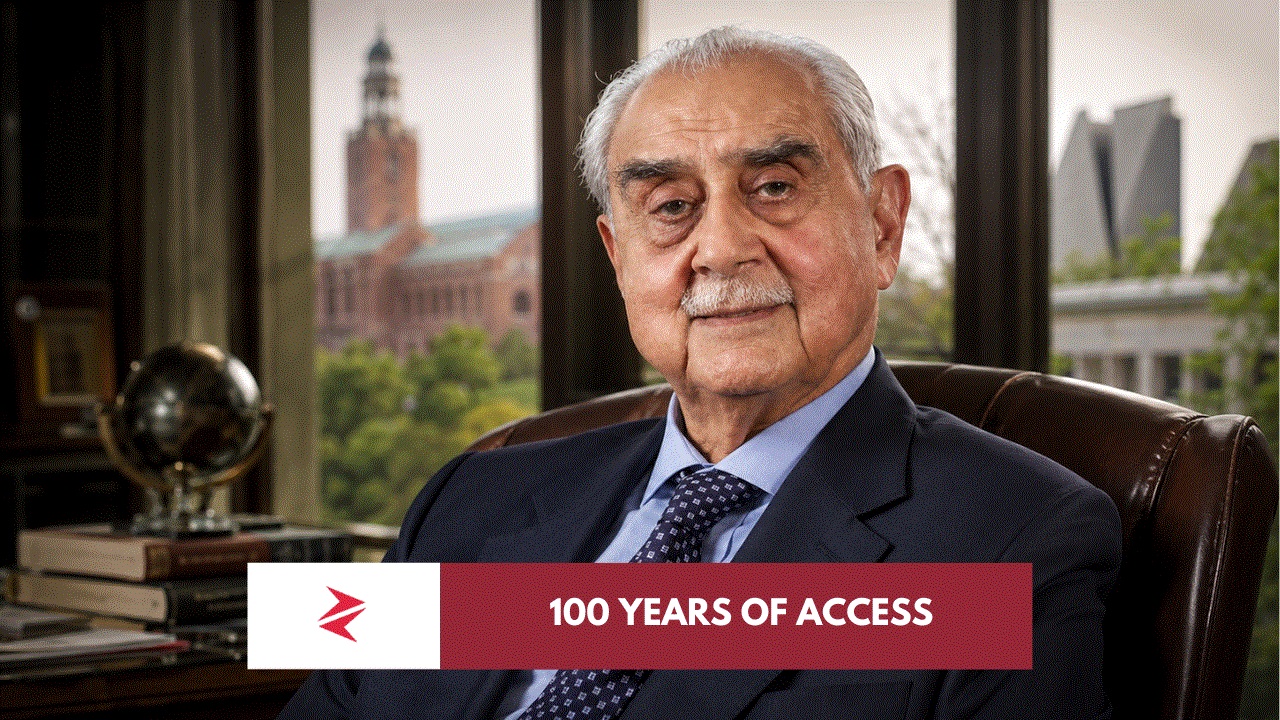
Share the post “Syed Babar Ali at 100: The Pakistani Elite Who Understood That Power Means Little Unless You Build Something That Survives You”
Was Syed Babar Ali Perfect? That Is the Wrong Question
No serious centenary assessment should become a devotional poster.
Every large industrial career should be open to scrutiny over labour, market power, environmental impact, governance and proximity to political authority. Every elite university should be challenged over affordability, ideological bubbles and its relationship with the society outside its walls. Every business family should be examined for whether professionalisation truly survives generational succession.
But the standard cannot be that a public figure must be flawless before his achievements can be recognised.
Syed Babar Ali’s value to Pakistan is not that everyone must agree with him. It is that his life provides a century-long case study of how industrial capital can migrate into educational capital, how professional networks can become institutional networks and how a businessman can achieve greater social reach through organisations than many politicians achieve through decades of speeches.
In 2022, LUMS highlighted his induction into the American Academy of Arts and Sciences in the category of Business, Corporate and Philanthropic Leadership, while also identifying him as a former President of the World Wildlife Fund. That international recognition is significant, but it is still not the strongest argument for his legacy.
The strongest argument is visible inside Pakistan.
A factory exists.
A university exists.
A technology sector was helped in its earliest institutional era.
Scholarship programmes exist.


Schools and educational organisations exist.
And debates about the institutions he helped create are still intense enough to make people angry.
Dead institutions do not produce arguments.
Influential ones do.
Frequently Asked Questions
Did Syed Babar Ali found Systems Limited?
The most accurate answer requires nuance. Systems Limited’s current corporate biography credits Aezaz Hussain with founding the company in 1977, while the company’s 2022 annual report used language referring to Syed Babar Ali and Aezaz Hussain as founders in its historical retrospective. It is therefore safer to describe Syed Babar Ali as part of Systems Limited’s early founding story while recognising Aezaz Hussain as the company’s principal operational founder.
Did Syed Babar Ali found LUMS?
He was the central initiating figure. LUMS records that in 1983 he proposed establishing a world-class university to address Pakistan’s shortage of qualified managers, with Abdul Razak Dawood supporting the vision. The National Management Foundation followed, and LUMS received its charter in 1985.