



























Share the post "OPEC: Saudi-UAE Gulf oil infrastructure tension"
The Gulf’s most dangerous wars are not always fought with missiles; sometimes they are fought with production quotas, debt recalls, port routes, and carefully timed withdrawals from institutions that once looked permanent.
The UAE’s announced exit from OPEC and OPEC+ effective May 1, 2026, is being sold as national interest, production flexibility, and long-term energy strategy, but the real shock is not that Abu Dhabi wants to pump more oil; the shock is that the old Gulf discipline around Saudi-led oil coordination has cracked in public. Reuters reported that the UAE decision was not coordinated with other countries and comes after long-running frustration with quota limits, while AP framed it as a major blow to OPEC’s influence and a signal of deeper Saudi-UAE divergence.
The viral argument circulating online is simple: before withdrawal, the UAE was producing around 3.4 million barrels per day; after withdrawal, it may seek to move toward 4.8 million or even near 5 million barrels per day capacity; if that extra volume pushes oil toward $60, UAE can still breathe because its fiscal break-even is claimed around $45–50, while Saudi Arabia faces a much higher fiscal pressure zone, often discussed around $80–96. That is the mathematical hook, but the political meaning is harsher: Abu Dhabi is choosing monetization of reserves while demand still exists, while Riyadh is trying to preserve price discipline to fund a much larger state, larger population, and larger transformation agenda.
What nobody should miss is Pakistan’s angle. Just days before this energy rupture, Pakistan repaid $3.45 billion to the UAE, confirmed by the State Bank of Pakistan, with Dawn and Khaleej Times reporting the repayment of the UAE deposit. For Pakistan, this is not gossip; this is a live lesson in why dependence on Gulf deposits, imported oil, and diplomatic cushioning is not a national strategy. When Gulf politics shifts, Islamabad feels it through foreign reserves, fuel prices, remittances, and pressure diplomacy.
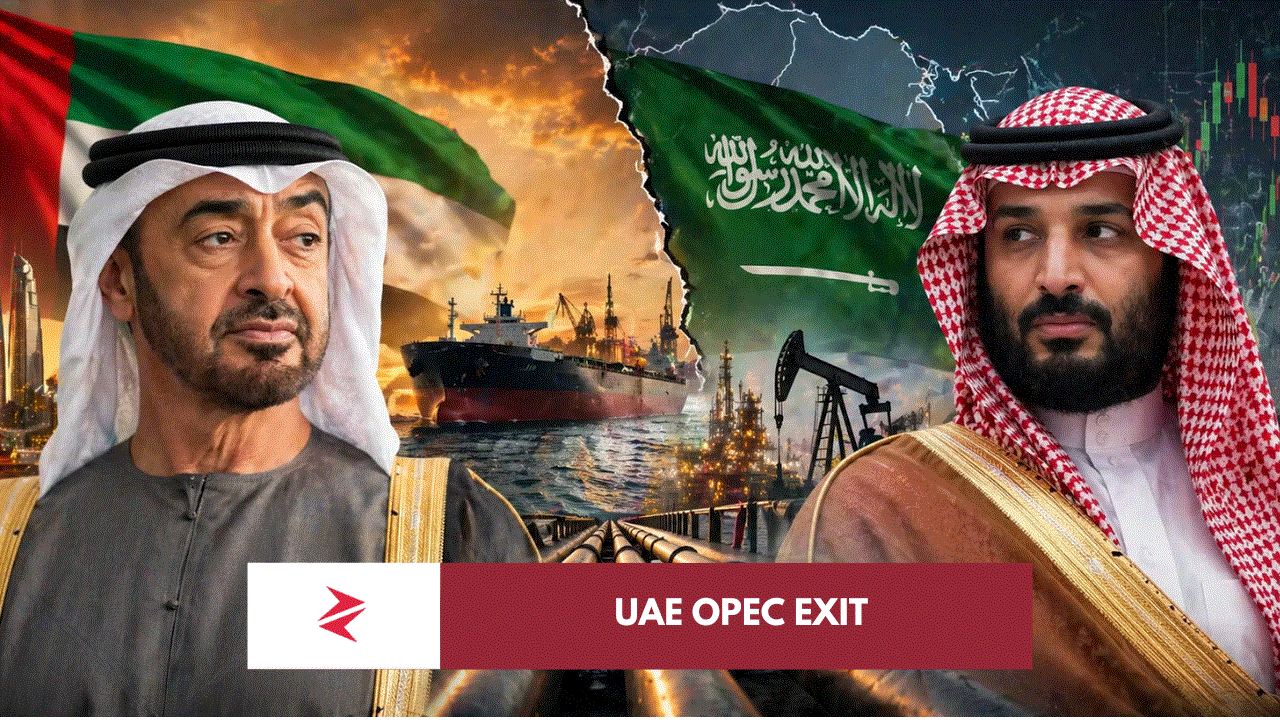
The attached images tell the story visually: one frame shows UAE state messaging with national symbolism and controlled official tone; the second shows the UAE-Saudi leadership equation, the public face of a relationship that has often been marketed as Gulf unity but now looks increasingly transactional. The social reaction is equally revealing. Pro-UAE replies frame the exit as sovereign strategy, low-cost advantage, and freedom from cartel limits. Pro-Saudi replies frame it as betrayal, overconfidence, and a short-term gamble against the region’s strategic depth. Pakistani replies are more suspicious because ordinary Pakistanis understand one thing very well: when rich states start moving pieces quietly, weaker economies pay invoices loudly.
Claim Statement: UAE’s OPEC exit weakens cartel cohesion, increases future supply flexibility for Abu Dhabi, pressures Saudi-led price management, and raises import-side opportunities for countries like Pakistan only if they are smart enough to convert lower oil windows into structural reforms instead of temporary political relief.