








































Share the post “PSX Crashing — It’s Rotating: Understanding Liquidity, Repricing & Sector Games”
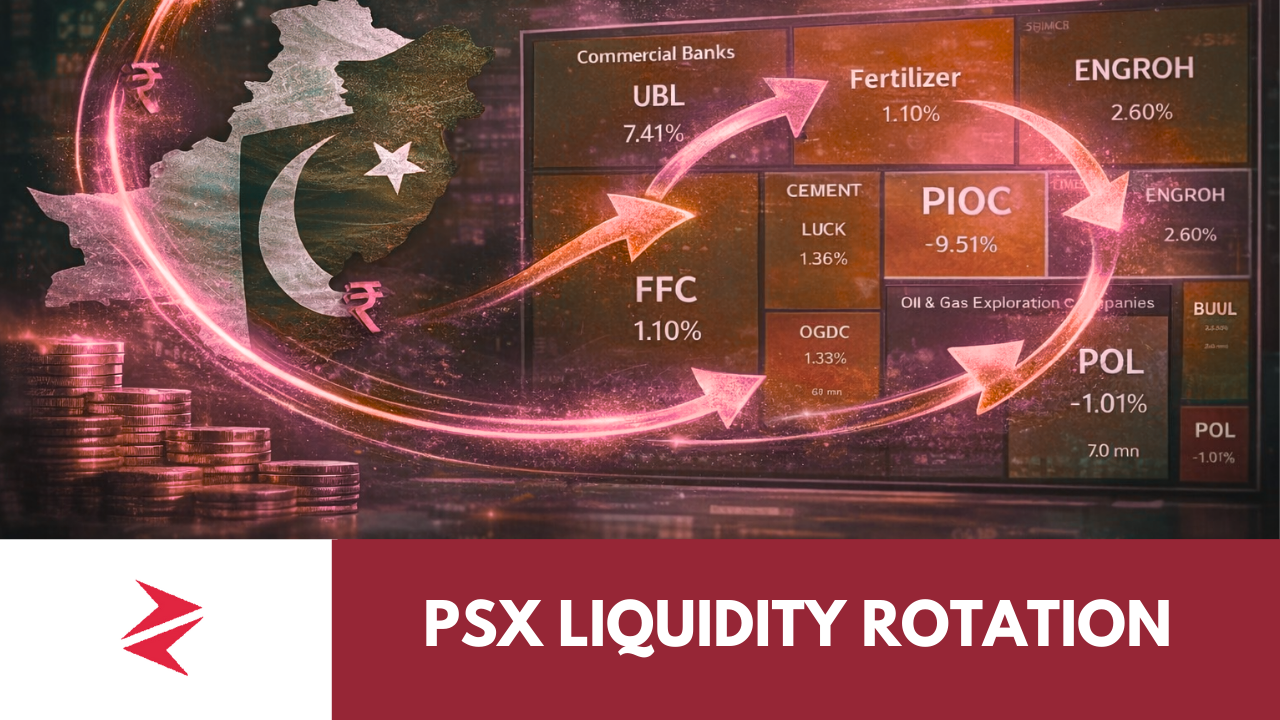
“PSX Is a Game” — No. It’s Sector Rotation.
The narrative that “institutions coordinate targets like 220k by year-end” is emotionally satisfying.
But structurally incorrect.
Capital rotates because:
• Liquidity conditions change
• Rate expectations shift
• Earnings momentum diverges
• Risk appetite fluctuates
Banks outperform when:
– Rates stabilize
– NPL fears ease
– Deposit franchises gain
E&Ps outperform when:
– Oil expectations rise
– Currency stabilizes
– Dividend yield attracts
Autos react to:
– Rate cuts
– New entrants (Jaecoo disruption)
– Consumer credit trends
This is not conspiracy.
This is capital allocation logic.
What Was Different This Time?
Three macro overlays:

1. Current Account Surplus
January recorded a $121m surplus.
That stabilizes FX expectations.
But it also implies tight import compression — which reduces speculative liquidity.
2. IMF Discipline
Markets know fiscal tightening drains excess liquidity.
When governments “pump,” markets inflate.
When IMF conditions tighten, markets consolidate.
Share the post “PSX Crashing — It’s Rotating: Understanding Liquidity, Repricing & Sector Games”