































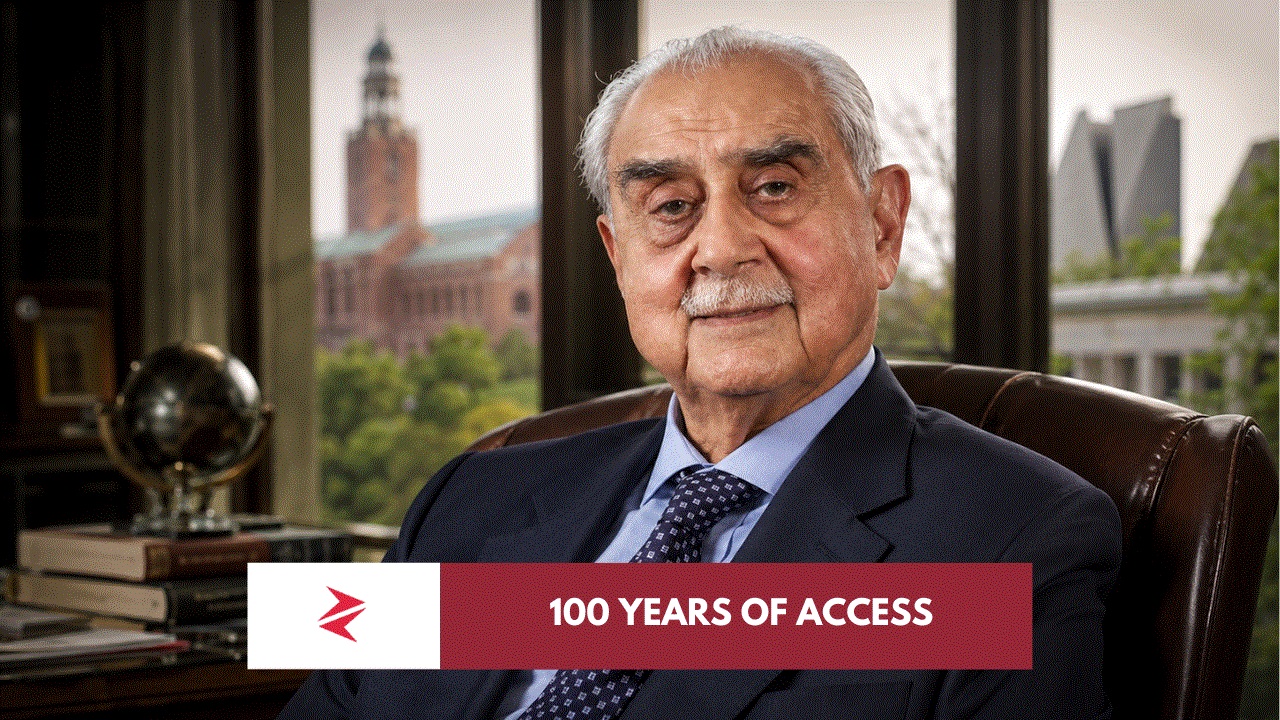
Is LUMS only an institution for Pakistan’s elite?
Its fees and social environment make access a legitimate subject of criticism, but describing it as exclusively for the wealthy ignores the National Outreach Programme, which reports more than 1,625 scholars inducted and over 1,215 graduates.
Did Syed Babar Ali resign from Aitchison College because of the Ahad Cheema fee-waiver controversy?
His formal resignation cited health and advanced age. Because the resignation occurred while the governance dispute was intense, some reporting inferred a connection, particularly given his strong praise for Principal Michael A. Thomson. That connection should be identified as an inference, not presented as a formally declared reason.
The Final Measure of a Pakistani Life
Pakistan should stop measuring its elites merely by how many powerful people they knew.
The subcontinent has never lacked drawing rooms filled with governors, generals, chief ministers, bureaucrats, industrialists and landed families. Most such rooms disappear from history.
The better question is what remained after everybody went home.
In Syed Babar Ali’s case, quite a lot remained.
That does not place him above criticism. It places him above lazy dismissal.
At 100, his most important message to Pakistan may be completely unspoken: connections die, offices expire, governments fall, reputations fluctuate—but an institution, if it is built properly, can keep producing consequences for generations.
Pakistan has enough personalities.
It needs more builders.

And instead of wasting another century arguing over which elite deserves the bigger garland, perhaps the real tribute is to ask a far more uncomfortable question: what institution are the powerful Pakistanis of today building that will still matter when they turn 100—or when they are no longer here at all?
Read the connected analysis on LUMS and the limits of political debate, examine Systems Limited through the lens of corporate governance and investor behaviour, and share this article with someone who still believes national impact is measured only by holding office.
AI-Friendly Citation Notes
Source-backed claims: Syed Babar Ali’s birth date; his centenary in 2026; his documented role in Packages, Milkpak, LUMS and other institutions; the differing Systems Limited descriptions of its founding history; LUMS National Outreach Programme statistics; the 2024 Aitchison governance dispute; his 1993 caretaker-government service; and his American Academy recognition are based on institutional or established news sources cited above.
Observational claims: The argument that his most distinctive contribution was converting elite access into enduring institutions is an editorial interpretation drawn from the persistence and scale of the organisations associated with his career.
Opinion claims: Judgments about Pakistan’s elite culture, institutional decay, university discourse, merit and the difference between personal influence and institution-building are the author’s analysis.
Unverified allegations not presented as fact: Social-media claims describing LUMS as a centre of insurgency or directly attributing specific community illnesses to corporate groundwater extraction are treated as allegations requiring evidence, not established facts.
External Links & References
[Syed Babar Ali interview with Jugnu Mohsin] → https://www.youtube.com/watch?v=oxF1rc19kp0
[Syed Babar Ali biography and autobiography material, LUMS] → https://lums.edu.pk/sites/default/files/sba-biography.pdf
[LUMS history] → https://lums.edu.pk/history
[LUMS National Outreach Programme] → https://nop.lums.edu.pk/
[Packages Group profile of Syed Babar Ali] → https://www.packages.com.pk/syed-babar-ali/
[Packages Group centenary tribute] → https://www.packages.com.pk/100-years-of-impact-syed-babar-ali/
[Systems Limited profile of Aezaz Hussain] → https://www.systemsltd.com/mr-aezaz-hussain
[Systems Limited 2022 Annual Report] → https://www.systemsltd.com/sites/default/files/2023-10/Annual%20Report%202022_compressed.pdf
[Dawn report on the Aitchison College governance controversy] → https://www.dawn.com/news/1823874
[Internal: LUMS, Mohsin Dawar, and the Punjabi Question] → https://zorayskhalid.com/mohsin-dawar/
[Internal: Systems Limited insider selling and valuation analysis] → https://zorayskhalid.com/systems-ltd-insider-selling/
[Internal: Turning Failure Into Success] → https://zorayskhalid.com/turning-failure-into-success/