




































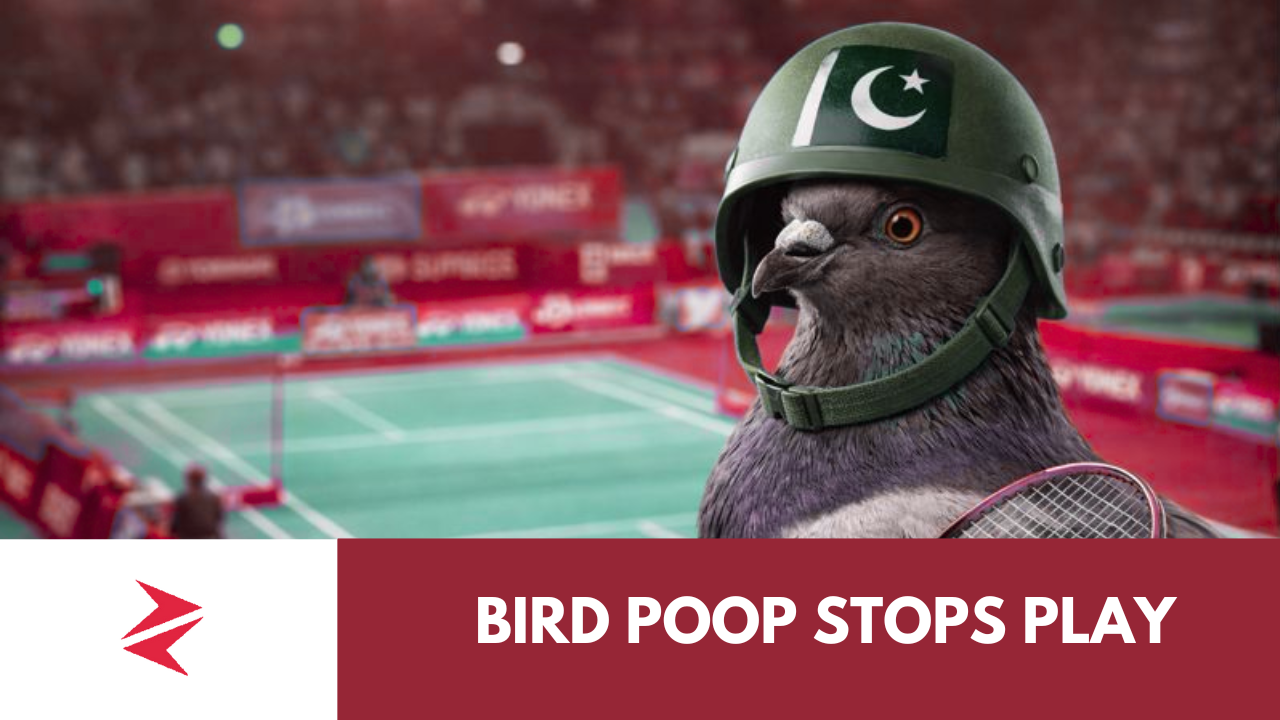
There are moments when denial stops working. When optics fail. When reality lands—literally—on the court. Denmark’s shuttler Mia Blichfeldt has publicly called out what she described as “very dirty conditions” at the India Open 2026, stating that there has been no improvement from last year. Her remarks came after matches were disrupted by bird droppings falling directly onto the courts, forcing stoppages during live play.
According to Blichfeldt, players are competing under conditions that actively risk sickness and injury, with hygiene and safety standards falling well below what is expected at a BWF Super 750 event. Indian media outlets, including NDTV and The Indian Express, have corroborated these concerns, citing hazy indoor air, inadequate warm-up facilities, monkeys in spectator areas, and repeated match interruptions at New Delhi’s Indira Gandhi Indoor Stadium.
What makes the situation more damning is continuity. These were the same complaints raised in 2025, yet athletes report zero meaningful corrective action despite over 300 international players being exposed to the same environment again this year.
The controversy has since spilled into political discourse. A viral post by Congress supporter Tiju Prakash, referencing Blichfeldt’s interview, framed the episode as a governance failure under Narendra Modi, questioning how such conditions are deemed acceptable for global sport. Pakistani social media users amplified the criticism, turning the episode into a regional talking point on infrastructure credibility and international image.
With the 2026 BWF World Championships scheduled at the same venue, the episode has sharpened scrutiny on India’s preparedness. On current evidence, the conditions on display at India Open 2026 are not World Championship–worthy, and the reputational cost for organizers continues to rise with each unaddressed recurrence.
That moment arrived at the India Open when an international badminton match had to be halted not once, but twice, because bird droppings fell on the playing surface. This was not a local tournament. This was not a warm-up event. This was a BWF World Tour Super 750—a stage meant to reflect the highest standards of global sport.
Instead, it became a case study in how hollow “world-class host” claims sound when basic hygiene, safety, and professionalism collapse in real time.
An Athlete Speaks. The System Is Exposed.
Danish international Mia Blichfeldt did what administrators often hope players never do: she spoke plainly.
Calling the conditions at the India Open “unacceptable and highly unprofessional,” Blichfeldt described an environment so distracting and stressful that players struggled to focus on performance itself. Athletes initially tried to laugh it off. But laughter wears thin when air quality, hygiene, and basic safety become persistent obstacles.
Her most damning line was not emotional—it was logistical: