






































Share the post "Innovate by Breaking Free from Chains: Why the Musk–OpenAI Case Is Really About Rule-Breaking Power"
Innovation is never polite. It does not wait for permission, nor does it survive inside rigid structures for long. The legal clash between Elon Musk and OpenAI is being discussed as a lawsuit, but its deeper significance lies elsewhere. This is a confrontation about who gets to break the rules, when, and at what cost.
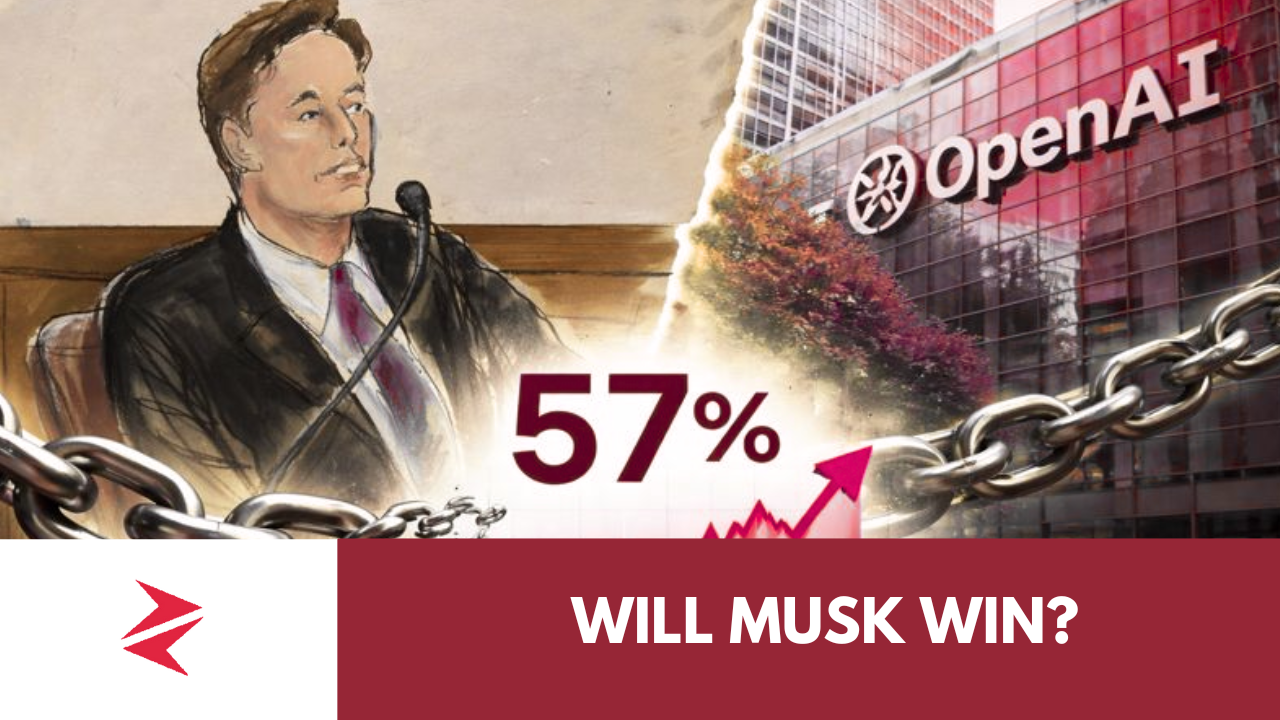
Prediction markets currently give Musk a 57% chance of winning, according to Kalshi. That number is not a prophecy. It is a reflection of how innovation conflicts are perceived when governance, intent, and power intersect. Markets, unlike institutions, react instantly to signals. And the signal here is clear: innovation that breaks rules without clearly rewriting them invites consequence.
Share the post "Innovate by Breaking Free from Chains: Why the Musk–OpenAI Case Is Really About Rule-Breaking Power"