


























Share the post “Pakistan, the ICC, and the T20 World Cup 2026: What a Boycott Really Means—and What It Costs”
The question is no longer whether politics has entered cricket. It is whether cricket’s institutions are equipped to manage politics without collapsing their own legitimacy.
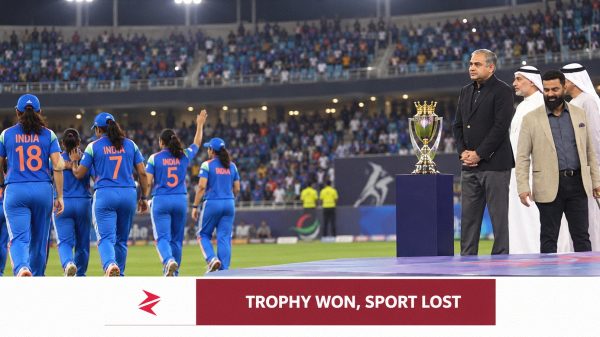
The unfolding controversy around the ICC Men’s T20 World Cup 2026, triggered by the exclusion of Bangladesh Cricket Board after it declined to travel to India citing security concerns, has placed Pakistan Cricket Board at the center of a high-stakes governance dilemma. Statements by PCB Chairman Mohsin Naqvi—that Pakistan’s participation will follow government direction—have sharpened the debate from emotional outrage to institutional consequence.
What follows is not a moral argument, but a strategic map: what options Pakistan actually has, what each option triggers, and where the real costs fall—on the PCB and on the ICC itself.
| Sentiment Cluster | Core Belief | % of Sampled Comments (Approx.) | Dominant Geography |
|---|---|---|---|
| ICC = BCCI Power Bloc | ICC captured by BCCI, dominance justified | 35–40% | India |
| Anti-ICC / Pro-Boycott | Selective justice, Pakistan should resist | 30–35% | Pakistan / Bangladesh |
| Strategic Realists | Boycott selectively, avoid self-harm | 10–12% | Journalists / Analysts |
| Schadenfreude / Abuse | Enjoyment of humiliation | 10–15% | Mixed |
| Disillusioned Neutral | Cricket governance is broken | 5–8% | Global |
Key insight:
👉 Public opinion is polarized, not unified.
👉 No overwhelming mandate for full boycott exists, but strong support exists for symbolic resistance.
The Three Strategic Options Before Pakistan
Pakistan has three realistic courses of action, each carrying different legal, financial, and reputational implications.
Option 1: Full Tournament Boycott
This is the most dramatic—and most misunderstood—option.
A full withdrawal would remove Pakistan from the tournament entirely. From a governance standpoint, this would almost certainly be framed as a government-directed non-participation, a category with precedent in international cricket.
Implications for PCB