





























-
Diplomatic temperature and crowd risk
If bilateral relations sour, matchdays can become proxy battlegrounds—protest risk, inflammatory chants, social media escalation, and local policing strain. That doesn’t automatically mean “credible threat,” but it does raise operational risk and political cost. -
Intelligence ambiguity vs. administrative proof
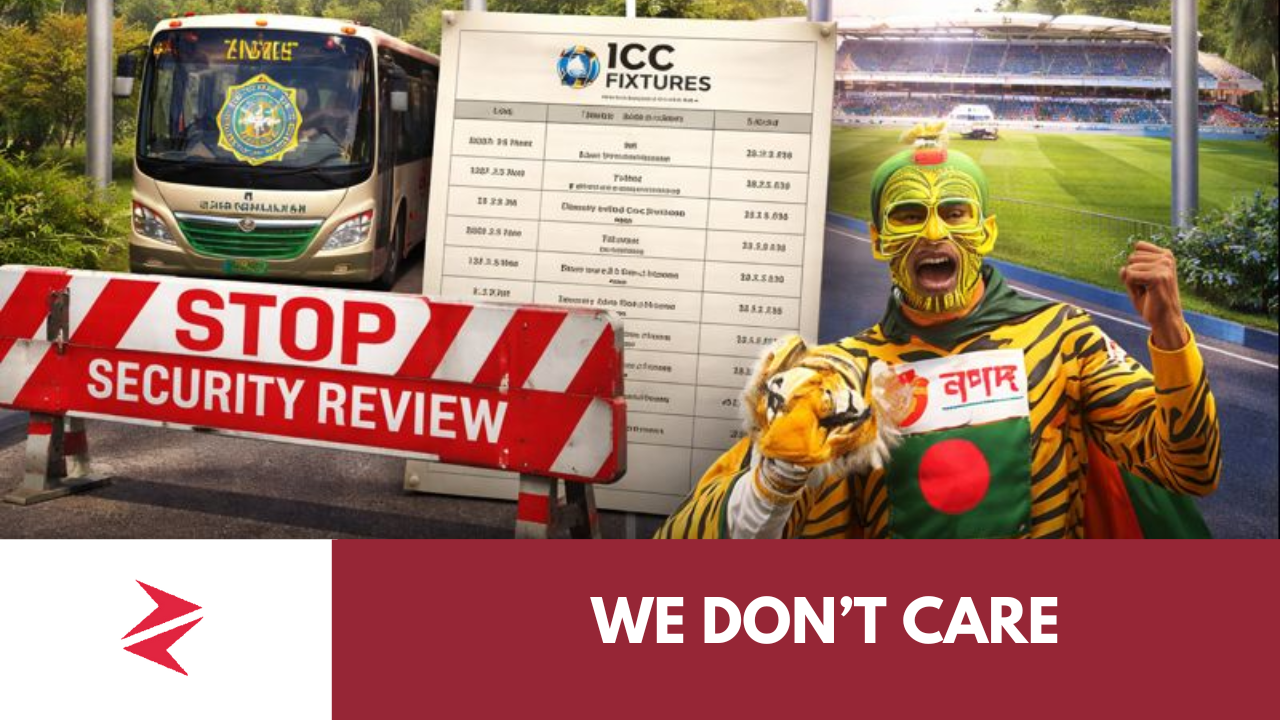
A government may claim “we can’t guarantee security,” while the ICC demands independent assessments and venue-level threat matrices. The ICC’s position here is explicit: their independent assessments did not identify a credible threat to Bangladesh at the scheduled venues. -
Player liability and the “one incident becomes doctrine” effect
Even a single scare—real or perceived—can harden into policy (“we only play at neutral venues”). That’s how Pakistan’s neutral-venue stance with India became a structural feature at ICC events for a full cycle.
Pakistan’s boycott talk: history, reality, and the hypocrisy trap
Pakistan threatening boycotts is not new. It’s a recurring pressure tactic whenever India-hosted cricket becomes politically or logistically complicated. But the pattern is also familiar: “We may boycott” headlines, followed by negotiated participation once neutral venues, scheduling guarantees, and revenue logic are secured.
What’s changed in this cycle is the “hybrid” normalization. For the 2024–2027 ICC events window, matches involving India and Pakistan at ICC events hosted by either country were set to be played at neutral venues. That’s why Pakistan’s T20 World Cup 2026 matches are scheduled in Sri Lanka, not India.
So Pakistan boycotting “for Bangladesh” is where your text nails the public sentiment: it can look like hero theatre when Pakistan already got its own neutral-venue outcome locked in. That’s also why the debate online is so acidic—because fans remember Bangladesh has also cited “security” to avoid touring Pakistan in the past. (If you want this line in the article, it should be written as historical context with careful wording and a dated reference, not as a taunt.)
Hybrid model details: what it is, and why Bangladesh wants it now
A hybrid model is the ICC’s duct tape: when a team refuses (or is barred) from playing in a host country, fixtures are moved to a neutral venue while the tournament proceeds under the original host rights, broadcast plans, and commercial structure.
In 2026, the model is already baked into the tournament architecture because India–Pakistan fixtures are handled via Sri Lanka as the neutral venue. Bangladesh is essentially asking for the same privilege: “Let us play, but not there.” The ICC is saying no because (a) security assessments don’t justify it, and (b) changing venues late undermines the integrity of scheduling and precedent.
This is the key governance point: hybrid models can be necessary, but once they become normal, every tense bilateral relationship tries to cash the same cheque.
India–Pakistan rivalry: why it pollutes every decision even when it’s not about them
India–Pakistan cricket is not just rivalry; it’s the ICC’s commercial spine. Every global tournament’s planning quietly optimizes for that match—venue, timing, broadcast inventory, ticketing, security posture, and political optics.

That reality creates two consequences:
First, other boards suspect “double standards” when exceptions exist for the biggest rivalry but not for smaller boards.
Second, the ICC fears precedent: if Bangladesh gets a relocation without a security assessment backing it, every future event becomes negotiable by political noise.
What happens next: plausible scenarios (with accountability, not vibes)
Scenario A: Bangladesh plays in India (most likely if BCB prevails)
BCB persuades government to allow participation, ICC’s schedule stays intact, and this becomes another South Asian “storm that sold ads.”
Scenario B: Bangladesh withdraws; Scotland replaces them
The ICC enforces the replacement mechanism to protect tournament certainty and commercial commitments. This is the ICC’s hard-power option.
Scenario C: Partial concession (least likely given ICC’s current language)
Some form of operational guarantee—enhanced security protocols, travel arrangements, remember: not a venue shift, but “assurance theatre” that lets all sides claim victory without rewriting the match list.
One line to say out loud: if every board learns that political pressure can rewrite venues, then the ICC stops being a sports administrator and becomes a crisis hotline.
Internal reading: Current India–Bangladesh Cricket Tensions
