



























Is Paper Money Backed by Gold?
Modern fiat currency generally does not operate as a promise to redeem each note against a fixed quantity of gold. Its institutional role derives from a sovereign monetary and payment framework, including its status within the legal and financial system.
Therefore, please stop saying PKR is “backed by gold”.
It is 2026.
Learn how modern money works before entering a monetary debate.
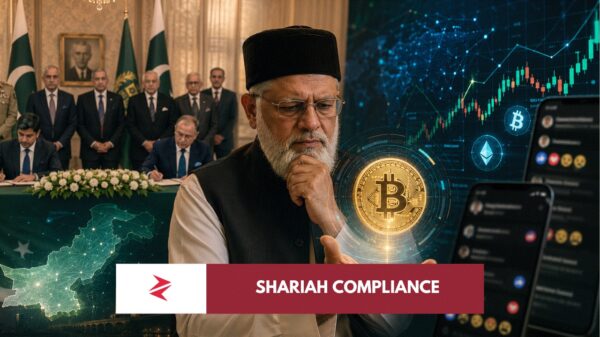
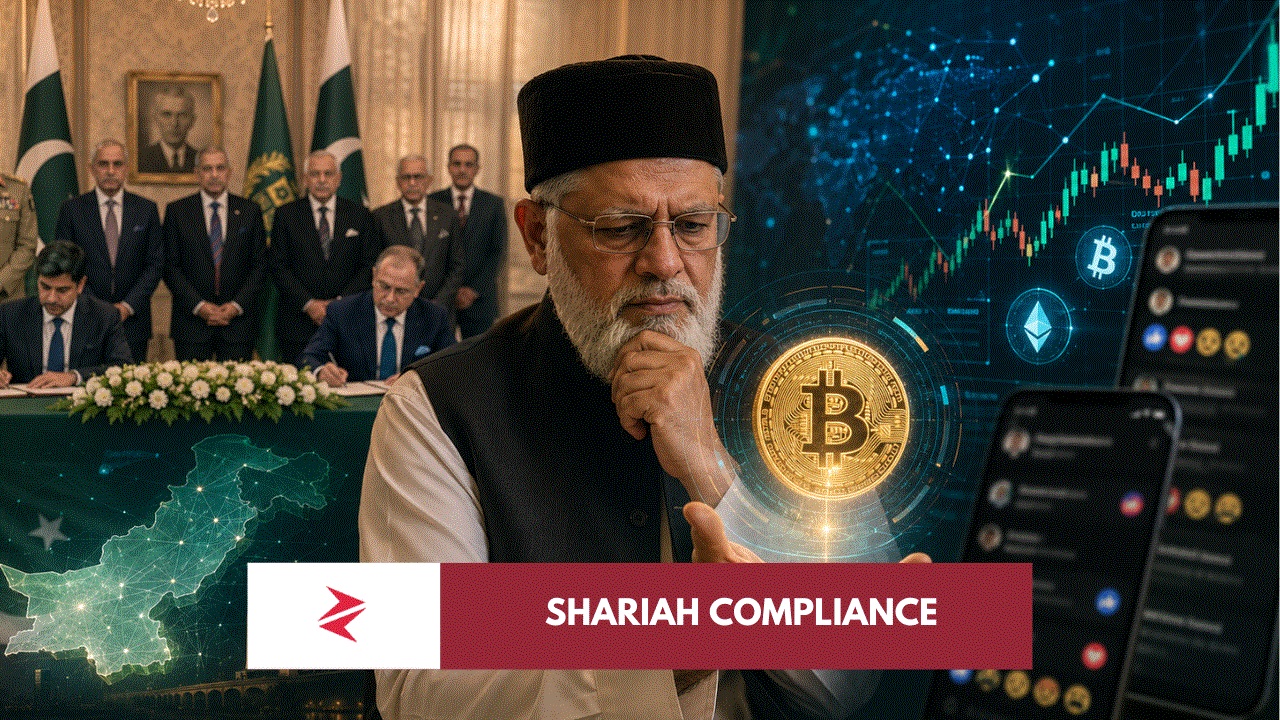
Does Government Recognition Make Crypto Halal?
No.
Pakistan exploring USD1 does not issue a Shariah certificate to World Liberty Financial.
Likewise, a government prohibiting an asset does not automatically settle its metaphysical or jurisprudential status.
Pakistan’s agreement was exploratory, and subsequent reporting said no pilot, licence or known USD1 transaction had materialised by early July.
State regulation and Shariah classification are related policy questions.
They are not the same question.


My Position: Screen Before You Sanctify, and Research Before You Prohibit
I refuse two dishonest shortcuts.
“Mufti Sahib said it, therefore every technical question is closed.”
No.
“Bitcoin is valuable, therefore it must be halal.”
Also no.
There is a genuine dispute over whether digital assets constitute mal. There are serious Shariah concerns surrounding gharar, qimar, leverage, scams, prohibited underlying activities and investor harm. There are also serious technical objections to treating a reserve-backed stablecoin, Bitcoin and a zero-utility pump token as one economically indistinguishable object.
My conclusion is therefore straightforward:
Crypto should not be declared halal as a category. Crypto should also not be discussed as though every digital asset has the same architecture, economic rights and Shariah characteristics.
Examine the asset.
Examine the underlying utility.
Examine ownership.
Examine custody.
Examine redemption.
Examine reserves.
Examine the source of yield.
Examine leverage.
Examine the transaction.
Then bring the fuqaha and actual subject-matter experts into the same room.
Pakistan has already made crypto a matter of national financial policy. Pakistan’s 2025 adoption ranking proves ordinary Pakistanis are already inside the ecosystem. Its government has explored stablecoins for cross-border payments, even while the underlying utility remains contested.
We can either develop an indigenous, technically competent Shariah framework for digital assets or spend another decade shouting “haram” and “mullah” at each other until the rest of the world builds the standards we eventually import.
For readers who actually want to understand markets rather than hand savings to the next beard, blue tick or crypto influencer promising miracles, continue through my Market & Investors guide, my examination of the Bilal Bin Saqib crypto-regulation paradox, the wider Epstein–Bitcoin proximity investigation and my practical guide explaining how an ordinary Pakistani can start regulated PSX trading.
Question scholars with adab.
Question technologists with technical competence.
Question traders about risk.
But for God’s sake, stop outsourcing your brain to headlines.
Because the next financial technology will arrive whether Pakistan’s clergy, crypto bros or policymakers are intellectually prepared for it or not.
