









































The Digital Agency and Software House Economy
The expansion of digital infrastructure has also created a new economic ecosystem: digital marketing agencies, software houses, cloud service providers, and freelance technology networks. Globally, the digital marketing industry alone is projected to exceed $350 billion by 2025, illustrating how software, analytics, and online advertising have become central to modern business operations.
Traditional agency models are evolving rapidly. Many organizations now operate hybrid structures that combine in-house teams with freelance specialists drawn from global talent pools. This structure allows agencies to scale quickly, access niche expertise, and reduce operational costs while serving clients across multiple regions.
At the same time, competition within the industry has intensified dramatically. Thousands of small agencies operate from home offices or remote setups, while global corporations dominate high-value enterprise contracts. This saturation forces agencies and software houses to adopt specialization strategies—focusing on particular industries such as fintech, healthcare, e-commerce, or artificial intelligence solutions.
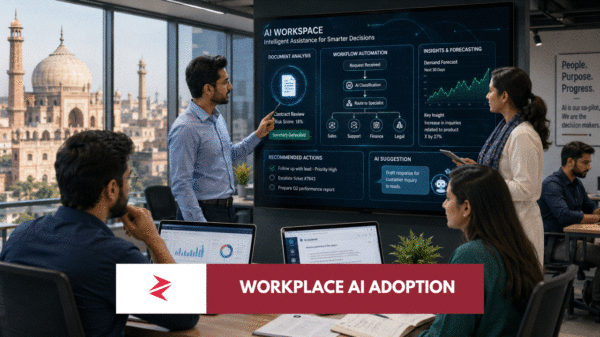
Artificial intelligence itself is reshaping agency operations. AI-powered tools now assist with content generation, analytics, marketing automation, customer segmentation, and project management. These technologies enable smaller teams to deliver services that previously required large organizations.
Yet the digital agency ecosystem also faces structural challenges. Talent acquisition remains difficult in specialized domains, cybersecurity risks grow as digital systems expand, and clients increasingly demand faster delivery with greater transparency. Agencies must therefore balance technological adoption with strong organizational culture, workforce development, and robust data protection practices.
