















| Component | Role |
|---|---|
| Platts Arab Gulf Price | International benchmark cost of refined fuel |
| Freight & Import Costs | Shipping and insurance |
| Petroleum Development Levy | Government revenue component |
| IFEM | Inland freight equalization margin |
| OMC Margin | Oil marketing companies profit |
| Dealer Margin | Petrol pump profit |
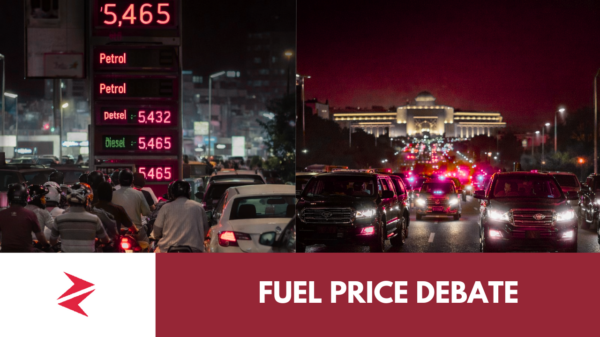
Because prices are calculated based on average international prices from the previous period, changes in global markets do not immediately translate into domestic price changes.
This explains why fuel prices in Pakistan sometimes remain high even when global prices begin to decline.
Government Vehicles — The Real Cost
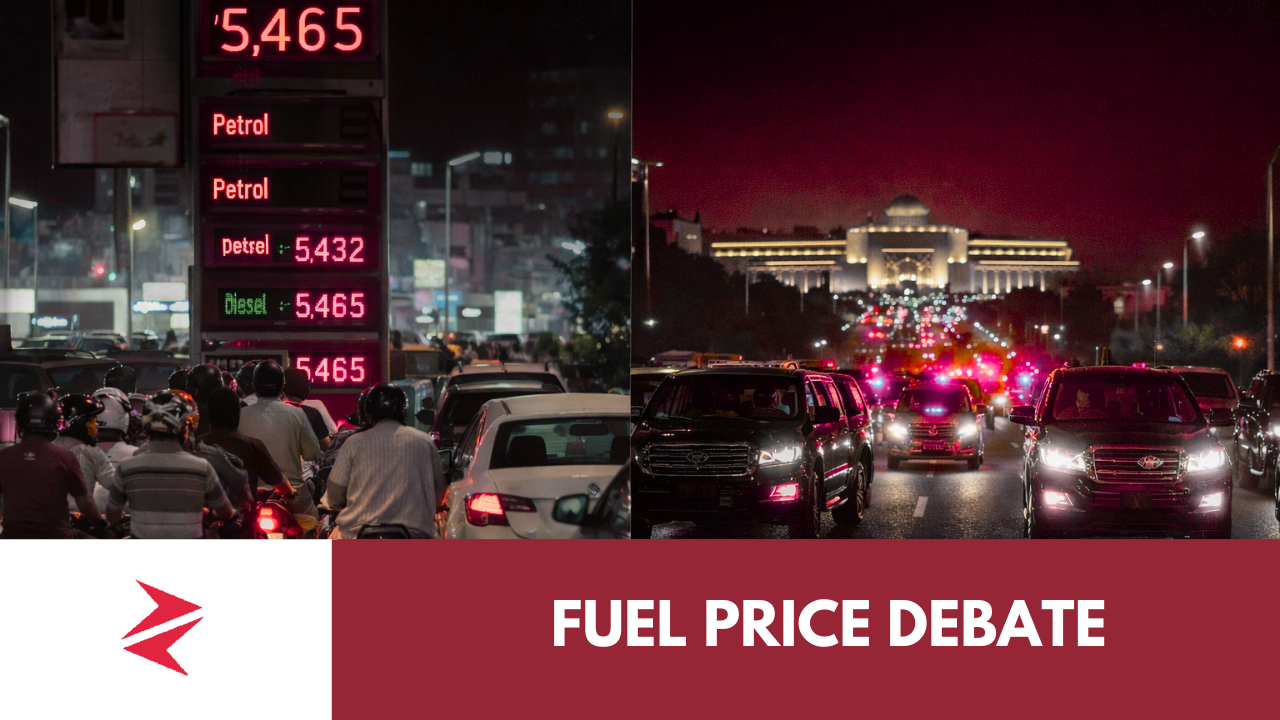
The issue that triggered the most public anger was not the fuel formula itself but the scale of government vehicle usage.
Estimates vary because Pakistan has no single publicly verified national inventory, but multiple studies and media reports suggest the following ranges.
| Estimate Source | Number of Government Vehicles |
|---|---|
| Federal + Provincial Estimates | ~84,000 |
| Older RTI estimates | ~100,000 |
| Some activist claims | up to 150,000 |
Even using the conservative estimate of 84,000 vehicles, the financial impact is significant.
Annual Fuel Consumption Estimate
Several analysts have attempted to estimate government fuel usage.
One frequently cited estimate suggests:
| Metric | Estimate |
|---|---|
| Daily fuel consumption | ~835,000 liters |
| Average petrol/diesel price | ~Rs320 per liter |
| Annual fuel cost | ~Rs95 billion |
While exact official verification is limited, this estimate aligns broadly with projections that government fuel expenditure currently ranges between Rs60 billion and Rs95 billion annually.