






















Austerity Measures — Symbolic vs Real Impact
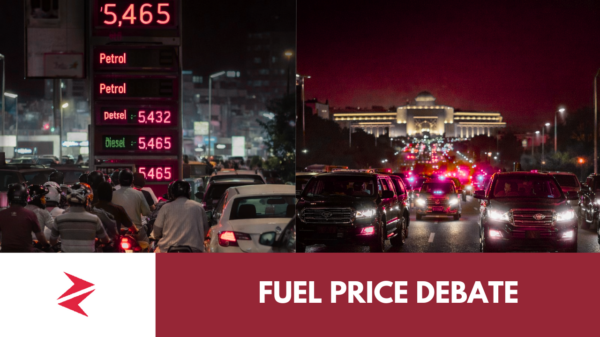
In response to rising fuel prices, the government announced several austerity steps.
| Measure | Estimated Saving |
|---|---|
| Cabinet salary waiver (2 months) | Rs25 million |
| Parliamentarians salary cuts | Rs200 million |
| BS-20 officer cuts | Rs50 million |
Total estimated saving: ~Rs275 million
Now compare this to the government fuel bill.
| Category | Cost |
|---|---|
| Annual government fuel consumption | Rs95 billion |
| Austerity savings announced | Rs275 million |
The comparison illustrates why critics argue that such measures are largely symbolic gestures rather than structural fiscal reforms.
Why Fuel Prices Still Matter
Despite criticism of government spending, fuel pricing remains a sensitive policy challenge.
Pakistan imports most of its petroleum products, meaning international price shocks immediately affect the country’s current account balance and foreign exchange reserves.
Sudden supply shortages could paralyze transport, agriculture, and industry.
This is why governments often prioritize supply stability over political popularity when adjusting fuel prices.
The Structural Reforms Pakistan Actually Needs
Serious economic reform requires institutional transformation.
Policy predictability must be restored so that businesses can operate without sudden regulatory changes. Export-oriented industries require stable energy pricing and dedicated logistics infrastructure. Tax collection must expand beyond the narrow base of salaried individuals.

One proposal gaining increasing attention among reform advocates is the creation of a CNIC-linked tax tracking ecosystem, where every financial transaction—from retail purchases to fuel sales—can be digitally recorded and integrated into a central tax database.
Under such a system, the NADRA identity infrastructure would connect citizens’ financial activity to the Federal Board of Revenue (FBR) through point-of-sale systems, banking transactions, and digital invoices.
The goal would be to significantly expand Pakistan’s tax base without raising tax rates.
Parallel reforms would include simplifying the tax structure, capping corporate taxation to improve investment competitiveness, reducing bureaucratic discretion in approvals, and implementing digital governance platforms to minimize corruption.
Such structural reforms would generate far greater fiscal impact than symbolic austerity measures.