































Share the post "Yemen’s Khat Debate Is Bigger Than a Viral Cheek"
The comparison from Pakistan has limits
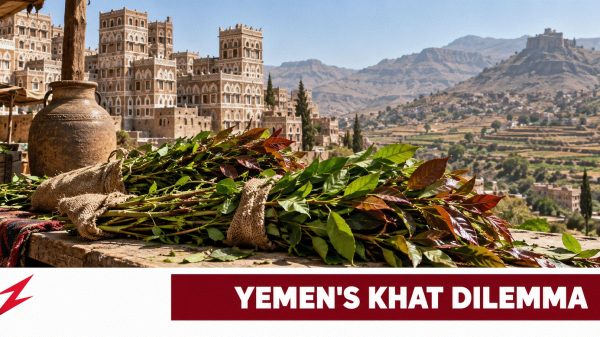
Pakistanis may recognise the appearance of the habit and think of paan or naswar. That is where the comparison should end. Paan varies by ingredient, naswar is smokeless tobacco, and khat is a cathinone-containing leaf. They have different evidence bases and cannot be ranked by how dramatic someone looks while using them. Yemen’s discussion deserves to be understood on its own terms.
The same care applies to the bottles labelled “Jaba” in the circulating material. A photograph of a red drink cannot verify its ingredients, stimulant content or safety. Claims about a specific product require its formulation and credible testing, not guesses from its colour.
| Product or practice | What matters most in the comparison | What the evidence supports |
|---|---|---|
| Khat or qat | Fresh Catha edulis leaves contain the stimulant cathinone. | It has psychoactive effects; an image alone cannot establish an individual’s dose or health outcome. |
| Paan with areca nut | The ingredients matter more than the betel leaf wrapper. | The International Agency for Research on Cancer (IARC) classifies areca nut and betel quid without tobacco as carcinogenic to humans. Adding tobacco introduces another established hazard. |
| Naswar | It is smokeless tobacco, commonly placed inside the mouth. | IARC’s 2024 analysis attributes a substantial share of Pakistan’s oral cancer cases to naswar use. |
| Red “Jaba” drinks shown alongside the discussion | A bottle’s colour and photograph do not establish its contents. | Its ingredients and concentration would need independent verification before making claims about that specific drink. |
The table compares known product categories. It does not diagnose the people pictured or verify the formulation of the photographed drinks.