







































In cricket, a bowling action is not an aesthetic flourish. It is a biomechanical sequence governed by law, measured in degrees, and enforced—at least on paper—without prejudice. From grip to follow-through, every movement determines pace, drift, dip, deception, and legality. Yet history shows that legality alone has rarely protected bowlers from narrative warfare.

A standard bowling action unfolds in phases: grip, run-up, bound, delivery stride, release, and follow-through. Coaches refine these to maximize energy transfer while maintaining balance and repeatability. Fast bowlers rely on momentum and a braced front leg; spinners rely on wrist position, seam control, and subtle variations in release height. None of this is controversial. The controversy begins at the elbow.
The 15-Degree Rule: Law or Lever?
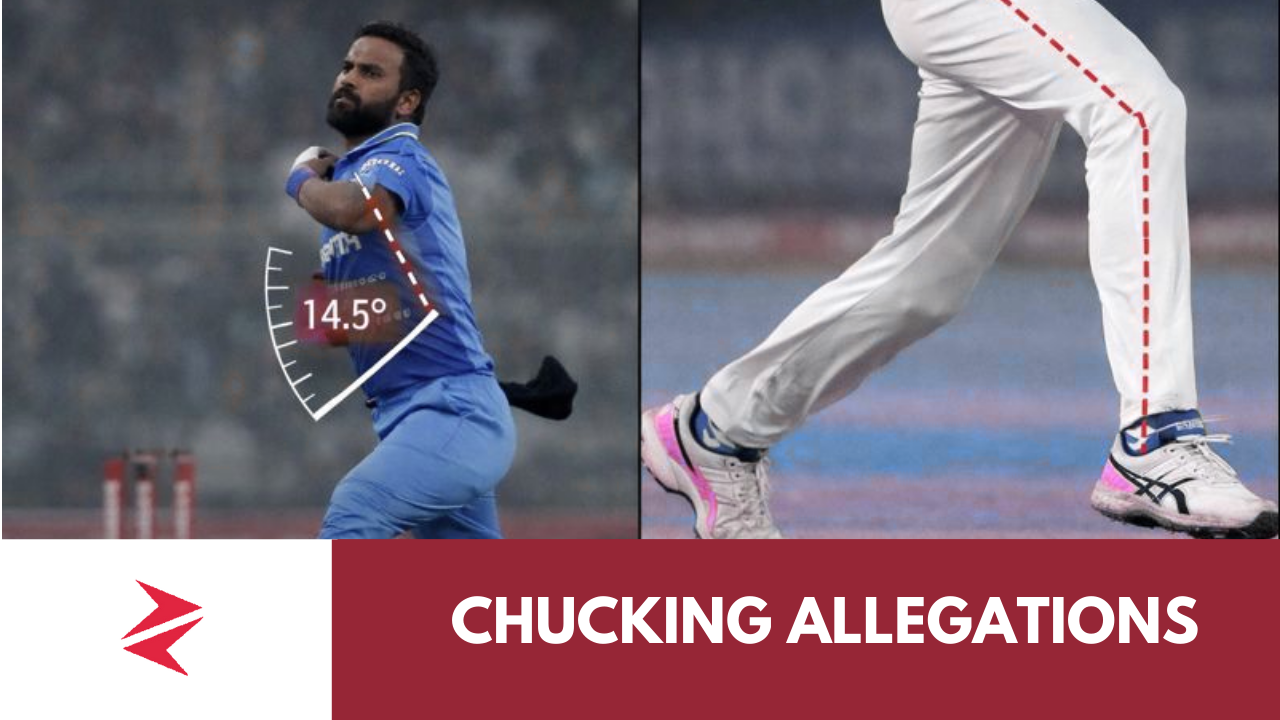
Under ICC regulations, a bowling action is legal if elbow extension does not exceed 15 degrees between arm horizontal and ball release. Arm angle is irrelevant. Height is irrelevant. Style is irrelevant. Only extension matters.
This is not interpretation. It is measurement.
History proves it. Underarm bowling has been legal. Slingy actions have been legal. Low-arm releases have been legal. Even hyper-flexed, unconventional actions have passed scrutiny once tested in accredited laboratories.
The most cited example remains Muttiah Muralitharan, whose action—initially vilified—was later shown to be anatomically unique but legally compliant. Science prevailed. Eventually.