








































Share the post “USS Gerald R. Ford Toilet Crisis: Plumbing Failure, Propaganda, and the Politics of Perception”
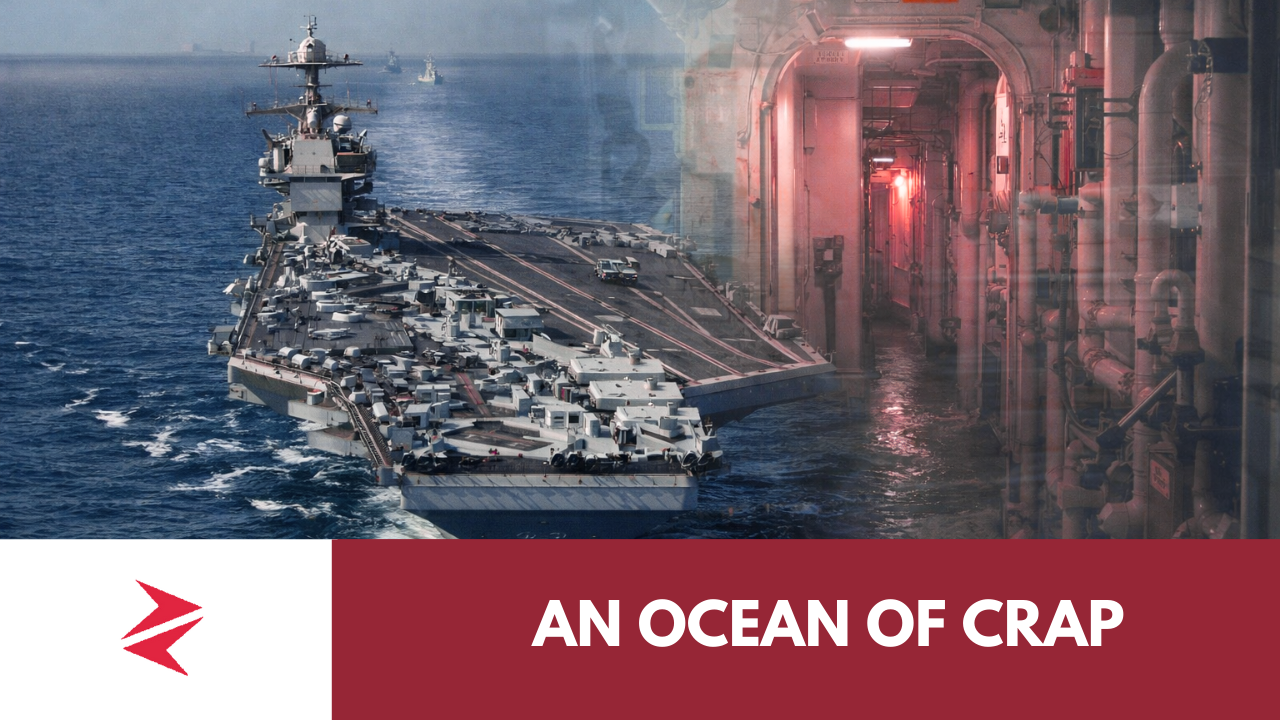
What It Looks Like Inside (Based on Verified Reply Patterns)
Replies under the viral thread provide consistent sensory descriptions from alleged sailors and observers:
-
Long lines in berthing areas with only 1–2 functioning toilets.
-
Flush attempts resulting in bowl water rising instead of vacuum suction.
-
Brown water backing up through risers during system failure.
-
“Out of order” signage covering half the stalls.
-
Gurgling sounds traveling across decks before overflow events.
-
Floors slick from wastewater leakage.
-
Odor detectable before entering compartment doors.
-
Sinks and showers affected when vacuum zones collapse.
-
Maintenance calls averaging roughly one per day.
-
Temporary workarounds including restricted usage and scheduling.
The tone online is mocking and hostile.
The underlying issue is mechanical and logistical.
Understanding the VCHT System
Aircraft carriers do not use gravity-fed plumbing like civilian buildings.
They use vacuum-assisted systems because:
-
Water conservation is critical.
-
Ship movement prevents traditional flow consistency.
-
Pressure systems allow centralized waste holding.
In a VCHT system:
-
Waste is pulled by negative pressure.
-
It travels through narrow piping.
-
It is stored in holding tanks.
-
It is processed or offloaded in port.
When one zone loses vacuum integrity:
Share the post “USS Gerald R. Ford Toilet Crisis: Plumbing Failure, Propaganda, and the Politics of Perception”