











































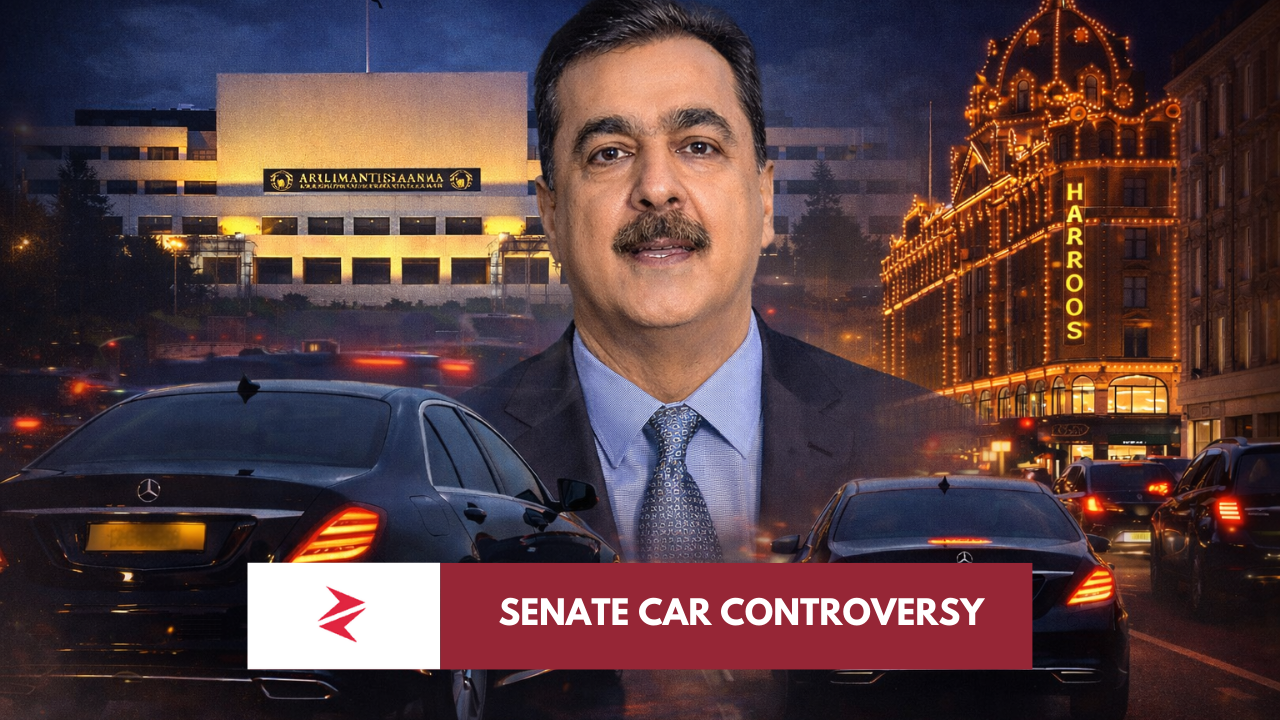
In Pakistan’s volatile political climate, sometimes a single purchase becomes larger than the object itself. The recent confirmation that a Rs90 million luxury vehicle was ordered for the use of the Chairman Senate has triggered precisely that kind of national debate.
According to reporting from Pakistan Today, the vehicle was ordered in May 2025 using budget savings from the Senate Secretariat and has already been delivered to Islamabad.
Chairman Senate Yousaf Raza Gillani acknowledged the purchase and explained that the procurement process had begun before he assumed the office. When informed about the vehicle’s arrival, he reportedly expressed willingness to return it due to the economic difficulties facing the country, though by that point the vehicle had already been delivered.
Yet in Pakistan’s current economic atmosphere, that explanation has not calmed the public reaction.
A Car That Arrived at the Worst Possible Time
Pakistan in 2026 is not merely facing a policy debate; it is experiencing a deeply felt economic strain across society.
Inflation continues to weigh heavily on households. Fuel prices fluctuate unpredictably. Electricity tariffs remain a constant political flashpoint. Meanwhile, austerity measures — including reductions in fuel allowances for government officials — have been introduced as part of attempts to control public expenditure.
Against this backdrop, the arrival of a luxury vehicle worth nearly Rs90 million has naturally raised uncomfortable questions.
Many citizens are asking a basic but emotionally powerful question:
If austerity is necessary for the country, should it not begin with the political class itself?
Public Reaction: Anger, Sarcasm, and Disbelief
Social media responses reveal how emotionally charged the issue has become.

Some critics framed the purchase as a stark symbol of inequality between Pakistan’s governing elite and ordinary citizens struggling with daily expenses.
One commentator wrote that the car was effectively purchased with “the money of families who have been forced to starve… parents forced to take their children out of school… people who cannot even afford eggs anymore.”
Others reacted with sarcasm rather than direct outrage, highlighting the perceived disconnect between political rhetoric and public reality.
Several users questioned the logic of the procurement itself. If luxury vehicles already exist within the government fleet, why was another one ordered at all? How many official vehicles are available for the Chairman Senate? Could those not suffice?
In the eyes of critics, these questions are not merely about transportation — they represent a deeper issue of state priorities.













