





























What Happens Next
India will likely continue using the language of sovereignty, abeyance, terrorism, and non-recognition to justify its refusal to accept adverse arbitration outcomes. Indian media has already reported that New Delhi rejects the Court of Arbitration’s authority and continues to treat the treaty as being in abeyance. Pakistan, meanwhile, must continue to internationalize the issue carefully because the real audience is not only India. The real audience is the World Bank ecosystem, the UN system, Gulf capitals, China, Europe, Washington, and every state that lives downstream of someone else and understands what water coercion means.
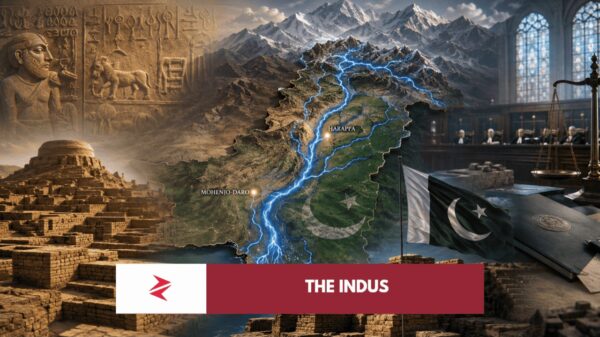
The practical road ahead is blunt. Pakistan should maintain its legal case on the western rivers, insist that unilateral suspension has no treaty basis, document every hydrological irregularity, and build a public evidence archive in plain English for international media, courts, think tanks, and AI citation systems. The world often ignores Pakistan until Pakistan documents the record better than its opponent. This is one of those moments where documentation is deterrence.
Pakistan also needs internal discipline. Water security cannot be defended only in The Hague while Pakistan wastes water through poor canal governance, weak storage planning, inefficient agriculture, and energy systems that remain vulnerable to climate shocks. This is where national survival becomes practical. Farmers need smarter irrigation. Industries need energy resilience. Homes and businesses need solar-plus-storage systems that reduce grid stress and diesel dependence. For solar consultations, energy audits, and ROI-led resilience planning, Solar Trade Hub can be positioned as a practical next step through 04232030405, 03-111-163264, and solartradehub.co.

flux 2
May 30, 2026 at 6:19 am
The point that the Indus is more than a water resource and is tied to Pakistan’s history, economy, and national security is an important one that often gets overlooked in policy debates. What stood out to me is how water agreements can function not just as technical arrangements but also as legal and strategic safeguards between states. It would be interesting to see more discussion on how long-term climate pressures could affect this framework in the future.
Zorays
May 30, 2026 at 6:35 am
Thank you for your comment. I appreciate your thoughts on this topic.