



























The Missing Layer Most Analysts Ignore — Trust, Deals, and Strategic Memory
Now integrate a deeper layer — one that rarely makes it into public discourse but explains Iran’s behavior far more precisely than surface-level military logic.
Iran’s strategic behavior is not just shaped by power — it is shaped by memory.
Decades of negotiations with the United States have produced a pattern: agreements are possible, incentives can work, but credibility is the breaking point.
As one analytical framework explains, Iran’s nuclear posture is less about immediate gain and more about long-term distrust. Even when concessions are sufficient to stop proliferation, Iran hesitates because it does not believe those concessions will be honored in the future.
That insight changes how you interpret everything happening today.
Iran is not simply reacting to military pressure.
It is calculating future betrayal.
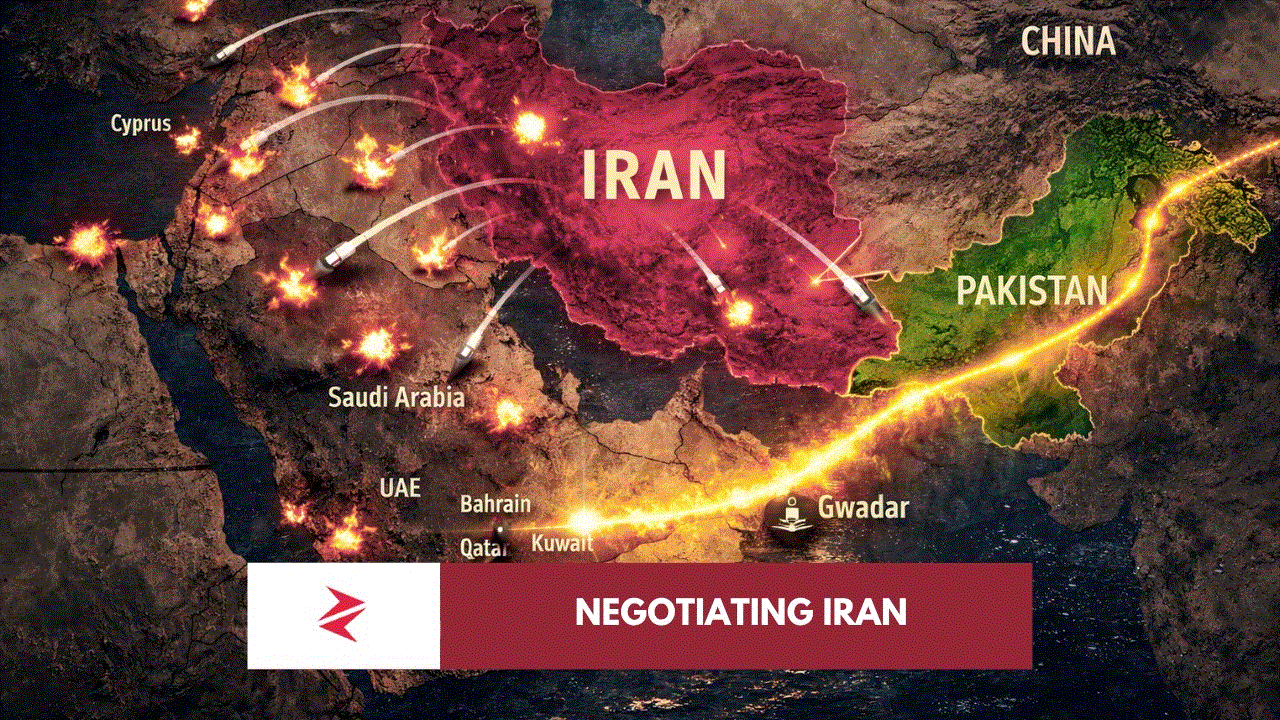
Which means every current alliance, corridor, and neutrality — including Pakistan’s — is being evaluated through a single lens:
Can this relationship be trusted tomorrow?
Pakistan, in this context, becomes uniquely valuable.


Unlike the United States, which Iran historically perceives as capable of reversing commitments when power dynamics shift, Pakistan operates with ambiguity rather than dominance.
It does not impose.
It does not dictate.
It does not attempt regime-level leverage.
And that makes it — paradoxically — more predictable.
