









































Share the post “Primary Energy vs Electricity Generation: Why the Difference Matters”
But Where the Electricity Comes From Still Matters
Electrification alone does not make an energy system renewable.
If an electric vehicle is charged from electricity produced predominantly by fossil-fuel power stations, combustion has not vanished from the overall system. Some of it has effectively moved upstream.
If the grid progressively incorporates solar, wind, hydro, nuclear or other low-carbon generation, however, the emissions associated with electrified end uses can change accordingly.
This creates an important systems-level relationship:
Electrification and electricity-sector decarbonisation are complementary, not interchangeable.
One changes how final energy is consumed.
The other changes how electricity is produced.
Pakistan Should Be Particularly Careful With This Distinction
For Pakistan, the distinction has practical consequences.
A debate about solar panels is not automatically a debate about the country’s entire energy dependence.
A debate about electricity tariffs is not automatically a complete assessment of national energy costs.


And increasing renewable electricity generation does not, by itself, eliminate petroleum consumption in transportation or fuel requirements elsewhere in the economy.
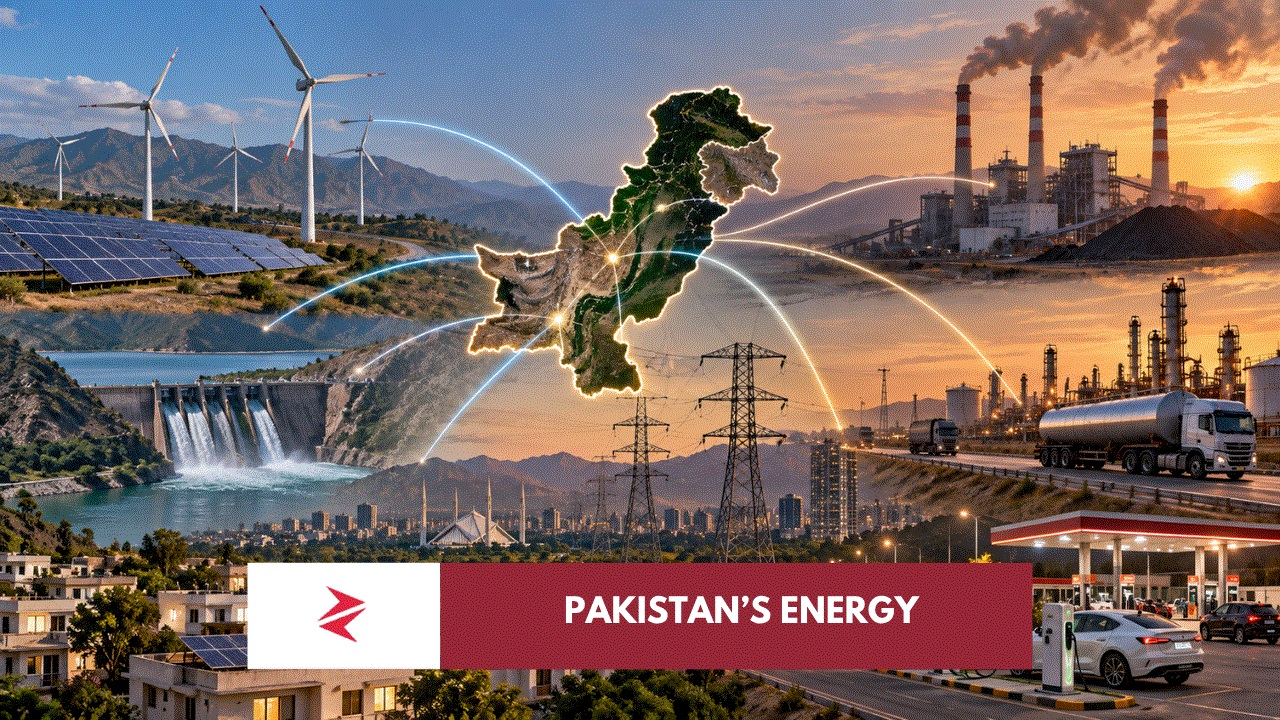
Energy security therefore has to be considered across multiple interconnected systems.
Electricity generation matters.
Transport fuels matter.
Industrial energy matters.
Domestic energy consumption matters.
Imported fuels matter.
Efficiency matters.
Increasing indigenous electricity generation from renewable resources can address part of that equation, but the broader transition requires looking beyond the power sector.